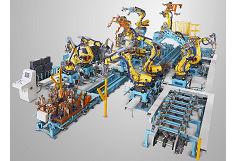
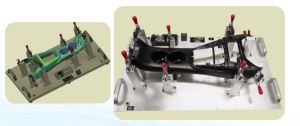
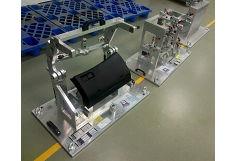
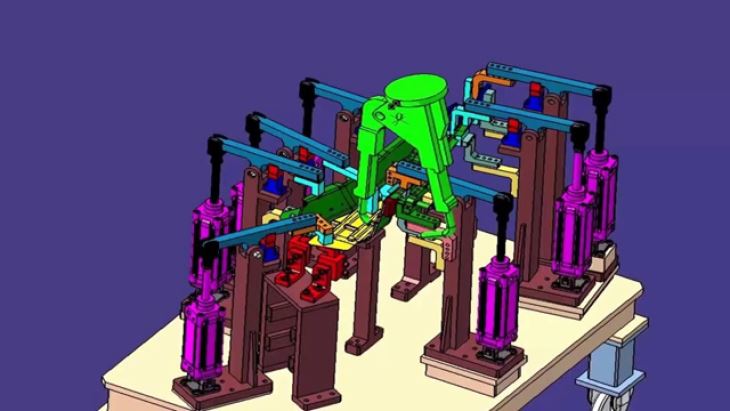
In the automotive manufacturing industry, the A Pillar welding fixture plays a crucial role in ensuring the accuracy and quality of A Pillar assembly. As a leading A Pillar welding fixture supplier, I am often asked about the materials used to make these fixtures. In this blog post, I will delve into the various materials commonly employed in the production of A Pillar welding fixtures, exploring their properties, advantages, and applications.
Steel Alloys
Steel alloys are among the most widely used materials for A Pillar welding fixtures due to their excellent mechanical properties and durability. High - strength low - alloy (HSLA) steels are particularly popular. These steels offer a good balance between strength and formability. Their high strength allows the fixture to withstand the forces exerted during the welding process, including the pressure from clamps and the impact of welding sparks.
For example, AISI 4130 is a well - known HSLA steel. It has a high yield strength, which means it can resist deformation under load. This is essential in an A Pillar welding fixture, as any deformation can lead to inaccurate positioning of the A Pillar parts, resulting in poor weld quality and misaligned assemblies. The good formability of AISI 4130 also enables it to be machined into complex shapes, which is necessary for creating fixtures that can precisely hold the A Pillar components in place.
Another type of steel alloy used is stainless steel. Stainless steel, such as 304 or 316, offers corrosion resistance. In a welding environment, there may be exposure to moisture, welding fumes, and other corrosive substances. Using stainless steel helps to prevent the fixture from rusting and deteriorating over time, ensuring its long - term performance and reliability. The smooth surface finish of stainless steel also makes it easier to clean, which is important for maintaining a clean welding environment and preventing contamination of the A Pillar parts.
Aluminum Alloys
Aluminum alloys are also frequently utilized in A Pillar welding fixtures. One of the main advantages of aluminum alloys is their low density. Compared to steel, aluminum is much lighter, which can significantly reduce the overall weight of the fixture. This is beneficial in applications where the fixture needs to be moved or repositioned frequently, as it reduces the physical effort required for handling.
6061 aluminum alloy is a common choice. It has good mechanical properties, including moderate strength and excellent machinability. The high thermal conductivity of aluminum alloys is another advantage. During the welding process, a significant amount of heat is generated. The ability of aluminum to conduct heat away from the welding area helps to prevent overheating of the fixture and the A Pillar parts, reducing the risk of thermal distortion.
However, aluminum alloys have lower hardness compared to steel alloys. To address this, surface treatment processes such as anodizing can be applied. Anodizing creates a hard, protective layer on the surface of the aluminum, increasing its wear resistance and durability.
Cast Iron
Cast iron has been used in fixture manufacturing for a long time. Gray cast iron, in particular, is known for its excellent damping properties. In a welding environment, there are vibrations generated during the welding process. These vibrations can affect the accuracy of the fixture and the quality of the welds. The damping ability of gray cast iron helps to absorb and dissipate these vibrations, providing a stable platform for welding.
Cast iron also has good dimensional stability. It can maintain its shape and size over time, even under the influence of temperature changes and mechanical stresses. This is important for ensuring the long - term accuracy of the A Pillar welding fixture. However, cast iron is relatively heavy and has lower machinability compared to steel and aluminum alloys. Therefore, it is often used in applications where its damping and dimensional stability properties are most needed, such as the base or frame of the fixture.
Composite Materials
In recent years, composite materials have started to gain popularity in the manufacturing of A Pillar welding fixtures. Carbon fiber composites, for example, offer a combination of high strength and low weight. They have a very high strength - to - weight ratio, which makes them ideal for applications where weight reduction is a priority without sacrificing strength.
Carbon fiber composites also have excellent stiffness. This stiffness helps to maintain the shape of the fixture under load, ensuring precise positioning of the A Pillar parts. Additionally, composite materials can be designed to have specific properties by adjusting the fiber orientation and resin matrix. This allows for the customization of the fixture to meet the specific requirements of different A Pillar welding applications.
However, composite materials are relatively expensive compared to traditional materials such as steel and aluminum. Their manufacturing process is also more complex, which may limit their widespread use. But as technology advances and costs decrease, we can expect to see more composite materials being used in A Pillar welding fixtures.
Plastics
Certain types of plastics are used in A Pillar welding fixtures, mainly for non - load - bearing or low - stress components. Acrylic plastics, for example, are transparent and have good optical properties. They can be used for creating covers or viewing windows on the fixture, allowing operators to monitor the welding process without opening the fixture.
Polyurethane is another plastic material that is sometimes used. It has good shock - absorbing properties and can be used as a cushioning material in the fixture to protect the A Pillar parts from damage during clamping.
Selection of Materials for Different Parts of the A Pillar Welding Fixture
The choice of materials depends on the specific function of each part of the A Pillar welding fixture. For the base and frame, which need to provide a stable support structure, materials with high strength and good damping properties such as cast iron or steel alloys are often used.
The clamping components, which need to apply pressure accurately and securely hold the A Pillar parts, are typically made of high - strength steel alloys to ensure they can withstand the clamping forces without deforming.
For components that are in contact with the A Pillar parts, such as locating pins and support blocks, materials with high hardness and wear resistance are preferred. This can be achieved through the use of hardened steel or surface - treated aluminum alloys.
Importance of Material Selection
Selecting the right materials for an A Pillar welding fixture is crucial for several reasons. Firstly, it directly affects the quality of the welded A Pillar assemblies. A fixture made of high - quality materials that can maintain its accuracy and stability will ensure that the A Pillar parts are correctly positioned during welding, resulting in high - quality welds and well - aligned assemblies.
Secondly, material selection impacts the cost and performance of the fixture. Using the most appropriate materials can optimize the balance between cost and performance. For example, using a combination of different materials in different parts of the fixture can reduce the overall cost while still meeting the performance requirements.
Finally, the durability of the fixture is also related to material selection. A fixture made of materials with good corrosion resistance, wear resistance, and thermal stability will have a longer service life, reducing the need for frequent replacements and maintenance.
Conclusion
As an A Pillar welding fixture supplier, I understand the importance of using the right materials in fixture manufacturing. Steel alloys, aluminum alloys, cast iron, composite materials, and plastics all have their unique properties and applications in the production of A Pillar welding fixtures. By carefully selecting the materials based on the specific requirements of each fixture, we can ensure high - quality, accurate, and durable products.
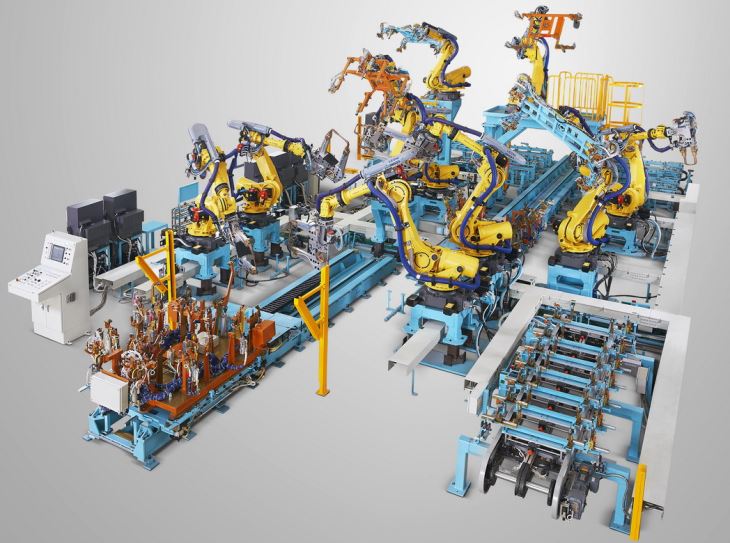
If you are in the market for A Pillar welding fixtures or want to learn more about our Robotic Welding Fixture Line and Auto Pillar Parts Welding Fixture, I encourage you to contact us for a detailed discussion. We are committed to providing the best solutions for your automotive welding needs.
References
- ASM Handbook, Volume 1: Properties and Selection: Irons, Steels, and High - Performance Alloys
- Aluminum Association: Aluminum Design Manual
- Cast Iron Development Association: Technical Guides on Cast Iron Applications
- Composite Materials Handbook: Design and Manufacturing Considerations