As a supplier of Checking And CMM Fixtures, I've been deeply involved in the industry, witnessing the critical role that measuring probes play in the precision and efficiency of coordinate measuring machines (CMMs). In this blog, I'll delve into the essential requirements for measuring probes in CMM fixtures, sharing insights based on my years of experience and industry knowledge.
Accuracy and Precision
The primary function of a measuring probe in a CMM fixture is to accurately and precisely capture the dimensions and geometries of the part being measured. Accuracy refers to how close the measured value is to the true value, while precision relates to the consistency of repeated measurements. For a measuring probe to be effective, it must offer high levels of both.
High - accuracy probes are capable of detecting even the slightest deviations in a part's dimensions. This is crucial in industries such as aerospace and automotive, where parts must meet extremely tight tolerances. For example, in the production of engine components, a deviation of just a few micrometers can lead to significant performance issues. A probe with high precision ensures that repeated measurements of the same part yield consistent results, reducing the likelihood of errors in quality control.
Resolution
Resolution is another key requirement for measuring probes. It refers to the smallest increment that a probe can detect. A probe with high resolution can capture fine details and small features on a part. In applications where parts have complex geometries or small surface features, such as micro - machined components or medical devices, a high - resolution probe is essential.
For instance, when measuring the intricate details of a dental implant, a probe with a resolution of a few micrometers can accurately capture the shape and dimensions, ensuring a perfect fit for the patient. Low - resolution probes may miss these critical details, leading to inaccurate measurements and potential quality issues.
Repeatability
Repeatability is closely related to precision but deserves its own emphasis. A probe with good repeatability will produce the same measurement results when used to measure the same feature multiple times under the same conditions. This is vital for quality control processes, as it allows manufacturers to rely on the consistency of the measurement data.
In a production environment, where multiple parts of the same design are being measured, repeatable probes ensure that any variations detected are due to actual differences in the parts and not the measuring equipment. For example, in an automotive assembly line, repeatable probes are used to measure the dimensions of engine blocks. If the probe is not repeatable, it can lead to false positives or negatives in quality checks, potentially causing production delays and increased costs.
Stylus Length and Diameter
The length and diameter of the stylus on a measuring probe are important considerations. The stylus is the part of the probe that comes into contact with the part being measured. The length of the stylus affects the probe's ability to access hard - to - reach features on a part. In some cases, such as measuring the internal dimensions of a deep bore or a cavity, a long stylus may be required.
On the other hand, the diameter of the stylus determines the minimum feature size that can be measured. A smaller - diameter stylus can access and measure smaller features, while a larger - diameter stylus may be more suitable for measuring larger, flat surfaces. For example, when measuring the fine threads on a screw, a small - diameter stylus is needed to accurately capture the thread profile.
Material Compatibility
The material of the probe and its stylus must be compatible with the material of the part being measured. Some materials, such as soft plastics or delicate metals, can be easily damaged by a hard - tipped probe. In such cases, a probe with a soft or non - abrasive tip may be required to prevent damage to the part.
Conversely, when measuring hard materials like ceramics or hardened steels, a probe with a durable and wear - resistant tip is necessary to ensure accurate and long - lasting measurements. For example, in the manufacturing of ceramic cutting tools, a probe with a diamond - tipped stylus can withstand the high hardness of the ceramic material and provide accurate measurements.
Environmental Adaptability
Measuring probes in CMM fixtures must be able to operate effectively in different environmental conditions. Temperature, humidity, and vibration can all affect the performance of a probe. For example, changes in temperature can cause thermal expansion or contraction of the probe and the part being measured, leading to measurement errors.
Probes that are designed to be temperature - compensated can minimize these effects. In addition, probes used in industrial environments may need to be resistant to dust, moisture, and other contaminants. For instance, in a foundry where there is a lot of dust and high temperatures, a probe with a sealed design and environmental protection features can ensure reliable measurements.
Compatibility with CMM Fixtures
The measuring probe must be compatible with the CMM fixture in which it is used. This includes mechanical compatibility, such as the probe's mounting mechanism and its ability to fit into the fixture's probe holder. Electrical compatibility is also important, especially for probes that use electronic sensors to measure.
The probe must be able to communicate effectively with the CMM's control system to transmit measurement data accurately. In addition, the probe's software must be compatible with the CMM's software for seamless integration and data processing. For example, if a CMM fixture is designed to use a specific type of probe interface, the probe must be able to connect to this interface without any issues.
Cost - effectiveness
While high - performance measuring probes are essential for accurate measurements, cost - effectiveness is also an important consideration. Manufacturers need to balance the performance requirements of the probe with its cost. A probe that offers the highest level of accuracy and resolution may not always be necessary for every application.
In some cases, a more affordable probe with sufficient performance for the specific task can be a better choice. For example, in a small - scale manufacturing operation where the tolerance requirements are not extremely tight, a mid - range probe can provide satisfactory results at a lower cost.


Conclusion
In conclusion, the requirements for measuring probes in CMM fixtures are diverse and complex. Accuracy, precision, resolution, repeatability, stylus length and diameter, material compatibility, environmental adaptability, compatibility with CMM fixtures, and cost - effectiveness are all important factors to consider when selecting a measuring probe.
As a supplier of Checking And CMM Fixtures, we understand the importance of these requirements and offer a wide range of probes that meet the needs of different industries and applications. Whether you are in the aerospace, automotive, medical, or any other industry, we can provide you with the right measuring probe for your CMM fixture.
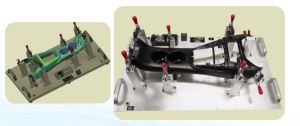
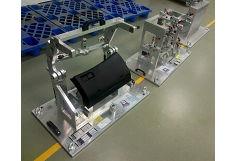
If you are interested in our products, such as Gauges/Checking Fixtures For A/B/C Pillar /Auto Pillar Parts, Checking Fixture For Automotive Industry, or Checking Fixtures, please feel free to contact us for more information and to discuss your specific requirements. We are committed to providing you with high - quality products and excellent service to help you achieve accurate and efficient measurements in your manufacturing processes.
References
- "Coordinate Measuring Machines: Principles, Applications, and Accuracy" by Peter J. Scott
- "Measurement and Instrumentation Principles" by Alan S. Morris
- Industry standards and guidelines related to CMM measurement and probe technology