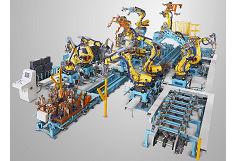
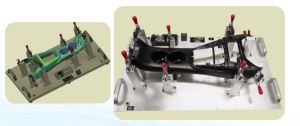
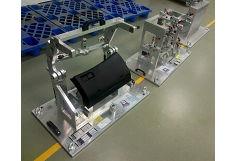
Hey there! As a rear seats welding jig supplier, I'm super excited to share with you how to program an automatic rear seats welding jig. It's a process that combines technical know - how, creativity, and a bit of elbow grease. So, let's dive right in!
Understanding the Basics
Before we start programming, we need to have a solid understanding of what an automatic rear seats welding jig is. It's a specialized tool used in the automotive industry to hold rear seats components in place during the welding process. This ensures that the welding is accurate, consistent, and of high quality.
The first step is to gather all the necessary information about the rear seats we're working with. This includes the dimensions, materials, and the specific welding requirements. We need to know the exact angles, distances, and positions where the welds will be made. This data will form the foundation of our programming.
Selecting the Right Programming Language and Software
There are several programming languages and software options available for programming an automatic welding jig. The choice depends on the type of controller used in the jig and the complexity of the welding tasks.
One of the commonly used languages is G - code. It's a simple yet powerful language that's widely used in CNC (Computer Numerical Control) machines. G - code allows us to control the movement of the welding torch, the speed of welding, and other parameters. Many welding jig controllers support G - code, making it a popular choice.
For more complex tasks, we might use a high - level programming language like Python. Python has a large number of libraries and frameworks that can be used to develop sophisticated control algorithms. It also allows for easy integration with other systems, such as sensors and vision systems.
Designing the Welding Sequence
Once we've selected the programming language, it's time to design the welding sequence. This involves determining the order in which the welds will be made. The welding sequence is crucial as it can affect the quality of the welds and the overall strength of the rear seats.
We need to consider factors like heat distribution, distortion, and accessibility. For example, if we weld all the joints on one side of the seat first, it can cause the seat to warp. So, we might need to alternate between different sides and sections of the seat to balance the heat and minimize distortion.
We can use simulation software to test the welding sequence before implementing it on the actual jig. This helps us identify any potential issues and make adjustments early on.
Setting Up the Sensors and Feedback Systems
An automatic welding jig relies on sensors and feedback systems to ensure accurate and consistent welding. These sensors can measure parameters such as position, temperature, and welding current.
For example, a position sensor can be used to ensure that the welding torch is in the correct position before starting the weld. A temperature sensor can monitor the heat generated during welding and adjust the welding parameters accordingly.

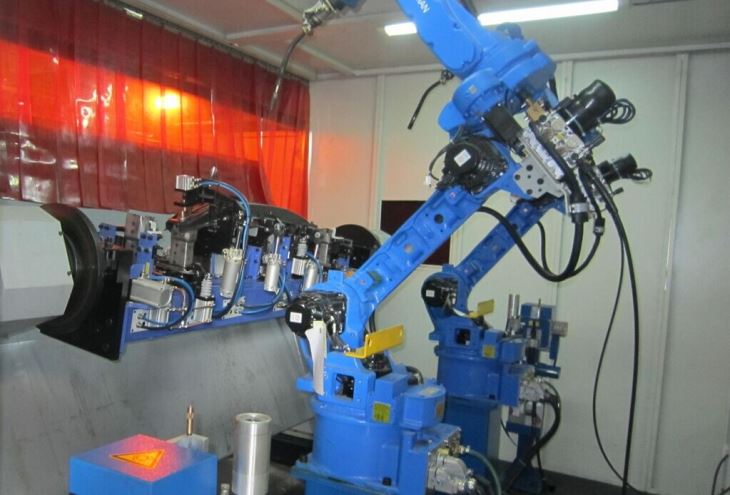
We need to program the jig to communicate with these sensors and use the feedback to make real - time adjustments. This can significantly improve the quality of the welds and reduce the chances of errors.
Integrating with Other Systems
In a modern automotive manufacturing environment, the rear seats welding jig needs to be integrated with other systems. This includes the conveyor system that transports the seats to the welding station, the quality control system, and the overall production management system.
We can use communication protocols like Ethernet/IP or Profibus to connect the welding jig to these systems. This allows for seamless data exchange and coordination between different parts of the manufacturing process.
For instance, when a seat arrives at the welding station, the conveyor system can send a signal to the welding jig to start the welding process. After the welding is complete, the quality control system can receive data from the jig about the welding parameters and perform an inspection.
Testing and Debugging
Once the programming is complete, it's time to test the automatic rear seats welding jig. We start with a dry run, where the jig moves through the welding sequence without actually welding. This helps us check the movement of the torch, the accuracy of the sensors, and the overall functionality of the program.
During the dry run, we might encounter some issues such as incorrect movements or sensor malfunctions. We need to debug the program and make the necessary adjustments. This might involve tweaking the G - code, recalibrating the sensors, or modifying the control algorithms.
After the dry run, we perform a live test with actual rear seats components. This allows us to evaluate the quality of the welds and make any final adjustments.
Maintenance and Upgrades
Once the automatic rear seats welding jig is up and running, it's important to perform regular maintenance. This includes cleaning the jig, lubricating the moving parts, and checking the sensors and cables for any signs of wear and tear.
We also need to keep an eye on technological advancements and consider upgrading the programming and the hardware of the jig. For example, new sensors or control algorithms might become available that can improve the performance and efficiency of the jig.
Related Products
If you're interested in other automotive welding fixtures, we also offer Car Stamping Parts checking fixture and Front Bumper Welding Fixture. And of course, our Automotive Seat Welding Fixture range has a lot to offer.
Conclusion
Programming an automatic rear seats welding jig is a complex but rewarding process. It requires a combination of technical skills, creativity, and attention to detail. By following the steps outlined above, you can develop a high - quality program that ensures accurate and consistent welding of rear seats.
If you're in the market for a rear seats welding jig or need help with programming, don't hesitate to reach out. We're here to assist you with all your welding fixture needs. Whether you're a small - scale manufacturer or a large automotive company, we can provide customized solutions to meet your requirements.
References
- "CNC Programming Handbook" by Peter Smid
- "Python for Control Systems" by various authors
- Automotive Manufacturing Technology Journals