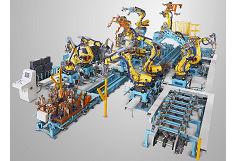
Hey there! As a supplier of Robotic MIG Weld Fixtures, I've seen firsthand how the welding speed can have a huge impact on the quality of the final product. In this blog, I'm gonna break down what that influence is and why it matters so much.
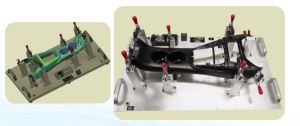
First off, let's talk about what Robotic MIG Weld Fixtures are. These are tools that hold the workpieces in place during the Metal Inert Gas (MIG) welding process, which is done by robots. They're super important in the manufacturing industry, especially for things like Auto Pillar Parts Welding Fixture and Robotic Welding Fixture Line. The fixtures ensure that the parts are in the right position and alignment, so the welding can be done accurately and consistently.
Now, let's get into the main topic: the influence of welding speed on the quality of a Robotic MIG Weld Fixture.
Penetration and Fusion
One of the most critical aspects of welding quality is penetration and fusion. Penetration refers to how deep the weld goes into the base metal, and fusion is about how well the filler metal combines with the base metal.
When the welding speed is too slow, there's a lot of heat input into the workpiece. This can lead to excessive penetration, which might cause burn - through in thin materials. For example, if you're working on a thin - walled auto pillar part, a slow welding speed could create holes in the part, making it useless. On the other hand, too much heat can also result in a wide weld bead, which might not be aesthetically pleasing and could add unnecessary weight to the final product.
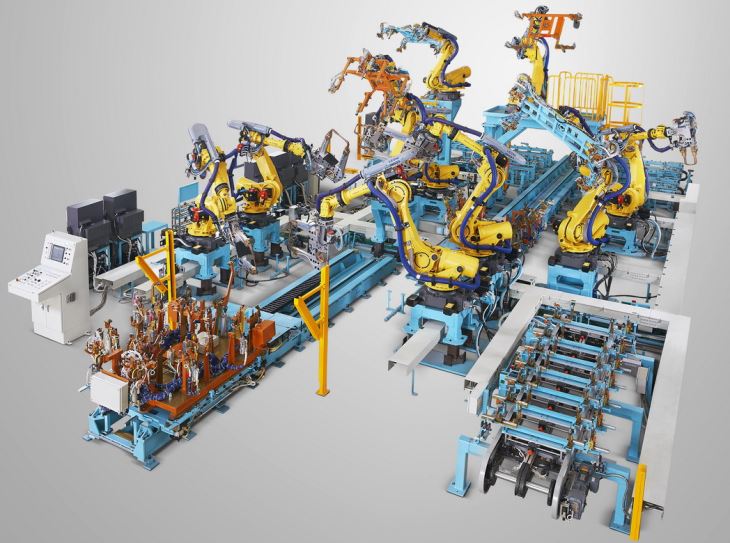
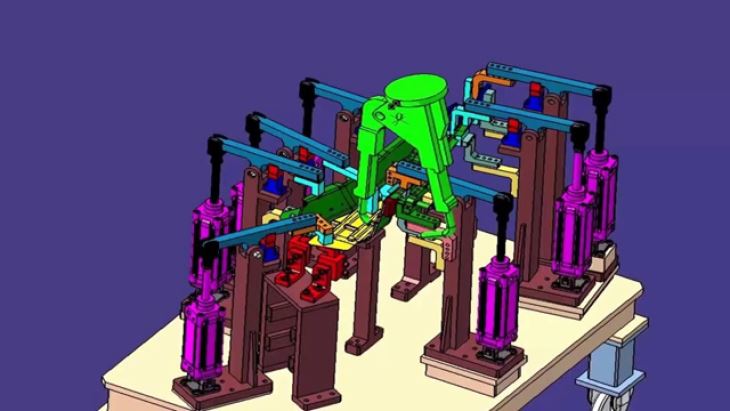
Conversely, when the welding speed is too fast, there isn't enough heat input. This leads to insufficient penetration, meaning the weld doesn't go deep enough into the base metal. As a result, the joint strength will be compromised. The filler metal might not fuse properly with the base metal, creating weak spots in the weld. In a Robotic Welding Fixture Line, this can lead to parts that don't meet the required strength standards, which is a big no - no in industries like automotive manufacturing.
Weld Bead Shape and Size
The welding speed also affects the shape and size of the weld bead. A proper weld bead should have a smooth, uniform shape.
A slow welding speed typically produces a wide and tall weld bead. This can be a problem in applications where space is limited or where a more precise weld is needed. For instance, in some auto pillar parts, a wide weld bead might interfere with other components during assembly.
When the welding speed is too fast, the weld bead becomes narrow and shallow. This not only looks bad but also reduces the cross - sectional area of the weld, which in turn reduces its strength. In a production line using Robotic MIG Weld Fixtures, inconsistent weld bead shapes and sizes can lead to quality control issues and increased rework.
Porosity and Spatter
Porosity and spatter are two common welding defects that are influenced by welding speed.
Porosity is the presence of small holes or voids in the weld. A slow welding speed can increase the risk of porosity because the molten metal has more time to absorb gases from the surrounding environment. These gases get trapped in the weld as it solidifies, creating pores. In a Robotic MIG Weld Fixture, porosity can significantly reduce the strength and corrosion resistance of the weld.
Spatter refers to the small droplets of molten metal that are ejected from the weld pool during the welding process. A high welding speed can cause more spatter because the arc can become unstable. Spatter not only makes the weld area messy but can also cause problems in the fixture itself. The spattered metal can stick to the fixture, affecting its accuracy and potentially causing damage over time.
Distortion
Distortion is another issue related to welding speed. When a workpiece is welded, the heat causes it to expand and then contract as it cools. If the welding speed is not controlled properly, this expansion and contraction can lead to distortion of the workpiece.
A slow welding speed means more heat is being applied over a longer period, which can cause greater distortion. In a Robotic Welding Fixture Line, distorted parts can be a nightmare. They might not fit correctly in the next stage of production, leading to assembly problems and potential delays in the manufacturing process.
On the other hand, a very fast welding speed can also cause distortion, although in a different way. The rapid heating and cooling can create internal stresses in the workpiece, which can result in warping or bending.
How to Optimize Welding Speed
So, how do we find the right welding speed for a Robotic MIG Weld Fixture? Well, it depends on several factors.
First, consider the type and thickness of the base metal. Thicker metals generally require a slower welding speed to ensure proper penetration, while thinner metals need a faster speed to avoid burn - through. For example, when welding thick steel plates in a Robotic Welding Fixture Line, a lower speed might be necessary compared to welding thin aluminum sheets.
The type of filler metal also matters. Different filler metals have different melting points and flow characteristics, which can affect the optimal welding speed.
The joint design is another crucial factor. A butt joint might require a different welding speed than a lap joint. The position of the weld (e.g., flat, horizontal, vertical) also plays a role. Welding in a vertical position usually requires a slower speed to prevent the molten metal from dripping.
Conclusion
In conclusion, the welding speed has a profound influence on the quality of a Robotic MIG Weld Fixture. It affects penetration, fusion, weld bead shape and size, porosity, spatter, and distortion. As a supplier of these fixtures, I know how important it is to get the welding speed right.
If you're in the market for high - quality Robotic MIG Weld Fixtures, whether it's for Auto Pillar Parts Welding Fixture or Robotic Welding Fixture Line, we can help. We have a team of experts who understand the intricacies of welding speed and can ensure that our fixtures are designed to produce the best - quality welds.
If you're interested in discussing your specific needs and how our Robotic MIG Weld Fixtures can meet them, feel free to reach out. We're here to work with you to optimize your welding processes and ensure the highest quality of your products.
References
- AWS Welding Handbook, American Welding Society.
- Welding Metallurgy, by John C. Lippold and David K. Miller.
- Robotics in Welding, an industry - specific research report.