Can an auto welding jig improve welding quality?
In the realm of modern manufacturing, welding is a critical process that joins materials together to create a wide range of products, from automotive components to industrial machinery. The quality of welding can significantly impact the structural integrity, performance, and longevity of the final product. As a leading supplier of auto welding jigs, I am often asked whether these tools can truly enhance welding quality. In this blog post, I will delve into this question, exploring the benefits of auto welding jigs and how they contribute to superior welding outcomes.
Understanding Auto Welding Jigs
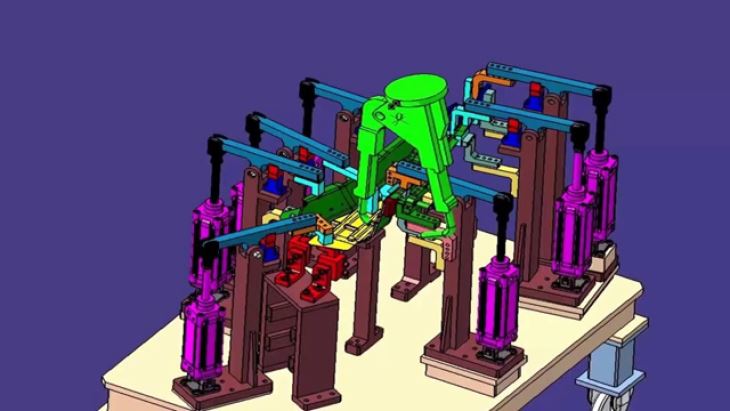
Before we discuss the impact of auto welding jigs on welding quality, let's first understand what they are. An auto welding jig is a specialized tool designed to hold and position workpieces accurately during the welding process. It ensures that the parts are aligned correctly, maintaining the desired gap and angle between them. This precision is crucial for achieving consistent and high - quality welds.
Auto welding jigs come in various forms, depending on the specific application and the complexity of the workpiece. Some are simple, single - part fixtures, while others are highly sophisticated, multi - part systems that can handle complex assemblies. They can be manually operated, semi - automated, or fully automated, with the latter being increasingly popular in high - volume manufacturing environments.
Benefits of Auto Welding Jigs for Welding Quality
1. Precision and Consistency
One of the primary advantages of using an auto welding jig is the ability to achieve precise and consistent welds. By holding the workpieces in a fixed position, the jig eliminates the risk of movement or misalignment during welding. This ensures that each weld is made exactly where it is supposed to be, with the correct gap and angle. As a result, the quality of the welds is more uniform across multiple parts, reducing the likelihood of defects such as porosity, lack of fusion, or uneven bead profiles.
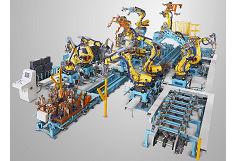
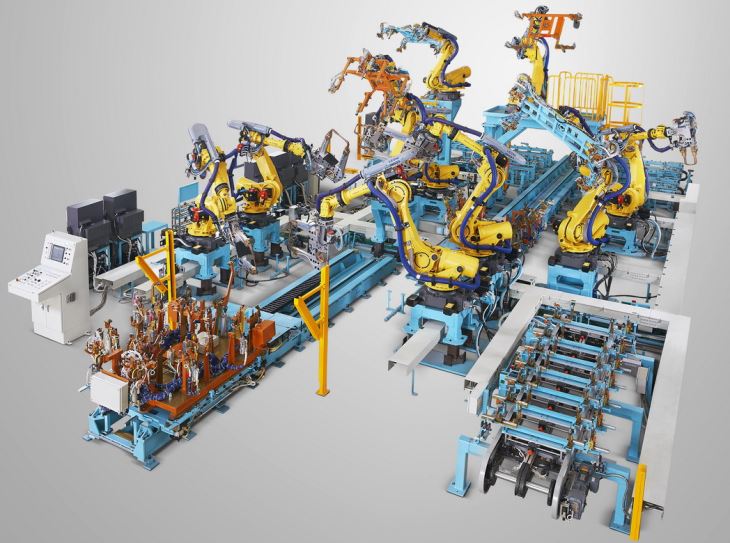
For example, in the automotive industry, where thousands of identical parts are produced daily, the use of auto welding jigs is essential to maintain the high standards of quality required. A Robotic Welding Fixture Line can precisely position car body components for welding, ensuring that every vehicle produced has the same level of structural integrity.
2. Improved Weld Strength
Proper alignment and positioning of the workpieces are crucial for achieving strong welds. When the parts are held in the correct position by an auto welding jig, the weld metal can flow evenly into the joint, creating a strong bond. This reduces the stress concentrations in the weld area, which can lead to premature failure.
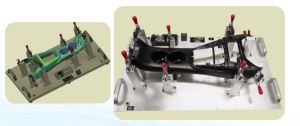
In addition, the jig can also help to control the heat input during welding. By keeping the workpieces in a stable position, it allows for more consistent heat distribution, which is essential for achieving optimal weld strength. For instance, in the manufacturing of Auto Pillar Parts Welding Fixture, a well - designed jig ensures that the welds are strong enough to withstand the forces exerted on the vehicle's pillars during normal use.
3. Reduced Distortion
Welding generates heat, which can cause the workpieces to expand and contract, leading to distortion. Auto welding jigs can help to minimize this problem by holding the parts firmly in place. They act as a restraint, preventing the parts from moving or warping during the welding process.
This is particularly important in applications where dimensional accuracy is critical. For example, in the production of precision machinery or aerospace components, even a small amount of distortion can render the part unusable. By using an auto welding jig, manufacturers can ensure that the final product meets the required specifications.
4. Enhanced Productivity
Auto welding jigs can also improve productivity, which indirectly contributes to better welding quality. By reducing the time spent on manual positioning and alignment of the workpieces, the jig allows for faster welding cycles. This means that more parts can be welded in a shorter period, increasing the overall output of the manufacturing process.
Moreover, the increased productivity also allows for more thorough inspection of the welds. With a higher throughput, manufacturers can afford to allocate more time and resources to quality control, ensuring that any potential defects are detected and corrected early.
Factors to Consider When Choosing an Auto Welding Jig
While auto welding jigs offer many benefits for welding quality, it is important to choose the right jig for your specific application. Here are some factors to consider:
1. Workpiece Geometry
The shape and size of the workpiece will determine the type of jig required. Complex geometries may require custom - designed jigs that can accurately hold and position the parts. It is essential to work with a supplier who has the expertise and experience to design and manufacture jigs for a wide range of workpiece geometries.
2. Welding Process
Different welding processes, such as MIG, TIG, or spot welding, have different requirements for workpiece positioning and clamping. The jig should be designed to accommodate the specific welding process being used. For example, a jig for spot welding may need to provide precise electrode access to the weld area.
3. Production Volume
The volume of parts to be welded will also influence the choice of jig. For high - volume production, automated jigs may be more suitable, as they can offer faster cycle times and greater consistency. On the other hand, for low - volume or prototype production, manual or semi - automated jigs may be more cost - effective.
4. Material Compatibility
The jig should be made of materials that are compatible with the workpiece material. Some materials may react with the jig material, causing corrosion or other issues. It is important to choose a jig material that is resistant to the heat and chemicals generated during the welding process.
Conclusion
In conclusion, auto welding jigs can significantly improve welding quality by providing precision, consistency, and control during the welding process. They help to achieve strong, uniform welds, reduce distortion, and enhance productivity. By choosing the right auto welding jig for your specific application, you can ensure that your welding operations meet the highest standards of quality.
If you are interested in improving the quality of your welding processes, I encourage you to explore our range of auto welding jigs. Our team of experts is ready to work with you to understand your specific needs and provide customized solutions. Contact us today to start a discussion about how our auto welding jigs can benefit your manufacturing operations.
References
- ASME Boiler and Pressure Vessel Code, Section IX - Welding and Brazing Qualifications
- AWS D1.1/D1.1M:2020 Structural Welding Code - Steel
- ISO 9606 - 1:2017 Qualification testing of welders - Fusion welding - Part 1: Steels