As a leading supplier of A PILLAR welding fixtures, I've had the privilege of working closely with various automotive manufacturers and welding experts. Over the years, I've gained extensive knowledge about the critical spot welding parameters that are essential for achieving high - quality welds in A PILLAR welding fixtures. In this blog, I'll share these insights with you, highlighting the key factors that influence the spot welding process.
Understanding Spot Welding
Spot welding is a process where two or more metal sheets are joined together by applying pressure and an electric current at specific points. This creates a series of weld spots, which hold the sheets firmly in place. In the context of A PILLAR welding fixtures, spot welding is used to assemble different components of the A - pillar, ensuring structural integrity and safety.
Key Spot Welding Parameters
1. Welding Current
The welding current is one of the most crucial parameters in spot welding. It determines the amount of heat generated at the weld interface. A higher current will generate more heat, which can lead to a larger weld nugget. However, if the current is too high, it can cause expulsion, where molten metal is ejected from the weld area. This not only weakens the weld but can also cause damage to the welding electrodes.
On the other hand, if the current is too low, the weld nugget may not form properly, resulting in a weak joint. For A PILLAR welding fixtures, the optimal welding current depends on several factors, such as the thickness and type of the metal sheets being welded, the electrode material and geometry, and the desired weld strength.
In general, for thinner metal sheets (less than 1.5 mm), a lower welding current in the range of 5 - 10 kA may be sufficient. For thicker sheets (1.5 - 3 mm), the current may need to be increased to 10 - 20 kA. It's important to note that these values are approximate and should be adjusted based on the specific requirements of the A - pillar design and the welding equipment being used.
2. Welding Time
The welding time refers to the duration for which the electric current is applied during the spot welding process. Similar to the welding current, the welding time also affects the heat input and the formation of the weld nugget. A longer welding time allows more heat to be transferred to the metal sheets, promoting the growth of the weld nugget.
However, excessive welding time can lead to overheating, which can cause distortion of the metal sheets and reduce the strength of the weld. Shorter welding times, on the other hand, may not provide enough heat for proper weld formation. For A PILLAR welding fixtures, the welding time typically ranges from 0.1 - 0.5 seconds, depending on the welding current and the thickness of the metal sheets.
3. Electrode Force
The electrode force is the pressure applied by the welding electrodes on the metal sheets during the spot welding process. This force is essential for ensuring good electrical contact between the electrodes and the metal sheets, as well as for containing the molten metal within the weld area.
A sufficient electrode force helps to prevent expulsion and ensures a uniform weld nugget. If the electrode force is too low, the electrical resistance at the electrode - metal interface may increase, leading to inconsistent welds. Conversely, if the electrode force is too high, it can cause indentation on the metal sheets and damage the electrodes.
For A PILLAR welding fixtures, the electrode force usually ranges from 1 - 5 kN, depending on the size and shape of the electrodes, the thickness of the metal sheets, and the welding current. It's important to maintain a consistent electrode force throughout the welding process to ensure the quality of the welds.
4. Electrode Material and Geometry
The choice of electrode material and geometry also has a significant impact on the spot welding process. The electrodes are responsible for conducting the electric current and applying the force to the metal sheets. Common electrode materials include copper alloys, such as copper - chromium and copper - zirconium, which have good electrical and thermal conductivity.
The geometry of the electrodes, such as the tip shape and size, affects the distribution of the electric current and the pressure applied to the metal sheets. For example, a smaller electrode tip diameter can concentrate the current, resulting in a smaller but more intense weld nugget. In contrast, a larger tip diameter can spread the current over a larger area, producing a larger but less intense weld nugget.
For A PILLAR welding fixtures, the electrode tip diameter typically ranges from 4 - 10 mm, depending on the thickness of the metal sheets and the desired weld size. The electrode tip should also be properly maintained to ensure consistent performance. Regular dressing of the electrode tips can help to remove any oxide layers and maintain the correct tip shape.
Influence of Metal Properties on Spot Welding Parameters
The properties of the metal sheets being welded, such as their thickness, composition, and surface condition, also play a crucial role in determining the optimal spot welding parameters.
1. Metal Thickness
As mentioned earlier, the thickness of the metal sheets affects both the welding current and the welding time. Thicker sheets require more heat input to form a proper weld nugget, which means higher welding currents and longer welding times. Additionally, thicker sheets may also require a higher electrode force to ensure good contact and prevent expulsion.
2. Metal Composition
Different metal compositions have different electrical and thermal properties, which can influence the spot welding process. For example, steel alloys with a high carbon content may require higher welding currents and longer welding times compared to low - carbon steels. Aluminum alloys, on the other hand, have a higher thermal conductivity, which means they dissipate heat more quickly. This requires higher welding currents and shorter welding times to achieve a proper weld.
3. Surface Condition
The surface condition of the metal sheets can also affect the spot welding process. Contaminants such as oil, grease, rust, or oxide layers on the metal surface can increase the electrical resistance at the electrode - metal interface, leading to inconsistent welds. It's important to clean the metal sheets thoroughly before welding to ensure good electrical contact and uniform heat distribution.
Quality Control in Spot Welding for A PILLAR Welding Fixtures
To ensure the quality of the spot welds in A PILLAR welding fixtures, it's essential to implement a comprehensive quality control program. This includes regular monitoring of the welding parameters, visual inspection of the welds, and non - destructive testing methods such as ultrasonic testing and X - ray inspection.
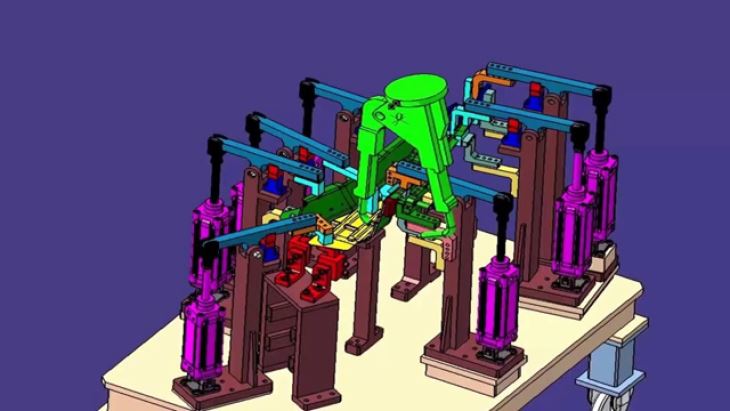
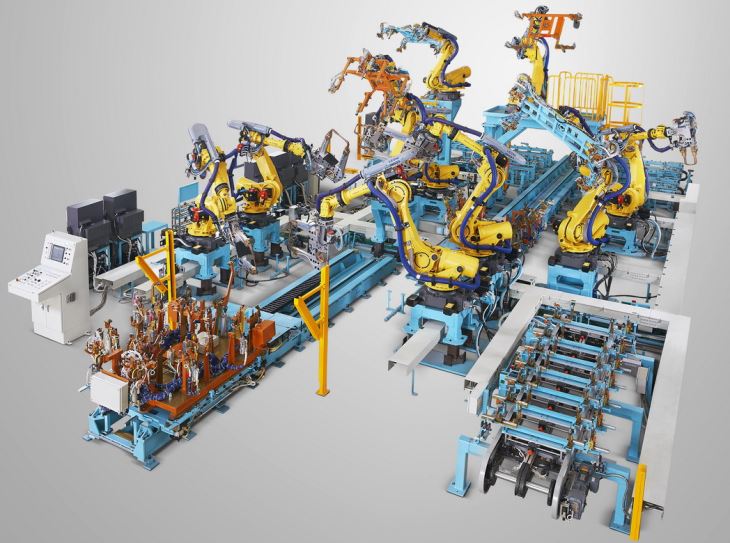
Regular calibration of the welding equipment is also necessary to ensure that the welding current, welding time, and electrode force are within the specified ranges. Any deviations from the optimal parameters should be corrected immediately to prevent defective welds.
The Role of Advanced Welding Technologies
In recent years, advanced welding technologies such as servo - controlled welding systems and adaptive welding controllers have been introduced to improve the accuracy and consistency of spot welding in A PILLAR welding fixtures. These technologies can automatically adjust the welding parameters based on real - time feedback, ensuring optimal weld quality even when there are variations in the metal properties or the welding conditions.
For example, a servo - controlled welding system can precisely control the electrode force and the welding time, while an adaptive welding controller can adjust the welding current based on the electrical resistance at the weld interface. These technologies not only improve the quality of the welds but also increase the productivity of the welding process.
Conclusion
In conclusion, achieving high - quality spot welds in A PILLAR welding fixtures requires a careful consideration of several key parameters, including the welding current, welding time, electrode force, electrode material and geometry, and the properties of the metal sheets being welded. By understanding these parameters and implementing a comprehensive quality control program, automotive manufacturers can ensure the structural integrity and safety of their A - pillar components.
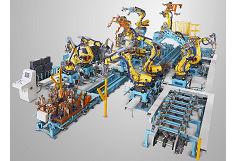
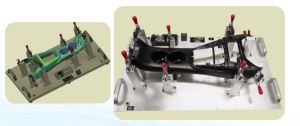
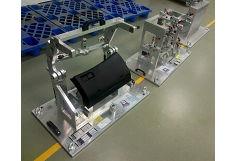
If you're in the market for high - quality A PILLAR welding fixtures, look no further. As a trusted supplier, we offer a wide range of Auto Pillar Parts Welding Fixture that are designed to meet the specific requirements of your automotive production line. Our Robotic Welding Fixture Line is equipped with advanced technologies to ensure precise and consistent spot welding.
We're committed to providing our customers with the best products and services. If you're interested in learning more about our A PILLAR welding fixtures or would like to discuss your specific needs, please don't hesitate to contact us for a detailed consultation. We look forward to working with you to achieve your automotive manufacturing goals.
References
- Welding Handbook, American Welding Society
- Automotive Welding Technology, various industry publications
- Research papers on spot welding in automotive applications from academic journals