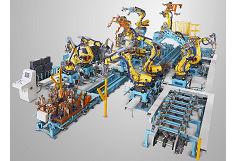
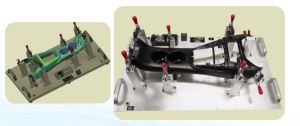
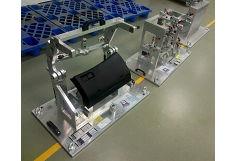
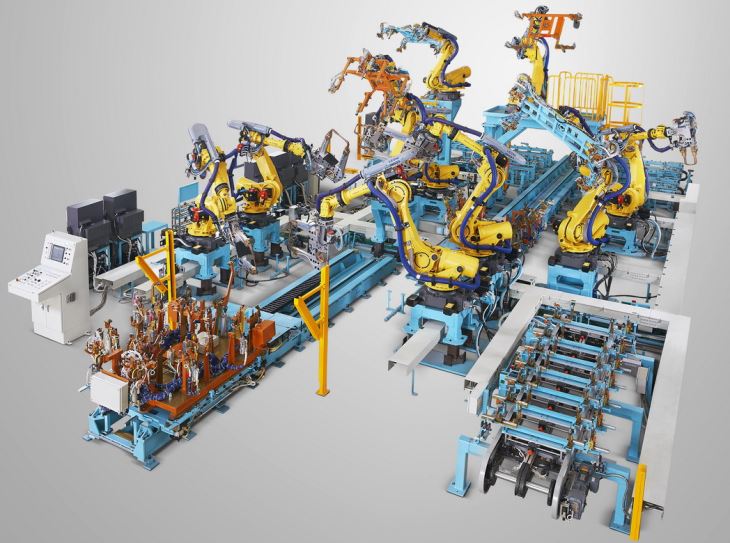
As a supplier of Robotic MIG Weld Fixtures, I understand the critical importance of fire prevention in the welding process. Robotic MIG (Metal Inert Gas) welding fixtures are widely used in various industries, including automotive, aerospace, and manufacturing. These fixtures help ensure precise and efficient welding operations, but they also pose potential fire hazards. In this blog post, I will discuss the essential fire - prevention measures for a Robotic MIG Weld Fixture.
1. Facility Design and Layout
The first step in fire prevention starts with the design and layout of the welding facility. The area where the Robotic MIG Weld Fixture is installed should be well - ventilated. Adequate ventilation helps to remove welding fumes and prevent the accumulation of combustible gases. A ventilation system should be designed to capture and exhaust the fumes at the source. For example, local exhaust ventilation (LEV) hoods can be installed near the welding area to directly capture the fumes.
The welding area should also be separated from other areas of the facility by fire - resistant partitions. These partitions can help contain a fire if it breaks out and prevent it from spreading to other parts of the building. Additionally, the layout should ensure that there is enough space around the Robotic MIG Weld Fixture for easy access and maintenance. This space can also act as a buffer zone in case of a fire.
2. Material Selection
The materials used in the construction of the Robotic MIG Weld Fixture play a crucial role in fire prevention. Non - combustible or fire - resistant materials should be used whenever possible. For the fixture's frame, materials like stainless steel or aluminum can be good choices as they have high melting points and are less likely to catch fire.
The electrical components of the fixture should also be carefully selected. Electrical fires are a common cause of fires in welding facilities. Use electrical components that are rated for the welding environment and have proper insulation. For example, high - quality cables with fire - resistant insulation can reduce the risk of electrical short - circuits and subsequent fires.
3. Regular Maintenance
Regular maintenance of the Robotic MIG Weld Fixture is essential for fire prevention. The fixture should be inspected regularly for any signs of wear and tear, loose connections, or damaged components. For example, the welding torch should be checked for proper alignment and any signs of overheating. A misaligned torch can cause excessive spatter, which can ignite nearby combustible materials.
The electrical system of the fixture should be inspected by a qualified electrician at regular intervals. This includes checking the wiring, switches, and control panels. Any loose connections or frayed wires should be repaired immediately. The cooling system of the fixture, if it has one, should also be maintained to ensure proper operation. Overheating due to a malfunctioning cooling system can lead to fires.
4. Fire Detection and Suppression Systems
Installing fire detection and suppression systems in the area where the Robotic MIG Weld Fixture is located is a must. Smoke detectors should be installed in the vicinity of the fixture. These detectors can quickly detect the presence of smoke, which is often an early sign of a fire. In addition to smoke detectors, heat detectors can also be installed, especially in areas where welding operations generate a lot of heat.
Fire suppression systems such as sprinklers or dry chemical fire extinguishers should be available in the welding area. Sprinklers can be effective in quickly extinguishing a fire, but they may not be suitable for all types of welding operations, especially those involving sensitive electronic components. In such cases, dry chemical fire extinguishers can be used. Employees should be trained on how to use these fire extinguishers properly.
5. Employee Training
Employee training is a key aspect of fire prevention. All employees who work with or around the Robotic MIG Weld Fixture should receive comprehensive training on fire safety. This training should include information on the potential fire hazards associated with the welding process, how to prevent fires, and what to do in case of a fire.
Employees should be trained on proper welding techniques to minimize the generation of spatter and sparks. They should also be taught to keep the work area clean and free of combustible materials. For example, they should be trained to remove any scrap metal, cardboard, or other flammable materials from the vicinity of the fixture.
6. Safety Procedures
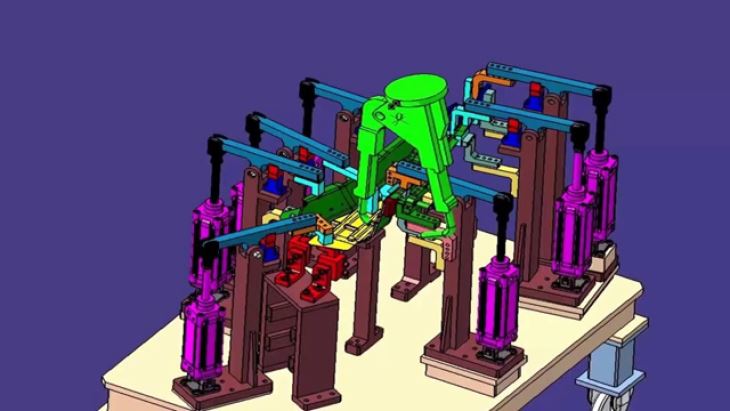
Establishing and enforcing strict safety procedures is crucial for fire prevention. Before starting any welding operation, employees should conduct a pre - start check of the Robotic MIG Weld Fixture. This includes checking the electrical system, the welding torch, and the gas supply.
During the welding process, employees should follow the recommended operating parameters. For example, they should not exceed the maximum current or voltage settings specified for the fixture. After the welding operation is completed, employees should ensure that the fixture is properly shut down and all power sources are turned off.
7. Use of Fire - Resistant Barriers
Fire - resistant barriers can be used to protect the Robotic MIG Weld Fixture and the surrounding area. These barriers can be made of materials such as fire - resistant curtains or shields. They can help contain the spatter and sparks generated during the welding process and prevent them from reaching nearby combustible materials.
For example, if there are flammable storage areas near the welding area, a fire - resistant curtain can be installed between the two areas. This curtain can act as a physical barrier and reduce the risk of fire spreading from the welding area to the storage area.
8. Monitoring and Alarm Systems
In addition to fire detection systems, monitoring and alarm systems can be installed to provide real - time information about the status of the Robotic MIG Weld Fixture. These systems can monitor parameters such as temperature, current, and voltage. If any of these parameters exceed the normal range, an alarm can be triggered.
This early warning system can allow employees to take immediate action to prevent a fire. For example, if the temperature of the fixture starts to rise abnormally, the welding operation can be stopped, and the cause of the overheating can be investigated.
Conclusion
Fire prevention for a Robotic MIG Weld Fixture is a multi - faceted approach that involves facility design, material selection, regular maintenance, fire detection and suppression systems, employee training, safety procedures, use of fire - resistant barriers, and monitoring systems. By implementing these measures, the risk of fires in welding facilities can be significantly reduced.
If you are in the market for a high - quality Robotic MIG Weld Fixture, we are here to help. Our Robotic Welding Fixture Line offers a wide range of solutions to meet your specific needs. We also have the Auto Pillar Parts Welding Fixture which is designed for precision and efficiency. Contact us today to discuss your requirements and start a procurement negotiation.
References
- American Welding Society. (Year). Welding Safety Guidelines.
- National Fire Protection Association. (Year). Fire Prevention Standards for Industrial Welding Facilities.