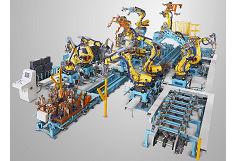
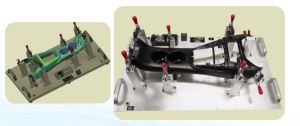
As a seasoned provider of Checking And CMM Fixtures, I've witnessed firsthand the diverse applications and distinct differences between these two types of fixtures. In this blog post, I'll delve into the unique application scenarios of checking fixtures and CMM fixtures, shedding light on their respective strengths and when to use each.
Understanding Checking Fixtures
Checking fixtures are specialized tools designed to verify the dimensional accuracy and form of a part against a predefined set of specifications. They are commonly used in mass production environments where rapid and reliable inspection is crucial. These fixtures are typically custom-built to match the specific geometry of the part being inspected, allowing for quick and easy checks of critical features such as holes, slots, and contours.
One of the primary advantages of checking fixtures is their speed and simplicity. They can be operated by relatively unskilled personnel, making them an ideal solution for high-volume production lines. By providing a go/no-go assessment of part quality, checking fixtures help to identify defective parts early in the manufacturing process, reducing waste and improving overall efficiency.
Another key benefit of checking fixtures is their ability to provide real-time feedback on part quality. This allows operators to make immediate adjustments to the manufacturing process, ensuring that parts meet the required specifications. Additionally, checking fixtures can be used to monitor the stability of the manufacturing process over time, helping to identify trends and potential issues before they become major problems.
Application Scenarios for Checking Fixtures
- Mass Production: In industries such as automotive, aerospace, and consumer electronics, where large quantities of parts are produced, checking fixtures are essential for ensuring consistent quality. They can be used to inspect parts at various stages of the manufacturing process, from raw material inspection to final assembly.
- In-Line Inspection: Checking fixtures are often integrated into production lines to provide continuous inspection of parts as they are being manufactured. This allows for immediate identification and removal of defective parts, minimizing the impact on production efficiency.
- Supplier Quality Control: When sourcing parts from external suppliers, checking fixtures can be used to verify the quality of incoming parts. This helps to ensure that only parts that meet the required specifications are accepted, reducing the risk of production delays and quality issues.
- Process Validation: Before starting a new production run, checking fixtures can be used to validate the manufacturing process and ensure that it is capable of producing parts within the required tolerances. This helps to minimize the risk of costly rework and scrap.
Understanding CMM Fixtures
Coordinate Measuring Machines (CMMs) are highly accurate measuring devices used to determine the dimensions and geometry of a part with a high degree of precision. CMM fixtures are designed to hold the part in a fixed position during the measurement process, ensuring accurate and repeatable results. These fixtures are typically more complex and expensive than checking fixtures, but they offer greater flexibility and accuracy.
One of the main advantages of CMM fixtures is their ability to measure a wide range of part geometries and features. They can be used to measure complex surfaces, free-form shapes, and internal features that are difficult or impossible to measure using traditional checking fixtures. Additionally, CMMs can provide detailed measurement data that can be used for statistical process control and quality analysis.
Another key benefit of CMM fixtures is their accuracy and repeatability. They can measure parts with a high degree of precision, typically within a few microns, making them ideal for applications where tight tolerances are required. Additionally, CMMs can be programmed to perform automated measurements, reducing the potential for human error and increasing productivity.
Application Scenarios for CMM Fixtures
- Precision Manufacturing: In industries such as medical devices, aerospace, and tool and die making, where high precision is required, CMM fixtures are essential for ensuring the quality of parts. They can be used to measure parts at various stages of the manufacturing process, from rough machining to final finishing.
- Reverse Engineering: CMM fixtures can be used to capture the dimensions and geometry of existing parts, allowing for the creation of digital models that can be used for reverse engineering and product development. This is particularly useful in industries where legacy parts need to be replicated or modified.
- Quality Assurance: CMM fixtures are often used in quality assurance departments to perform final inspection of parts before they are shipped to customers. They can provide detailed measurement reports that can be used to verify compliance with customer specifications and industry standards.
- Research and Development: In research and development environments, CMM fixtures can be used to measure and analyze new materials and designs, helping to optimize product performance and reduce development time.
Key Differences in Application Scenarios
While both checking fixtures and CMM fixtures are used for part inspection, there are several key differences in their application scenarios.
- Speed vs. Accuracy: Checking fixtures are designed for rapid inspection and provide a go/no-go assessment of part quality. They are ideal for high-volume production environments where speed is crucial. On the other hand, CMM fixtures are designed for high-precision measurement and provide detailed measurement data. They are ideal for applications where accuracy is the primary concern.
- Complexity vs. Simplicity: Checking fixtures are typically simpler and less expensive than CMM fixtures. They are custom-built to match the specific geometry of the part being inspected, making them easy to use and operate. CMM fixtures, on the other hand, are more complex and require specialized training to operate. They are designed to hold the part in a fixed position during the measurement process, ensuring accurate and repeatable results.
- Volume vs. Flexibility: Checking fixtures are best suited for high-volume production environments where the same part is produced repeatedly. They are designed to provide quick and easy checks of critical features, making them ideal for mass production. CMM fixtures, on the other hand, are more flexible and can be used to measure a wide range of part geometries and features. They are ideal for applications where parts are produced in low volumes or where there is a need for frequent design changes.
Conclusion
In conclusion, checking fixtures and CMM fixtures are both essential tools for part inspection, but they have different strengths and application scenarios. Checking fixtures are ideal for high-volume production environments where speed and simplicity are crucial, while CMM fixtures are ideal for applications where accuracy and flexibility are the primary concerns. By understanding the differences between these two types of fixtures, manufacturers can choose the right tool for the job and ensure the quality of their products.
If you're in the market for Checking And CMM Fixtures, or need more information about Checking Fixture For Plastic Parts or Checking Fixture And Gages, I encourage you to reach out to us. We have the expertise and experience to provide you with the best solutions for your specific needs. Contact us today to discuss your requirements and explore how our fixtures can enhance your manufacturing processes and improve the quality of your products.


References
- Smith, J. (2018). Metrology for Manufacturing Engineers. CRC Press.
- Doebelin, E. O. (2003). Measurement Systems: Application and Design. McGraw-Hill.
- ISO 10360. (2012). Geometrical product specifications (GPS) - Acceptance and reverification tests for coordinate measuring machines (CMM). International Organization for Standardization.