As a dedicated supplier of Checking Fixtures, I've had the privilege of witnessing firsthand the evolution and application of both manual and automated checking fixtures in the manufacturing industry. These tools are essential for ensuring the quality and precision of parts, but they come with distinct characteristics that set them apart. In this blog, I'll delve into the differences between manual and automated checking fixtures, exploring their respective advantages, limitations, and ideal use cases.
Manual Checking Fixtures
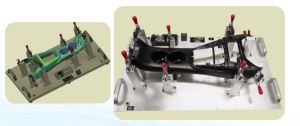
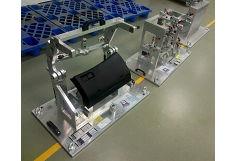
Manual checking fixtures have been a staple in the manufacturing world for decades. They are simple, reliable, and cost - effective solutions for quality control. These fixtures are typically made of metal or plastic and are designed to hold a part in a specific position for inspection.
One of the primary advantages of manual checking fixtures is their simplicity. They are easy to understand and operate, even for workers with minimal training. A technician can simply place a part into the fixture and visually or physically inspect it against pre - defined tolerances. For example, a go - no - go gauge, a common type of manual checking fixture, allows the operator to quickly determine if a part is within the acceptable size range. If the part fits into the "go" end of the gauge but not the "no - go" end, it is considered to be within tolerance.
Another benefit of manual checking fixtures is their low cost. They don't require complex electronics or software, which significantly reduces the initial investment. This makes them an attractive option for small and medium - sized enterprises (SMEs) or for applications where high - volume production is not required. Additionally, manual fixtures are generally more durable and less prone to breakdowns compared to their automated counterparts, which can lead to lower maintenance costs over time.
However, manual checking fixtures also have their limitations. The inspection process is highly dependent on the skill and experience of the operator. Human error can introduce inconsistencies in the inspection results, especially when dealing with complex or intricate parts. Moreover, manual inspection is time - consuming, which can slow down the production process, especially in high - volume manufacturing environments.
Automated Checking Fixtures
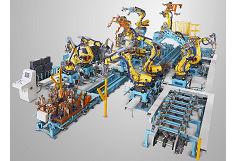
Automated checking fixtures, on the other hand, leverage advanced technologies such as sensors, robotics, and software to perform inspections with high speed and precision. These fixtures are capable of measuring multiple dimensions simultaneously and can provide detailed reports on the part's quality.
One of the most significant advantages of automated checking fixtures is their speed. They can inspect parts much faster than manual methods, which is crucial for high - volume production lines. For example, in the automotive industry, where thousands of parts are produced every day, automated fixtures can ensure that each part meets the strict quality standards without causing bottlenecks in the production process.
Automated checking fixtures also offer high accuracy and repeatability. The use of sensors and software eliminates the potential for human error, ensuring that each part is inspected consistently. This is particularly important for industries where precision is critical, such as aerospace and medical device manufacturing. Additionally, automated fixtures can collect and analyze large amounts of data, which can be used for process improvement and quality control.
However, automated checking fixtures come with a higher price tag. The initial investment in hardware, software, and installation can be substantial, which may not be feasible for some SMEs. Moreover, these fixtures require regular maintenance and calibration to ensure their accuracy, which can add to the overall cost of ownership. They also require a certain level of technical expertise to operate and maintain, which may necessitate additional training for the workforce.
Ideal Use Cases
The choice between manual and automated checking fixtures depends on several factors, including the production volume, part complexity, quality requirements, and budget.
For low - volume production or prototypes, manual checking fixtures are often the best choice. They are cost - effective and can provide a quick and reliable way to verify the quality of parts. For example, a small machine shop that produces custom parts for a niche market may find that manual fixtures are sufficient for their needs.
In high - volume production environments, especially those with strict quality requirements, automated checking fixtures are more suitable. They can handle large numbers of parts quickly and accurately, ensuring that the production process runs smoothly. For instance, in the mass production of consumer electronics, automated fixtures can be used to inspect the dimensions and functionality of components such as circuit boards and connectors.
When dealing with complex parts that require multiple measurements or intricate inspections, automated fixtures may be necessary. Their ability to measure multiple dimensions simultaneously and provide detailed reports makes them well - suited for such applications. For example, in the manufacturing of engine components, where precise tolerances are critical for performance and safety, automated checking fixtures can ensure that each part meets the exact specifications.


Conclusion
In conclusion, both manual and automated checking fixtures have their own unique advantages and limitations. As a [your role] at [your company], I understand the importance of choosing the right fixture for each application. Whether you are looking for a cost - effective solution for low - volume production or a high - speed, high - precision option for high - volume manufacturing, we have the expertise and experience to help you make the best decision.
If you are interested in learning more about our Checking Fixtures, Checking And CMM Fixtures, or Gauges/Checking Fixtures For A/B/C Pillar /Auto Pillar Parts, please don't hesitate to contact us. We are always ready to discuss your specific requirements and provide you with the best solutions for your quality control needs.
References
- Dornfeld, D. A., Minis, I., & Shin, Y. C. (2006). Handbook of Manufacturing Processes. CRC Press.
- Groover, M. P. (2010). Fundamentals of Modern Manufacturing: Materials, Processes, and Systems. Wiley.
- Alting, L., & Zhang, H. (1999). Manufacturing Automation: Metal Cutting Mechanics, Machine Tool Vibrations, and CNC Design. Cambridge University Press.