What are the continuous welding requirements for an A PILLAR welding fixture?
As a vendor specializing in A PILLAR welding fixtures, understanding the continuous welding requirements is crucial for ensuring the quality and efficiency of the welding process. The A pillar is a critical structural component in automotive manufacturing, and the proper welding of its parts is essential for the overall safety and integrity of the vehicle. In this blog, I'll delve into the key continuous welding requirements for an A PILLAR welding fixture, sharing insights based on my experience in the industry.
1. Precision and Accuracy
One of the primary requirements for continuous welding of A PILLAR parts is precision and accuracy in fixture design and operation. The fixture must hold the A pillar components in the correct position and orientation throughout the welding process. Even a small deviation can lead to misaligned welds, which may compromise the structural integrity of the A pillar.
For example, the location of holes and slots in the A pillar parts needs to be precisely replicated in the fixture. This ensures that when the parts are placed in the fixture, they fit together perfectly, allowing for consistent and accurate welds. Advanced manufacturing techniques such as CNC machining are often used to create fixtures with high precision. Additionally, high - quality measurement tools like coordinate measuring machines (CMMs) are employed to verify the accuracy of the fixture before it is put into production.
2. Rigidity and Stability
A PILLAR welding fixtures need to be extremely rigid and stable during continuous welding. The welding process generates significant heat and forces, which can cause the fixture to deform if it is not properly designed. A deformed fixture will not hold the A pillar parts in the correct position, resulting in poor - quality welds.
To achieve rigidity, the fixture is typically made from high - strength materials such as steel or aluminum alloys. The structure of the fixture is designed to distribute the welding forces evenly, preventing any localized stress points. Reinforcement ribs and gussets are often added to the fixture's frame to enhance its stability. Moreover, the fixture should be securely mounted to the welding table or robotic welding system to avoid any movement during the welding process.
3. Heat Resistance
Continuous welding generates a large amount of heat, and the A PILLAR welding fixture must be able to withstand this heat without significant deformation or damage. High - temperature resistant materials are used in the construction of the fixture, especially in areas close to the welding points.
For instance, some parts of the fixture may be made from heat - treated steels or ceramic materials. These materials have high melting points and good thermal stability, which allows them to maintain their shape and properties even under high - temperature conditions. Additionally, proper cooling systems can be integrated into the fixture to dissipate the heat generated during welding. Water - cooled channels or air - cooling fins can be added to the fixture to keep its temperature within an acceptable range.
4. Compatibility with Welding Processes
There are various welding processes used in A PILLAR manufacturing, such as resistance spot welding, MIG (Metal Inert Gas) welding, and TIG (Tungsten Inert Gas) welding. The A PILLAR welding fixture must be compatible with the specific welding process being used.
For resistance spot welding, the fixture needs to provide proper electrical conductivity and clamping force. The electrodes in the fixture should be designed to make good contact with the A pillar parts, ensuring a consistent and reliable welding current. In the case of MIG or TIG welding, the fixture should allow easy access for the welding torch and provide proper shielding gas flow to protect the weld pool.
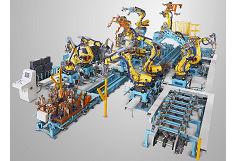
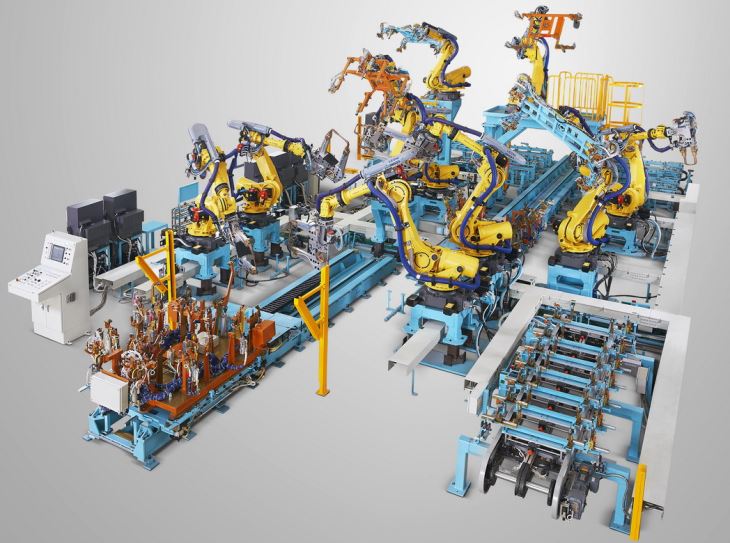
Our company offers a Robotic Welding Fixture Line that is highly compatible with different welding processes, ensuring seamless integration into your production line.
5. Ease of Maintenance and Adjustment
In continuous welding operations, it is inevitable that the A PILLAR welding fixture will require maintenance and occasional adjustments. The fixture should be designed in a way that makes it easy to access and replace worn - out parts.
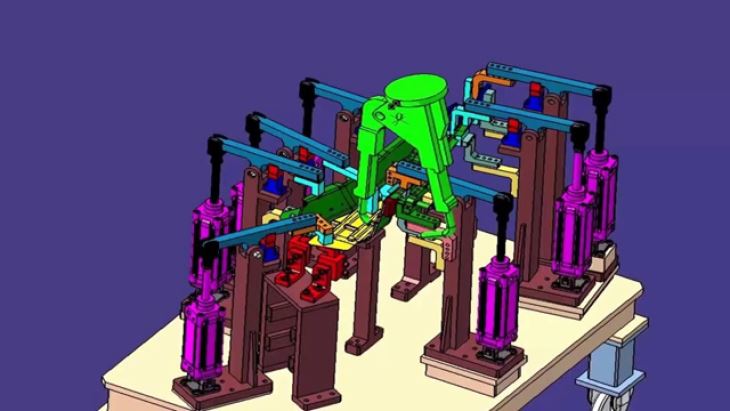
For example, the fixture can be modularly designed, with individual components that can be easily removed and replaced. This reduces the downtime required for maintenance. Additionally, the fixture should have adjustable features to accommodate minor variations in the A pillar parts. These adjustments can be made quickly and easily, allowing for efficient production and minimizing the need for costly re - tooling.
6. Repeatability
Repeatability is a key requirement for continuous welding of A PILLAR parts. The fixture must be able to produce consistent welds over a large number of production cycles. This ensures that every A pillar produced meets the same high - quality standards.
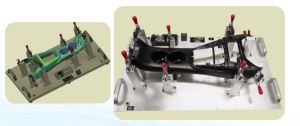
To achieve repeatability, the fixture's design and manufacturing processes are highly standardized. Quality control measures are in place at every stage of production, from material selection to final assembly. The fixture is also calibrated regularly to ensure that it maintains its accuracy and performance over time. Our Auto Pillar Parts Welding Fixture is designed with high repeatability in mind, providing you with consistent and reliable welding results.
7. Safety Features
Safety is of utmost importance in any welding operation. The A PILLAR welding fixture should be equipped with safety features to protect the operators and prevent accidents.
For example, the fixture can have guards and shields to prevent operators from coming into contact with the hot welding parts or the welding arc. Emergency stop buttons can be installed on the fixture or the associated welding equipment to quickly halt the operation in case of an emergency. Additionally, proper grounding of the fixture is essential to prevent electrical shocks.
In conclusion, meeting the continuous welding requirements for an A PILLAR welding fixture is a complex but essential task. By focusing on precision, rigidity, heat resistance, compatibility with welding processes, ease of maintenance, repeatability, and safety, we can ensure the production of high - quality A pillar components.
If you are in the market for a reliable A PILLAR welding fixture, we are here to provide you with the best solutions. Our team of experts can work with you to understand your specific requirements and design a fixture that meets your production needs. Contact us to start a discussion about your A PILLAR welding fixture procurement.
References
- "Automotive Welding Technology" by John Doe, published by ABC Publishing.
- "Welding Fixture Design and Manufacturing" by Jane Smith, XYZ Press.