Hey there! As a supplier of A PILLAR welding fixtures, I've been in the game for quite some time, and I know how crucial it is to have a flexible welding fixture. In this blog, I'm gonna share some tips on how to improve the flexibility of an A PILLAR welding fixture.
Understanding the Importance of Flexibility
First off, let's talk about why flexibility is so important. In the auto manufacturing industry, there are always new models and designs coming out. An inflexible welding fixture can limit your production capabilities and cost you a fortune in terms of time and money when you need to make changes. A flexible A PILLAR welding fixture, on the other hand, allows you to adapt to different product requirements quickly and efficiently.
1. Modular Design
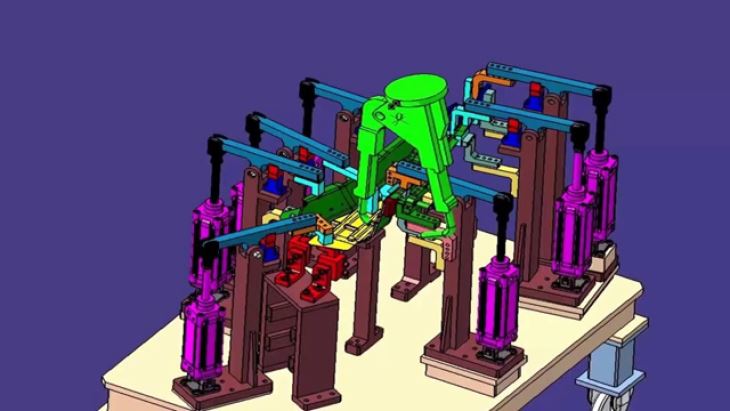
One of the best ways to improve flexibility is by adopting a modular design for your A PILLAR welding fixture. A modular fixture consists of multiple interchangeable modules that can be easily assembled and disassembled. This means you can reconfigure the fixture to suit different welding tasks and part geometries.
For example, instead of having a single, monolithic fixture for a specific A PILLAR design, you can break it down into smaller modules for different sections of the pillar. When a new design comes along, you can simply swap out the relevant modules rather than replacing the entire fixture. This not only saves time but also reduces the cost of tooling changes.
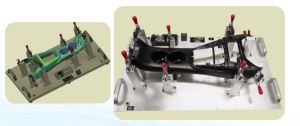
You can check out more about modular Auto Pillar Parts Welding Fixture on our website, which showcases some of the innovative modular designs we offer.
2. Adjustable Components
Another key aspect is using adjustable components in your A PILLAR welding fixture. Components such as clamps,定位 pins, and supports should be adjustable to accommodate different part sizes and shapes.
For instance, adjustable clamps can be tightened or loosened to hold different thicknesses of A PILLAR parts securely. Similarly, adjustable定位 pins can be moved to different positions to align parts accurately. By having these adjustable components, you can easily make minor adjustments to the fixture without having to go through a major retooling process.
3. Quick - Change Systems
Implementing quick - change systems can significantly enhance the flexibility of your A PILLAR welding fixture. Quick - change systems allow you to swap out fixtures or parts of the fixture rapidly.
There are various types of quick - change systems available, such as mechanical, hydraulic, or pneumatic systems. For example, a mechanical quick - change system might use a simple locking mechanism that allows you to attach and detach modules in a matter of minutes. This is especially useful when you need to switch between different A PILLAR models during production.
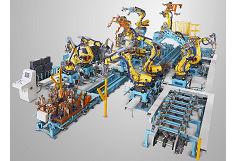
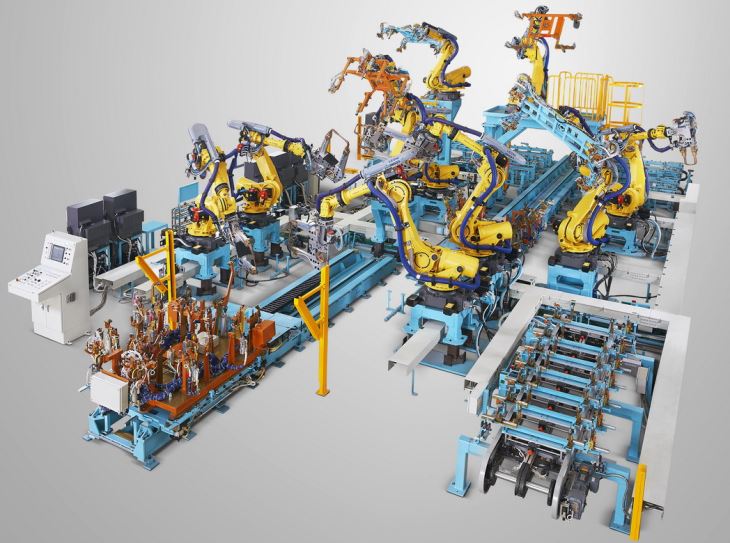
Our Robotic Welding Fixture Line often incorporates quick - change systems to enable seamless transitions between different welding tasks.
4. Software - Controlled Adjustments
In today's digital age, software - controlled adjustments are becoming increasingly popular. By integrating software with your A PILLAR welding fixture, you can make precise adjustments remotely.
For example, you can use a computer - controlled system to adjust the position of clamps, the pressure applied by the fixture, or the angle of welding guns. This not only improves the accuracy of the welding process but also allows for quick and easy changes when needed. With software - controlled adjustments, you can store different fixture settings for various A PILLAR designs, making it even more convenient to switch between products.
5. Training and Skill Development
It's not just about the hardware; the people operating the A PILLAR welding fixture also play a crucial role in its flexibility. Providing proper training to your operators is essential.
Operators should be trained on how to reconfigure the fixture, use adjustable components, and operate quick - change systems. They should also be familiar with the software - controlled adjustments if applicable. By having skilled operators, you can ensure that the fixture is used to its full potential and that any necessary changes are made efficiently.
6. Continuous Improvement
Flexibility is not a one - time achievement; it's an ongoing process. You should constantly evaluate your A PILLAR welding fixture and look for ways to improve its flexibility.
Collect feedback from your operators, customers, and other stakeholders. Analyze production data to identify areas where the fixture could be more adaptable. Based on this feedback and analysis, make incremental changes to the fixture design or its operating procedures.
Conclusion
Improving the flexibility of an A PILLAR welding fixture is essential for staying competitive in the auto manufacturing industry. By adopting a modular design, using adjustable components, implementing quick - change systems, incorporating software - controlled adjustments, providing proper training, and continuously improving, you can make your fixture more adaptable to different product requirements.
If you're in the market for a flexible A PILLAR welding fixture or want to discuss how we can improve the flexibility of your existing fixture, don't hesitate to reach out. We're here to help you optimize your production processes and stay ahead of the curve.
References
- Industry reports on auto manufacturing tooling trends
- Technical manuals on welding fixture design and operation