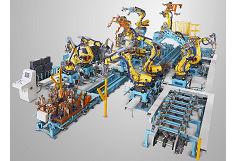
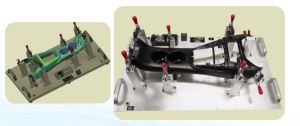
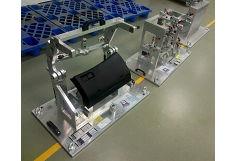
In the automotive manufacturing industry, rear seats welding jigs play a crucial role in ensuring the quality and precision of seat assembly. As a rear seats welding jig supplier, I understand the significance of collecting and analyzing data from these jigs. This process not only helps in maintaining high - quality standards but also in optimizing the manufacturing process. In this blog, I will share some insights on how to effectively collect and analyze data from rear seats welding jigs.
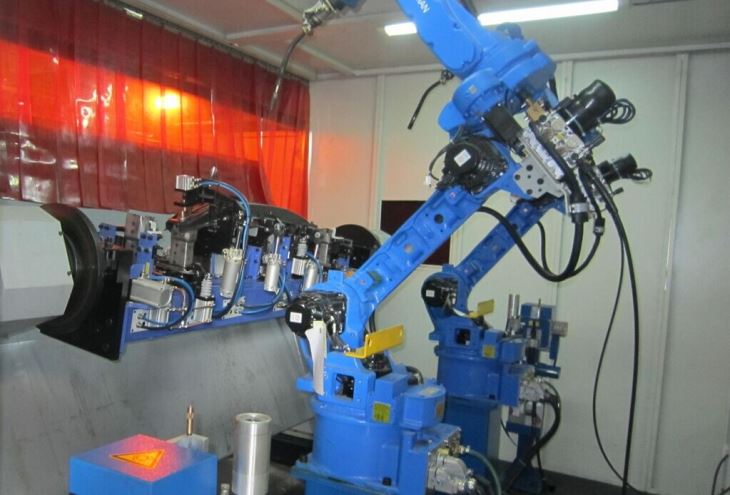

Data Collection
Sensor Installation
The first step in data collection is to install appropriate sensors on the rear seats welding jigs. Sensors can measure various parameters such as temperature, pressure, displacement, and welding current. For example, temperature sensors can be placed near the welding points to monitor the heat generated during the welding process. This is important because excessive heat can lead to distortion of the seat components, while insufficient heat may result in poor weld quality.
Pressure sensors can be used to measure the force applied during the clamping process. Proper clamping is essential to ensure that the seat parts are held firmly in place during welding, preventing misalignment. Displacement sensors can detect any movement or misalignment of the components during the welding operation. Welding current sensors are used to monitor the electrical current flowing through the welding electrodes, which directly affects the quality of the weld.
Data Logging Systems
Once the sensors are installed, a data logging system is required to record the data. There are various types of data logging systems available in the market, ranging from simple handheld devices to sophisticated industrial - grade systems. The data logging system should be able to store the data over a long period of time and have the capacity to handle large amounts of data.
It is also important to ensure that the data logging system is compatible with the sensors being used. Some data logging systems can be programmed to record data at specific intervals, while others can be set to trigger recording based on certain events, such as a change in temperature or pressure. This flexibility allows for efficient data collection, ensuring that all relevant information is captured.
Connectivity and Communication
To make the data collection process more efficient, it is advisable to establish a connectivity and communication network. This can be achieved through wired or wireless connections. Wired connections, such as Ethernet or serial cables, provide a stable and reliable data transfer. Wireless connections, on the other hand, offer more flexibility, allowing the data to be transferred without the need for physical cables.
Many modern data logging systems support wireless communication protocols, such as Wi - Fi or Bluetooth. This enables the data to be transferred directly to a central server or a cloud - based storage system. By having the data stored in a central location, it becomes easier to access and analyze the data from multiple jigs simultaneously.
Data Analysis
Statistical Analysis
Once the data is collected, statistical analysis techniques can be applied to identify trends and patterns. For example, mean, median, and standard deviation can be calculated for each parameter. These statistical measures can provide insights into the overall performance of the rear seats welding jigs.
If the standard deviation of the welding current is too high, it may indicate that there are issues with the welding power supply or the electrodes. Similarly, a significant variation in the clamping pressure may suggest problems with the clamping mechanism. By analyzing the statistical data, potential problems can be identified early, allowing for timely corrective actions.
Trend Analysis
Trend analysis involves plotting the data over time to identify any long - term changes or patterns. This can help in predicting future performance and detecting any gradual deterioration in the quality of the welding process. For example, if the temperature at the welding points is gradually increasing over time, it may be a sign of a problem with the cooling system or the welding electrodes.
Trend analysis can also be used to compare the performance of different rear seats welding jigs. By comparing the data from multiple jigs, it is possible to identify the best - performing jigs and determine if there are any common issues that need to be addressed across the production line.
Root Cause Analysis
When a problem is identified through data analysis, root cause analysis is required to determine the underlying cause of the problem. This involves a systematic approach of asking "why" questions to drill down to the root cause. For example, if the weld quality is poor, the first question might be "Why is the weld quality poor?" The answer could be "Because the welding current is unstable." Then the next question would be "Why is the welding current unstable?" This process continues until the root cause, such as a faulty power supply or a damaged electrode, is identified.
Once the root cause is identified, appropriate corrective actions can be taken. This may involve replacing a faulty component, adjusting the operating parameters, or improving the maintenance schedule.
Benefits of Data Collection and Analysis
Quality Improvement
By collecting and analyzing data from rear seats welding jigs, it is possible to identify and address quality issues early in the manufacturing process. This helps in reducing the number of defective products, improving customer satisfaction, and minimizing the cost of rework and scrap.
Process Optimization
Data analysis can also be used to optimize the welding process. By understanding the relationship between different parameters, such as temperature, pressure, and welding current, it is possible to adjust the operating conditions to achieve the best possible weld quality. This can lead to increased productivity, reduced energy consumption, and lower manufacturing costs.
Predictive Maintenance
Another benefit of data collection and analysis is predictive maintenance. By monitoring the performance of the rear seats welding jigs over time, it is possible to predict when a component is likely to fail. This allows for proactive maintenance, reducing the risk of unplanned downtime and improving the overall reliability of the production line.
Industry Applications and Related Products
In the automotive industry, the data collected from rear seats welding jigs can be integrated with other manufacturing processes. For example, the data can be used in conjunction with Automotive Seat Welding Fixture to ensure the overall quality of the seat assembly. Similarly, the data can be related to Car Stamping Parts checking fixture to maintain the precision of the car body components. And Front Bumper Welding Fixture can also benefit from the data analysis to improve the welding quality of the front bumper.
Conclusion
Collecting and analyzing data from rear seats welding jigs is an essential part of the automotive manufacturing process. It helps in ensuring high - quality products, optimizing the manufacturing process, and reducing costs. As a rear seats welding jig supplier, I am committed to providing solutions that enable efficient data collection and analysis. If you are interested in learning more about our rear seats welding jigs or discussing how data collection and analysis can benefit your manufacturing process, please feel free to reach out for procurement and negotiation.
References
- Automotive Manufacturing Handbook: Assembly and Joining Processes
- Welding Technology: Principles and Applications
- Industrial Data Analysis and Quality Control: A Practical Guide