Hey there! As a supplier of checking fixtures, I'm super excited to take you on a journey through the history of these nifty tools. Checking fixtures, also known as gauges, have been around for ages and have played a crucial role in the manufacturing world.
Early Beginnings
Let's start way back in the day. The concept of measuring and checking the quality of parts dates back to ancient civilizations. The Egyptians, for example, were pretty good at building things, and they needed a way to make sure their bricks and stones were the right size and shape. They used simple tools like ropes and sticks to measure lengths and angles. These were the very first forms of what we now call checking fixtures.
Fast forward to the Industrial Revolution in the 18th and 19th centuries. This was a game - changer for manufacturing. With the rise of mass production, the need for consistent quality became even more important. Factories were churning out thousands of parts, and it was essential to ensure that each part met the required specifications.
At this time, simple mechanical gauges started to emerge. These were basic devices made of metal, often with a scale and a pointer. Workers would use them to measure the dimensions of parts such as the diameter of a shaft or the thickness of a plate. For instance, a micrometer, which is a type of precision gauge, was developed during this period. It allowed for much more accurate measurements compared to the earlier rope - and - stick methods.
The Mid - 20th Century: Advancements in Technology
In the mid - 20th century, technology took a huge leap forward. The development of new materials and manufacturing processes led to the creation of more sophisticated checking fixtures. The introduction of plastics and composites meant that gauges could be made lighter and more durable.
Automation also started to play a big role. Instead of manually measuring each part, automated checking systems were developed. These systems used sensors and computers to quickly and accurately measure multiple dimensions of a part at once. This was a massive improvement in terms of efficiency and accuracy. For example, coordinate measuring machines (CMMs) were introduced. These machines could measure the three - dimensional coordinates of points on a part's surface, allowing for a detailed analysis of its shape and size.
Modern Day: High - Tech Checking Fixtures
Today, checking fixtures have reached a whole new level of sophistication. With the advent of digital technology, we now have smart gauges that can communicate wirelessly with computers and other devices. These gauges can store data, analyze it, and even provide real - time feedback on the quality of a part.
3D printing has also had a significant impact on the production of checking fixtures. It allows for the rapid prototyping of custom gauges. Instead of waiting weeks or months for a gauge to be manufactured using traditional methods, we can now print a prototype in a matter of hours. This not only saves time but also reduces costs.
As a Checking Fixture Manufacturer, we're at the forefront of these technological advancements. We use the latest software and manufacturing techniques to create high - quality checking fixtures that meet the diverse needs of our customers.


Different Types of Checking Fixtures
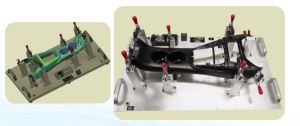
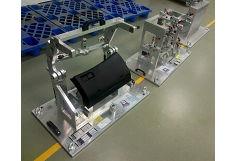
There are various types of checking fixtures used in different industries. For example, in the automotive industry, Gauges/Checking Fixtures For A/B/C Pillar /Auto Pillar Parts are crucial. These gauges are used to ensure that the A, B, and C pillars of a car meet the strict safety and aesthetic standards. They measure things like the curvature, thickness, and alignment of these parts.
In the stamping industry, Stamping Checking Fixture Manufacturer Supplier provide fixtures that are designed to check the quality of stamped parts. These fixtures can detect defects such as cracks, dents, and incorrect dimensions. They play a vital role in ensuring that the stamped parts are fit for use in various products.
The Future of Checking Fixtures
Looking ahead, the future of checking fixtures is very promising. We can expect to see even more integration of artificial intelligence and machine learning. These technologies will allow checking fixtures to learn from past measurements and make more accurate predictions about the quality of future parts.
The use of virtual reality (VR) and augmented reality (AR) in the inspection process is also on the horizon. Workers could use VR/AR headsets to visualize parts in 3D and perform virtual inspections, which would be much more immersive and efficient.
Why Choose Us as Your Checking Fixture Supplier
As a checking fixture supplier, we have a wealth of experience in the industry. We understand the unique requirements of different customers and industries. Our team of experts is constantly working on improving our products and services to stay ahead of the curve.
We offer a wide range of checking fixtures, from simple mechanical gauges to high - tech digital devices. All our products are made using the highest quality materials and are rigorously tested to ensure accuracy and reliability.
If you're in the market for checking fixtures, whether it's for automotive, stamping, or any other industry, I encourage you to get in touch with us. We'd be more than happy to discuss your needs and provide you with the best solutions. Let's work together to ensure the quality of your products and take your manufacturing processes to the next level.
References
- "A History of Manufacturing Technology" by John T. Black
- "Precision Measurement and Calibration" by National Institute of Standards and Technology (NIST)
- "Automotive Manufacturing Technology" by J. S. Grewal