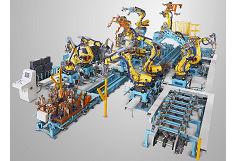
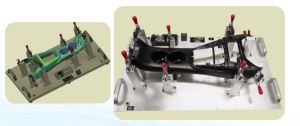
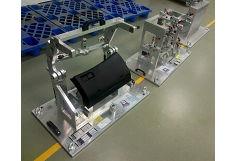
Hey there! I'm a supplier of Auto Welding Jig in China. If you're in the auto - manufacturing business, you know how crucial it is to have well - adjusted welding jigs. In this blog, I'll share some tips on how to adjust the parameters of Chinese Auto Welding Jigs.
Understanding the Basics of Auto Welding Jigs
First things first, let's talk a bit about what auto welding jigs are. These are tools used in the automotive industry to hold and position parts during the welding process. They ensure that the parts are in the right place and at the correct angle, which is super important for a high - quality weld.
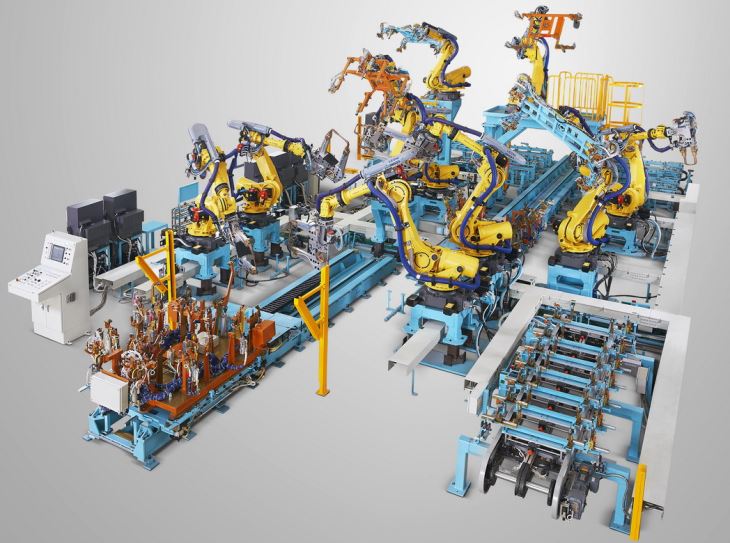
As a supplier, I've seen all kinds of welding jigs, from simple ones for small parts to complex Robotic Welding Fixture Line that are used in large - scale production. Each type has its own set of parameters that need to be adjusted properly.
Key Parameters to Adjust
1. Positioning Accuracy
One of the most important parameters is positioning accuracy. The jig has to hold the parts precisely where they need to be. If the parts are even slightly misaligned, it can lead to weak welds or parts that don't fit together correctly later on.
To adjust the positioning accuracy, you need to use precision measuring tools. I usually recommend using calipers and micrometers to measure the distances between different points on the jig. Make sure to check the alignment in both the X, Y, and Z axes. If you find any discrepancies, you can adjust the stops or clamps on the jig. These stops and clamps are what hold the parts in place, so getting them right is key.
2. Clamping Force
Clamping force is another crucial parameter. The jig needs to hold the parts firmly enough during the welding process to prevent any movement, but not so tightly that it damages the parts.
If the clamping force is too low, the parts might shift during welding, causing uneven welds. On the other hand, if it's too high, it could deform the parts. You can adjust the clamping force by changing the pressure settings on the clamping devices. Most modern jigs have adjustable clamps that allow you to fine - tune the force. Just be careful when making these adjustments, and test the force on a sample part first.
3. Welding Angle
The welding angle can greatly affect the quality of the weld. Different types of welds require different angles. For example, a fillet weld might need a different angle than a butt weld.
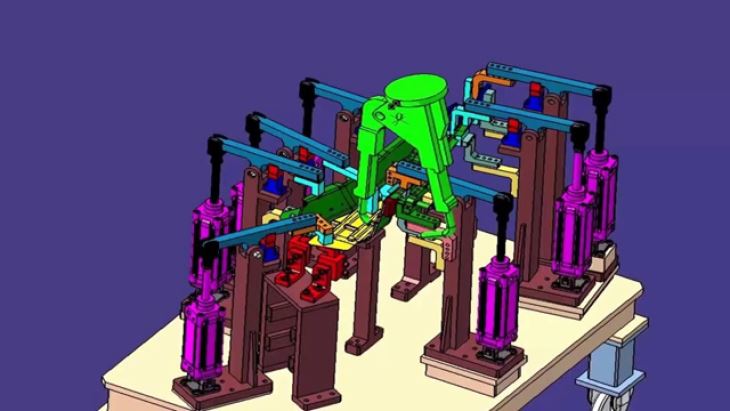
To adjust the welding angle, you can usually adjust the orientation of the welding torch holder on the jig. Some jigs have adjustable arms or brackets that let you change the angle easily. Make sure to follow the welding specifications for the particular part you're working on. You can refer to the engineering drawings or welding procedures to get the correct angle.
4. Welding Current and Voltage
These electrical parameters are also vital for a good weld. The welding current determines the heat input, while the voltage affects the arc length.
If the current is too low, the weld might not penetrate the parts properly. If it's too high, it could cause excessive spatter and damage the parts. The voltage also needs to be set correctly to maintain a stable arc. You can adjust these parameters on the welding machine itself. It's a good idea to do some test welds on scrap parts to find the optimal current and voltage settings for your specific jig and parts.
Step - by - Step Adjustment Process
Step 1: Inspection
Before making any adjustments, thoroughly inspect the jig. Look for any signs of wear and tear, such as loose bolts, damaged clamps, or bent parts. Replace any worn - out components to ensure the jig is in good working condition.
Step 2: Set the Base Parameters
Based on the part specifications, set the initial values for the positioning accuracy, clamping force, welding angle, and electrical parameters. Use the measuring tools and adjustment mechanisms as described above.
Step 3: Test Weld
Do a test weld on a sample part. This will give you a good idea of how well the current settings are working. Check the quality of the weld, including its strength, appearance, and penetration. If there are any issues, note them down and make the necessary adjustments.
Step 4: Fine - Tuning
Keep making small adjustments to the parameters based on the results of the test weld. It might take a few tries to get everything just right. Remember to document all the changes you make so you can refer back to them later.
Step 5: Final Check
Once you're satisfied with the test weld, do a final check of all the parameters. Make sure everything is still within the acceptable range. Then, you're ready to start using the jig for production.
Special Considerations for Different Types of Jigs
Robotic Welding Fixture Line
Robotic welding fixture lines are used in high - volume production. They often have more complex control systems. When adjusting the parameters for these jigs, you need to work closely with the robotic programming team. The robot's movements and the jig's settings need to be coordinated perfectly.
You also need to ensure that the sensors on the jig are working correctly. These sensors are used to detect the position of the parts and can affect the accuracy of the welding process.
Auto Pillar Parts Welding Fixture
Auto pillar parts are critical for the structural integrity of the vehicle. When adjusting the parameters of the welding fixture for these parts, extra care is needed. The positioning accuracy and clamping force are especially important.
Pillar parts are often made of high - strength steel, which can be more difficult to weld. You might need to adjust the welding current and voltage to account for the material properties.
Conclusion
Adjusting the parameters of Chinese Auto Welding Jigs is a process that requires attention to detail and some trial - and - error. By following the steps and tips I've shared in this blog, you can ensure that your jigs are set up correctly and produce high - quality welds.
If you're in the market for Auto Welding Jigs or need help with parameter adjustment, don't hesitate to reach out. We're here to assist you with all your welding jig needs. Whether you're a small - scale auto parts manufacturer or a large - scale production facility, we can provide the right solutions for you. Let's start a conversation about your requirements and see how we can work together to improve your welding processes.
References
- Welding Handbook, American Welding Society
- Automotive Manufacturing Technology, Society of Automotive Engineers