In the field of precision manufacturing, especially for industries like automotive, accurate measurement of components is crucial. A Cupholder CMM (Coordinate Measuring Machine) holding jig plays a significant role in this process. As a supplier of Cupholder CMM holding jigs, I have witnessed firsthand the impact of these jigs on measurement accuracy. In this blog, I will delve into the various aspects of how a Cupholder CMM holding jig affects measurement accuracy.
The Basics of CMM and Holding Jigs
Before we explore the impact on measurement accuracy, let's briefly understand what a CMM and a holding jig are. A Coordinate Measuring Machine is a device used to measure the physical geometrical characteristics of an object. It can precisely determine the position of points on the surface of an object in a three - dimensional space. This makes it an essential tool in quality control and manufacturing processes, especially when dealing with complex parts like cupholders.
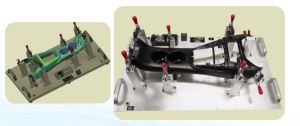
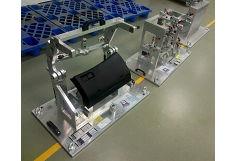
A holding jig, on the other hand, is a tool designed to securely hold the workpiece (in this case, a cupholder) in place during the measurement process. It ensures that the cupholder remains in a fixed and repeatable position, allowing the CMM to accurately measure its dimensions.
Positive Impacts on Measurement Accuracy
1. Stability and Repeatability
One of the most significant impacts of a Cupholder CMM holding jig on measurement accuracy is the provision of stability and repeatability. When a cupholder is placed in a well - designed holding jig, it is firmly held in position. This eliminates any movement or vibration during the measurement process. For example, if the cupholder were to shift even slightly while the CMM probe is taking measurements, it could lead to inaccurate readings.
A high - quality holding jig ensures that every time a cupholder is placed in it, it is positioned in the exact same way. This repeatability is crucial for consistent measurement results. In a manufacturing environment where multiple cupholders need to be measured, the ability to reproduce the same measurement conditions for each part is essential for ensuring product quality.
2. Reduction of Human Error
Human error can significantly affect measurement accuracy. When manually holding a cupholder for measurement, it is easy to introduce inconsistencies in the positioning. A Cupholder CMM holding jig minimizes this risk. Operators simply need to place the cupholder in the jig, and the jig takes care of the proper positioning. This reduces the variability in measurements caused by differences in how different operators hold the part.
For instance, if an operator holds the cupholder at a slightly different angle each time, the CMM will measure different dimensions. With a holding jig, the cupholder is always held at the correct angle, ensuring more accurate and reliable measurements.
3. Protection of the Workpiece
A good holding jig not only holds the cupholder in place but also protects it from damage during the measurement process. Some CMM probes can exert a certain amount of force on the workpiece. If the cupholder is not properly supported, this force could cause deformation, leading to inaccurate measurements.
The holding jig distributes the force evenly across the cupholder, preventing any local deformation. This is particularly important for cupholders made of soft materials or with complex geometries, where even a small amount of deformation can significantly affect the measurement results.
Negative Impacts if the Holding Jig is Defective
1. Misalignment
If the Cupholder CMM holding jig is not manufactured to the correct specifications, it can cause misalignment of the cupholder. Misalignment means that the cupholder is not placed in the position that the CMM is calibrated to measure. As a result, the measurements taken will be inaccurate.
For example, if the holes in the holding jig that are supposed to align with the mounting points of the cupholder are off by a few millimeters, the cupholder will be tilted or shifted. This will lead to incorrect measurements of its diameter, height, and other critical dimensions.
2. Wear and Tear
Over time, holding jigs can experience wear and tear. This can be due to repeated use, exposure to harsh environments, or improper handling. When a holding jig is worn out, its ability to hold the cupholder accurately is compromised.
For instance, if the clamping mechanism of the holding jig becomes loose, the cupholder may not be held firmly in place. This can result in movement during measurement, leading to inaccurate readings. Regular maintenance and inspection of the holding jigs are necessary to ensure their continued accuracy.
Factors to Consider in a High - Quality Cupholder CMM Holding Jig
1. Material Selection
The material used to manufacture the holding jig is crucial. It should be strong enough to withstand the forces exerted during the measurement process and resistant to wear and corrosion. Common materials include aluminum alloys and high - strength plastics. Aluminum alloys are lightweight, have good thermal stability, and can be easily machined to the required precision. High - strength plastics, on the other hand, are often used for their low cost and good damping properties, which can help reduce vibration.
2. Design Precision
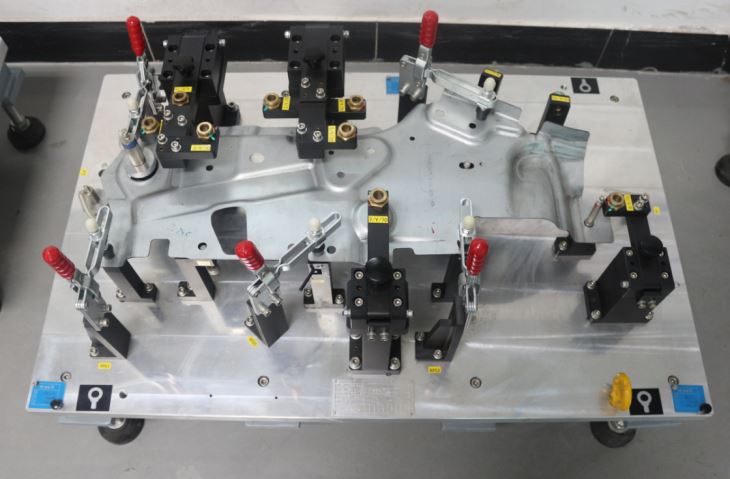
The design of the holding jig must be precise. It should be designed to fit the specific geometry of the cupholder. This includes considering the shape, size, and mounting points of the cupholder. A well - designed holding jig will have features such as locators, clamps, and supports that are accurately positioned to ensure proper alignment and holding of the cupholder.
3. Compatibility with CMM
The holding jig should be compatible with the CMM being used. This means that it should not interfere with the movement of the CMM probe and should be positioned in a way that allows the probe to access all the necessary measurement points on the cupholder.

Conclusion
In conclusion, a Cupholder CMM holding jig has a profound impact on measurement accuracy. When properly designed and maintained, it can significantly improve the stability, repeatability, and reliability of measurements. However, if the holding jig is defective or worn out, it can lead to inaccurate measurements.
As a supplier of Cupholder CMM Holding Fixture and Auto Metal Parts CMM Holding Fixture, we understand the importance of providing high - quality holding jigs. Our products are designed with precision, using the best materials and manufacturing processes to ensure optimal performance.
If you are in the market for Cupholder CMM holding jigs or have any questions about how they can improve your measurement accuracy, we invite you to contact us for a detailed discussion and to explore potential business opportunities. We are committed to helping you achieve the highest level of measurement accuracy in your manufacturing processes.
References
- Smith, J. (2018). Precision Measurement in Manufacturing. Industrial Press.
- Johnson, A. (2019). Coordinate Measuring Machines: Principles and Applications. McGraw - Hill.