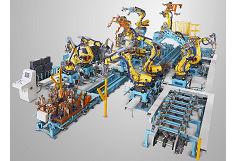
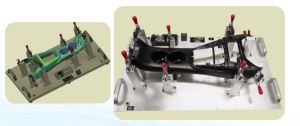
In the highly competitive manufacturing industry, welding jig manufacturers are constantly seeking ways to improve production efficiency. As a supplier in this field, I understand the challenges and opportunities that come with enhancing the efficiency of welding jig production. In this blog, I will share some practical strategies and insights based on my experience to help us all boost productivity and stay ahead in the market.
1. Optimize the Design Process
The design phase is the foundation of efficient production. A well - designed welding jig can significantly reduce manufacturing time and costs. Firstly, we should adopt advanced 3D modeling software. Programs like SolidWorks or AutoCAD allow us to create detailed and accurate virtual models of welding jigs. By visualizing the final product in a digital environment, we can identify potential design flaws early on, such as interference between components or difficult - to - reach areas for welding. This proactive approach saves time that would otherwise be spent on rework during the production stage.
Secondly, standardization is key. We can develop a library of standard components and design templates. For example, common clamps, brackets, and alignment pins can be pre - designed and reused across different welding jig projects. This not only speeds up the design process but also simplifies inventory management. When a new order comes in, designers can quickly assemble a custom jig using the existing standard parts, reducing the time spent on starting from scratch.
2. Upgrade Manufacturing Equipment
Investing in modern manufacturing equipment is essential for improving production efficiency. CNC (Computer Numerical Control) machines are a game - changer in the welding jig manufacturing process. CNC milling machines, lathes, and laser cutters offer high precision and repeatability. They can produce complex shapes and parts with minimal human intervention, which reduces the risk of human error and increases the production speed.
For instance, a CNC laser cutter can cut metal sheets with great accuracy and speed. It can follow the programmed design precisely, resulting in clean and consistent cuts. This is especially important for welding jigs, where accurate dimensions are crucial for proper alignment during the welding process. Additionally, automated welding equipment can also be introduced. Robotic welding systems can perform repetitive welding tasks at a much faster rate than manual welding, with better quality control. They can work continuously without fatigue, ensuring a steady output of high - quality welding jigs.
3. Implement Lean Manufacturing Principles
Lean manufacturing focuses on eliminating waste and maximizing value - added activities. One of the core principles of lean manufacturing is 5S (Sort, Set in order, Shine, Standardize, Sustain). In our workshop, we can sort through the tools, materials, and equipment, removing any unnecessary items. This decluttering makes it easier to find what we need quickly, reducing the time wasted on searching for tools during the production process.
We should also set everything in order. Designated storage areas for different types of components and tools can be established. For example, all clamps can be stored in one rack, and all measuring tools in another. This organized layout improves workflow and reduces the time spent on moving around the workshop. Shining involves keeping the workplace clean and well - maintained. A clean environment not only promotes safety but also helps to identify any potential issues, such as equipment malfunctions, early on.
Standardizing work processes is another important aspect of lean manufacturing. By documenting the best practices for each step of the welding jig production process, we can ensure that all workers follow the same procedures. This consistency leads to higher quality products and fewer errors. Finally, sustaining these practices requires continuous training and monitoring. Regular audits can be conducted to ensure that the 5S principles are being adhered to.
4. Improve Supply Chain Management
A well - managed supply chain is crucial for efficient production. We need to establish strong relationships with our suppliers. By working closely with them, we can negotiate better prices, shorter lead times, and more reliable delivery schedules. For example, we can enter into long - term contracts with key suppliers, which gives them the incentive to prioritize our orders and invest in improving their own production processes.
Inventory management is also a critical part of supply chain management. We should implement an inventory control system that allows us to track the stock levels of raw materials and components in real - time. This helps to prevent overstocking, which ties up capital, and understocking, which can lead to production delays. Just - in - time (JIT) inventory management can be adopted, where materials are delivered exactly when they are needed in the production process. This reduces inventory holding costs and minimizes the risk of obsolescence.
5. Enhance Employee Training and Skills
Our employees are the most valuable asset in the production process. Providing them with comprehensive training is essential for improving production efficiency. Technical training on operating the latest manufacturing equipment, such as CNC machines and robotic welding systems, can significantly increase their productivity. Workers who are well - trained can operate the equipment more effectively, produce higher - quality parts, and troubleshoot problems more quickly.
Soft skills training is also important. Communication skills training can improve the collaboration between different departments, such as design, production, and quality control. When employees can communicate effectively, they can share information more efficiently, resolve issues faster, and work together towards common goals. Additionally, problem - solving and decision - making training can empower employees to take initiative and make informed decisions on the production floor, reducing the need for constant supervision.
6. Use Data Analytics for Process Improvement
In the era of Industry 4.0, data analytics has become a powerful tool for improving production efficiency. We can collect data from various sources in the production process, such as machine sensors, quality control inspections, and production schedules. By analyzing this data, we can identify bottlenecks, trends, and areas for improvement.
For example, if the data shows that a particular CNC machine is frequently experiencing downtime, we can investigate the root cause, such as maintenance issues or programming errors. By addressing these issues, we can increase the overall availability of the machine and improve production throughput. Data analytics can also be used to optimize production schedules. By analyzing historical production data, we can predict demand more accurately and schedule production accordingly, reducing idle time and maximizing resource utilization.
7. Foster a Culture of Continuous Improvement
Finally, creating a culture of continuous improvement is vital for long - term success. Encouraging employees at all levels to suggest ideas for improvement can lead to innovative solutions. We can set up suggestion boxes or hold regular improvement workshops where employees can share their thoughts and experiences.
Management should also lead by example and actively support improvement initiatives. Recognizing and rewarding employees for their contributions to improving production efficiency can further motivate them to continue seeking better ways of working. This culture of continuous improvement ensures that our company is always evolving and adapting to changing market demands and technological advancements.
In conclusion, improving production efficiency is a multi - faceted challenge for welding jig manufacturers. By optimizing the design process, upgrading manufacturing equipment, implementing lean manufacturing principles, improving supply chain management, enhancing employee training, using data analytics, and fostering a culture of continuous improvement, we can significantly increase our productivity and competitiveness in the market.
If you are in the market for high - quality welding jigs and are looking for a reliable supplier, we would be delighted to have a conversation with you. Our team of experts is ready to understand your specific requirements and provide you with customized solutions. Contact us to start a procurement discussion and discover how we can meet your welding jig needs.
References: - Ohno, Taiichi. "Toyota Production System: Beyond Large - Scale Production." Productivity Press, 1988. - Womack, James P., and Daniel T. Jones. "Lean Thinking: Banish Waste and Create Wealth in Your Corporation." Simon & Schuster, 1996. - Pyzdek, Thomas, and Paul A. Keller. "The Six Sigma Handbook." McGraw - Hill Education, 2014.