Hey there! I'm a supplier of A PILLAR welding fixtures, and today I wanna chat about whether an A PILLAR welding fixture can be integrated with other equipment.
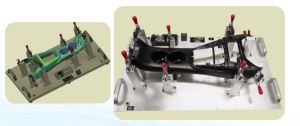
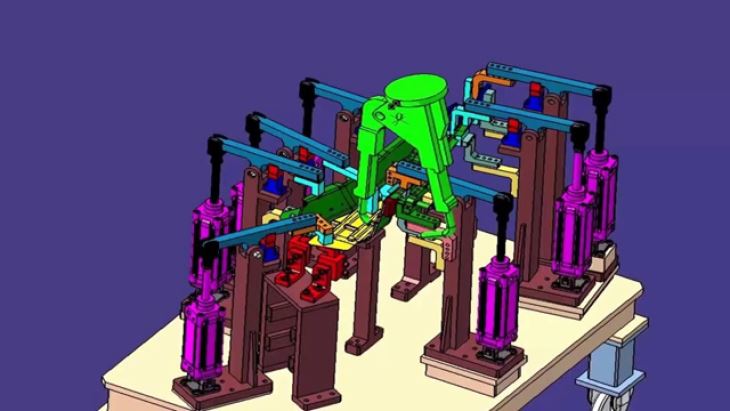
First off, let's talk about what an A PILLAR welding fixture is. It's a crucial tool in the automotive manufacturing process. The A pillar is that part of the car frame that runs from the roof to the front of the vehicle, on either side of the windshield. A good A PILLAR welding fixture ensures precise welding of the A pillar components, which is super important for the overall structural integrity and safety of the car.
Now, the big question: Can it be integrated with other equipment? The short answer is yes, and here's why and how.
Integration with Robotic Welding Systems
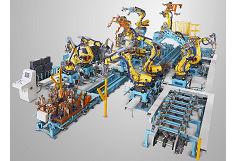
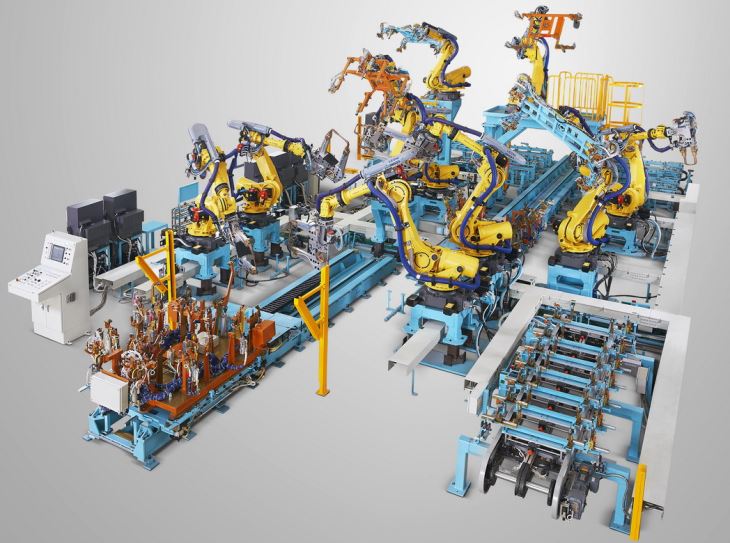
One of the most common integrations is with robotic welding systems. Robots have become a staple in modern manufacturing due to their precision, speed, and ability to work around the clock without getting tired. When an A PILLAR welding fixture is integrated with a robotic welding system, it can significantly boost the efficiency of the welding process.
The fixture holds the A pillar components in place with high accuracy. The robot, on the other hand, can be programmed to perform the welding tasks with consistent quality. For example, it can follow a pre - defined welding path, adjust the welding parameters like current and voltage based on the specific requirements of the A pillar. This combination results in faster production times and fewer defects. You can check out more about Robotic Welding Fixture Line to see how these systems work together.
The integration process usually involves some technical know - how. The fixture needs to be designed in a way that it can be easily interfaced with the robotic system. This might include things like having the right mounting points, communication ports for data transfer, and compatibility with the robot's programming language.
Integration with Conveyor Systems
Another great integration option is with conveyor systems. In a large - scale automotive manufacturing plant, conveyor systems are used to move parts from one workstation to another. By integrating an A PILLAR welding fixture with a conveyor system, the A pillar components can be smoothly transported to the welding area and then moved on to the next stage of production.
This integration allows for a continuous flow of work. The fixture can be designed to be mounted on the conveyor, so that as the conveyor moves, the A pillar components are in the right position for welding. Once the welding is done, the conveyor can carry the welded A pillar to the inspection or assembly area. It also helps in reducing manual handling of the parts, which in turn reduces the risk of damage and improves overall productivity.
Integration with Inspection Equipment
Quality control is a must in the automotive industry. Integrating an A PILLAR welding fixture with inspection equipment can ensure that the welded A pillars meet the required standards. Inspection equipment like X - ray machines, ultrasonic testers, or vision systems can be set up near the welding fixture.
After the welding is completed, the inspection equipment can quickly check for any internal defects, such as porosity or incomplete welds. If a defect is detected, the system can flag it immediately, and the part can be either re - worked or discarded. This integration helps in maintaining high - quality standards and reducing the number of faulty products that reach the end - customer.
Benefits of Integration
There are several benefits to integrating an A PILLAR welding fixture with other equipment. Firstly, it improves productivity. As mentioned earlier, the combination of a fixture with robotic or conveyor systems allows for a faster and more continuous production process. This means more A pillars can be produced in a given time frame.
Secondly, it enhances quality. The precise positioning provided by the fixture and the consistent performance of the integrated equipment result in fewer welding defects. This leads to better - built cars and higher customer satisfaction.
Thirdly, it reduces labor costs. With more automated processes, there's less need for manual labor in the welding and handling of A pillar components. Workers can be re - assigned to more skilled tasks, such as programming the robots or operating the inspection equipment.
Challenges of Integration
Of course, integration isn't all sunshine and rainbows. There are some challenges that need to be addressed. One of the main challenges is the cost. Integrating different pieces of equipment can be expensive. You need to invest in the right technology, modify the existing equipment, and train the staff to operate the integrated system.
Another challenge is the technical complexity. Different equipment may use different communication protocols and programming languages. Ensuring that all the components can communicate effectively with each other requires a high level of technical expertise.
Compatibility is also an issue. Not all equipment is designed to work together. You need to make sure that the A PILLAR welding fixture you have is compatible with the other equipment you want to integrate it with.
Our Solutions as a Supplier
As an A PILLAR welding fixture supplier, we understand these challenges. That's why we offer comprehensive solutions. Our fixtures are designed with integration in mind. We work closely with our customers to understand their existing equipment and production processes.
We can help in the design and modification of the fixture to ensure seamless integration with robotic systems, conveyor systems, or inspection equipment. Our team of experts can also provide training to the customer's staff on how to operate the integrated system.
If you're in the market for an A PILLAR welding fixture that can be easily integrated with other equipment, you can check out our Auto Pillar Parts Welding Fixture. We have a wide range of options to suit different production needs.
Conclusion
In conclusion, an A PILLAR welding fixture can definitely be integrated with other equipment, and there are many benefits to doing so. While there are challenges, with the right approach and the help of a reliable supplier, these challenges can be overcome.
If you're interested in improving your automotive manufacturing process by integrating an A PILLAR welding fixture with other equipment, I encourage you to get in touch with us. We'd love to have a chat about your specific requirements and see how we can help you achieve your production goals.
References
- Automotive Manufacturing Handbook, various authors
- Welding Technology: Principles and Applications, John F. Lancaster