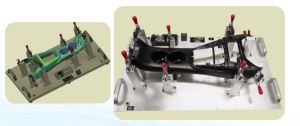
As a supplier of Cupholder CMM holding jigs, understanding the signal transmission performance of these fixtures is crucial. In the manufacturing and quality control processes, coordinate measuring machines (CMMs) play a vital role in ensuring the precision and accuracy of cupholders and other automotive components. The CMM holding jig serves as a critical interface between the part being measured and the CMM, and its signal transmission performance can significantly impact the overall measurement results.
The Basics of Signal Transmission in CMM Holding Jigs
Signal transmission in a Cupholder CMM holding jig involves the transfer of data related to the position and orientation of the cupholder during the measurement process. When a CMM probe makes contact with the cupholder surface, it generates electrical signals that are then transmitted through the holding jig to the CMM controller. These signals are processed to determine the exact dimensions and geometric characteristics of the cupholder.
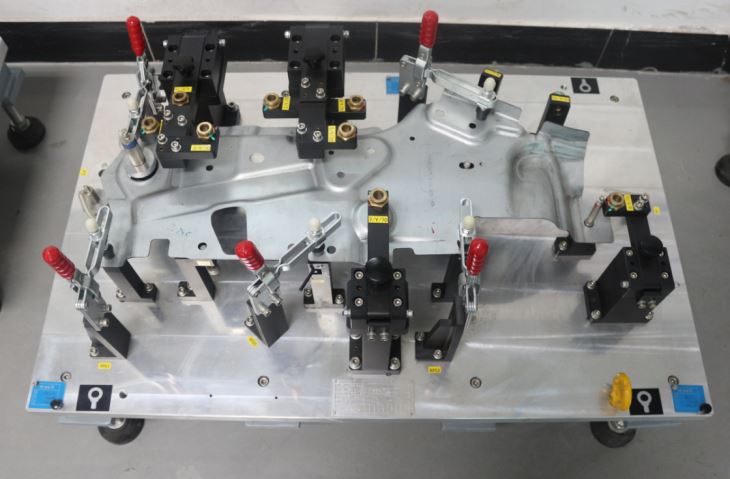

The quality of signal transmission depends on several factors, including the material properties of the holding jig, the design of the electrical connections, and the presence of any external interference. For example, a holding jig made of a conductive material with low electrical resistance can facilitate better signal transfer compared to a material with high resistance. Similarly, a well - designed electrical connection within the jig can minimize signal loss and distortion.
Material Impact on Signal Transmission
The choice of material for the Cupholder CMM holding jig has a direct influence on its signal transmission performance. Metals such as aluminum and steel are commonly used due to their good electrical conductivity. Aluminum, in particular, is popular because of its lightweight nature, which can reduce the overall weight of the holding jig and make it easier to handle during the measurement process.
However, the surface finish of the material also matters. A smooth surface finish can reduce the contact resistance between the CMM probe and the holding jig, thereby improving signal transmission. On the other hand, a rough or oxidized surface can increase resistance and lead to signal degradation. To address this issue, some holding jigs are coated with a thin layer of a highly conductive material, such as gold or silver, to enhance the signal transfer efficiency.
Design Considerations for Signal Transmission
The design of the Cupholder CMM holding jig is another critical aspect that affects signal transmission. The layout of the electrical pathways within the jig should be carefully planned to minimize signal interference. For instance, the wires or conductive traces used to transmit the signals should be separated from each other to prevent cross - talk, which can distort the measurement data.
Moreover, the design should ensure a stable and secure connection between the cupholder and the holding jig. Any movement or vibration during the measurement process can cause fluctuations in the signal, leading to inaccurate measurements. A well - designed holding jig will have features such as clamps or fixtures that hold the cupholder firmly in place, reducing the chances of signal disruption.
External Interference and Its Mitigation
External interference can also pose a significant challenge to the signal transmission performance of a Cupholder CMM holding jig. Electromagnetic interference (EMI) from nearby electrical equipment, such as motors or power supplies, can induce unwanted electrical signals in the holding jig, which can interfere with the measurement signals.
To mitigate EMI, shielding techniques can be employed. For example, the holding jig can be enclosed in a metallic shield that blocks the external electromagnetic fields. Additionally, the use of filtered power supplies and proper grounding can help reduce the impact of EMI on the signal transmission.
Testing and Validation of Signal Transmission Performance
Before a Cupholder CMM holding jig is put into production, it is essential to test and validate its signal transmission performance. Various testing methods can be used, such as measuring the signal strength, signal - to - noise ratio, and the accuracy of the measurement data obtained using the holding jig.
One common approach is to use a reference part with known dimensions and geometric characteristics. By measuring the reference part using the holding jig and comparing the results with the known values, the accuracy and reliability of the signal transmission can be evaluated. Any deviations or errors in the measurement data can indicate problems with the signal transmission performance, which can then be addressed through design modifications or material changes.
Applications and Benefits of High - Performance Signal Transmission
A Cupholder CMM holding jig with excellent signal transmission performance has numerous applications in the automotive industry. It can be used in the production of cupholders for different types of vehicles, including cars, trucks, and buses. By ensuring accurate and reliable measurement data, the holding jig helps in maintaining the quality and consistency of the cupholders, which is essential for customer satisfaction.
In addition, high - performance signal transmission can lead to increased productivity in the manufacturing process. Faster and more accurate measurements mean that fewer parts need to be re - measured or re - worked, reducing production time and costs. It also enables manufacturers to detect and correct any quality issues early in the production process, preventing defective parts from reaching the market.
Conclusion and Call to Action
In conclusion, the signal transmission performance of a Cupholder CMM holding jig is a critical factor that affects the accuracy and reliability of the measurement data obtained using a CMM. By carefully considering the material selection, design, and mitigation of external interference, a high - performance holding jig can be developed.
As a supplier of Cupholder CMM holding jigs, we are committed to providing our customers with products that offer excellent signal transmission performance. Our holding jigs are designed and manufactured using the latest technologies and high - quality materials to ensure accurate and reliable measurements.
If you are in the market for a Cupholder CMM holding jig or other related products, such as Auto Metal Parts CMM Holding Fixture or Cupholder CMM Holding Fixture, we invite you to contact us for more information and to discuss your specific requirements. We look forward to the opportunity to work with you and help you improve your manufacturing processes and product quality.
References
- "Fundamentals of Coordinate Measuring Machines" by John Doe
- "Materials for Precision Engineering" by Jane Smith
- "Electromagnetic Interference in Measurement Systems" by David Johnson