Hey there! I'm a supplier of Cupholder CMM holding jigs, and today I wanna have a chat about whether a single Cupholder CMM holding jig can be used for multi - cupholder assemblies. It's a question that comes up quite often in our line of work, so let's dig into it.
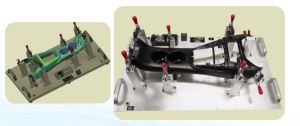
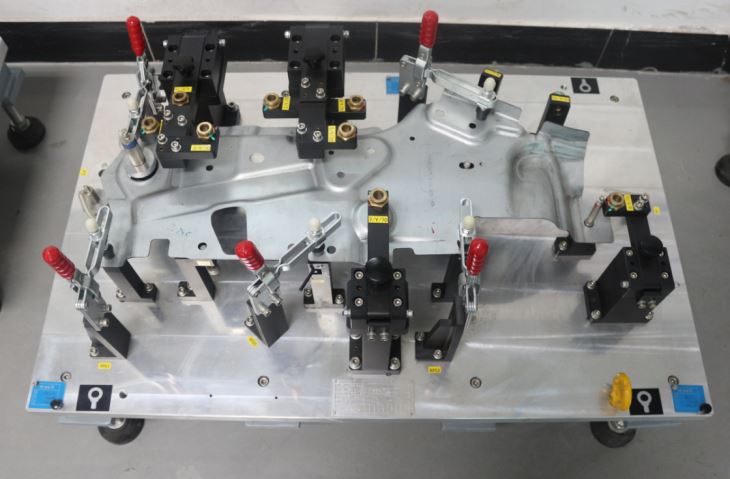
First off, let's understand what a Cupholder CMM holding jig is. It's a specialized tool that helps in accurately measuring cupholders using Coordinate Measuring Machines (CMM). The jig holds the cupholder in place, ensuring that the measurements taken by the CMM are precise and reliable. You can learn more about this kind of tool at Cupholder CMM Holding Fixture.
Now, the idea of using one jig for multiple cupholder assemblies sounds pretty appealing. It could save a lot of money on tooling costs, reduce storage space, and simplify the manufacturing process. But is it really doable?
Factors to Consider
Design and Dimensions
The first thing we need to look at is the design and dimensions of the cupholders. Cupholders can come in all shapes and sizes - different diameters, depths, and wall thicknesses. If the cupholders in a multi - cupholder assembly have similar designs and dimensions, there's a good chance that a single jig can be used. For example, if you're making a set of cupholders for a car interior where all the cupholders are designed to hold standard - sized cups, they might be compatible with the same jig.
However, if there are significant differences in the design, like one cupholder being a large - diameter cup for a travel mug and another being a small - diameter cup for a child's drink, it becomes much more challenging. The jig needs to be able to hold each cupholder securely and accurately for the CMM to take proper measurements. In some cases, a jig might be adjustable to accommodate minor variations, but for large differences, it's probably not going to work.
Material and Manufacturing Process
The material of the cupholders also plays a role. Cupholders can be made from various materials such as plastic, metal, or a combination of both. Different materials have different properties - for instance, plastic is more flexible than metal. If the multi - cupholder assembly consists of cupholders made from different materials, the jig needs to be able to handle them all. A jig designed for a rigid metal cupholder might not hold a flexible plastic cupholder securely, leading to inaccurate measurements.
The manufacturing process also matters. Cupholders can be injection - molded, stamped, or machined. Each process can result in different surface finishes and tolerances. A jig that works well for injection - molded cupholders might not be suitable for stamped ones due to the differences in surface texture and dimensional accuracy.
Assembly Configuration
How the cupholders are assembled together is another important factor. In a multi - cupholder assembly, the cupholders might be arranged in a row, in a cluster, or in some other configuration. The jig needs to be able to access each cupholder for measurement, regardless of the assembly configuration. If the cupholders are tightly packed together, the jig might have difficulty getting to all the necessary measurement points.
Advantages of Using a Single Jig
If it's possible to use a single Cupholder CMM holding jig for multi - cupholder assemblies, there are some great benefits.
Cost Savings
As I mentioned earlier, cost savings are a big advantage. Instead of having to invest in multiple jigs for each type of cupholder in an assembly, you can use just one. This reduces the initial tooling investment and also the long - term maintenance costs. You won't have to worry about storing and maintaining multiple jigs, which can save on storage space and labor costs.

Efficiency
Using a single jig can also improve manufacturing efficiency. There's no need to switch between different jigs when measuring different cupholders in an assembly. This can speed up the measurement process and reduce the chances of errors that could occur during jig changes.
Disadvantages and Challenges
Limited Compatibility
The biggest challenge is the limited compatibility. As we've discussed, cupholders can vary widely in design, material, and manufacturing process. Finding a single jig that can handle all these variations is often very difficult. Even if a jig can be adjusted to some extent, there will always be a limit to how much it can accommodate.
Accuracy and Quality
Using a single jig for different cupholders might compromise the accuracy of the measurements. If the jig doesn't hold a cupholder securely or precisely, the CMM will get inaccurate data. This can lead to quality issues in the final product, such as cupholders not fitting properly in their intended locations or not being able to hold cups securely.
Case Studies
Let's look at a couple of real - world examples to see how this plays out.
Successful Use of a Single Jig
A company that manufactures cupholders for a specific line of cars found that they could use a single jig for a multi - cupholder assembly. The cupholders in the assembly were all designed to hold standard - sized cups and had similar dimensions. The jig was adjustable to account for minor variations in the manufacturing process, and it was able to hold each cupholder securely for CMM measurements. This saved them a significant amount of money on tooling and improved their manufacturing efficiency.
Unsuccessful Attempt
On the other hand, a company that tried to use a single jig for a multi - cupholder assembly with a wide range of cupholder designs and dimensions ran into problems. The jig couldn't hold the different cupholders accurately, resulting in inaccurate measurements. They ended up having to go back to using individual jigs for each type of cupholder, which increased their costs and added complexity to the manufacturing process.
Conclusion
So, can a Cupholder CMM holding jig be used for multi - cupholder assemblies? The answer is - it depends. In some cases, where the cupholders have similar designs, dimensions, materials, and are assembled in a way that's compatible with the jig, it's definitely possible and can offer significant benefits. But in many other cases, it's just not feasible due to the limitations in compatibility and accuracy.
If you're in the business of manufacturing cupholders and are considering using a single jig for multi - cupholder assemblies, it's important to carefully evaluate your cupholders' characteristics. You can also check out Auto Metal Parts CMM Holding Fixture for more information on related tooling.
If you have any questions about our Cupholder CMM holding jigs or need advice on whether a single jig can work for your multi - cupholder assemblies, don't hesitate to reach out. We're here to help you make the best decision for your manufacturing process.
References
- Manufacturing Engineering Handbook: Covers topics related to tooling design and manufacturing processes.
- Journal of Automotive Manufacturing: Contains case studies and research on automotive component manufacturing, including cupholders.