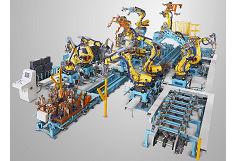
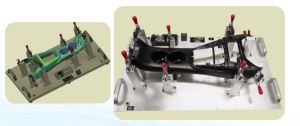
In the realm of modern manufacturing, robotic MIG (Metal Inert Gas) welding fixtures play a pivotal role in ensuring precision, efficiency, and quality in welding processes. As a supplier of Robotic MIG Weld Fixtures, I often encounter inquiries regarding the differences between single - torch and multi - torch robotic MIG weld fixtures. In this blog, I'll delve into the nuances of these two types of fixtures, highlighting their characteristics, advantages, and applications.
Single - Torch Robotic MIG Weld Fixtures
A single - torch robotic MIG weld fixture is, as the name suggests, equipped with a single welding torch. This type of fixture is relatively straightforward in design and operation. It is often the go - to choice for simpler welding tasks where the focus is on a single weld joint or a limited number of welds in a sequential manner.
Design and Operation
The design of a single - torch fixture is more uncomplicated compared to its multi - torch counterpart. The robotic arm is programmed to move the single torch to the desired welding positions along the workpiece. This simplicity makes it easier to program and set up, especially for operators who are new to robotic welding. The control system only needs to manage the movement and operation of one torch, reducing the complexity of the overall process.
Advantages
- Cost - Effective: Single - torch fixtures are generally more affordable. They require less hardware, such as additional torches, cables, and control systems for multiple torches. This makes them an attractive option for small - to - medium - sized enterprises or for projects with budget constraints.
- Flexibility: With a single torch, it is easier to make adjustments for different welding tasks. The operator can quickly re - program the robot to change the welding path, speed, and other parameters according to the specific requirements of each job. This flexibility allows for a wider range of applications, from small - scale custom welding jobs to prototyping.
- Precision: In some cases, a single torch can provide higher precision. Since there is only one torch to control, the robot can focus on making accurate welds at each point. This is particularly beneficial for welding delicate or small - sized components where precision is of utmost importance.
Applications
Single - torch robotic MIG weld fixtures are commonly used in industries such as automotive repair shops for welding small parts, in the production of furniture where individual welds are required, and in the manufacturing of small - scale metal products. For example, in the production of metal frames for bicycles, a single - torch fixture can be used to weld the joints one by one with high precision.
Multi - Torch Robotic MIG Weld Fixtures
Multi - torch robotic MIG weld fixtures are designed with two or more welding torches. These fixtures are engineered to handle more complex welding tasks where multiple welds need to be made simultaneously or in a coordinated manner.
Design and Operation
The design of multi - torch fixtures is more complex. The robotic arm needs to be configured to manage the movement and operation of multiple torches. The control system has to synchronize the actions of all the torches, ensuring that they work in harmony to achieve the desired welding results. This often involves advanced programming and sophisticated control algorithms.
Advantages
- High Productivity: The most significant advantage of multi - torch fixtures is their ability to increase productivity. By welding multiple joints simultaneously, the overall welding time can be significantly reduced. For example, in large - scale automotive manufacturing, where a large number of welds are required on each vehicle body, multi - torch fixtures can complete the welding process much faster than single - torch fixtures.
- Consistency: Since multiple torches are working in a coordinated manner, the welds are more consistent. This is crucial for mass production, where uniformity in weld quality is essential. The control system can ensure that each torch applies the same welding parameters, such as current, voltage, and wire feed speed, resulting in consistent weld strength and appearance across all the joints.
- Reduced Cycle Time: In addition to increased productivity, multi - torch fixtures can also reduce the cycle time. The robot can move the torches to different welding positions more efficiently, minimizing the time spent on repositioning between welds. This is particularly beneficial for high - volume production lines where every second counts.
Applications
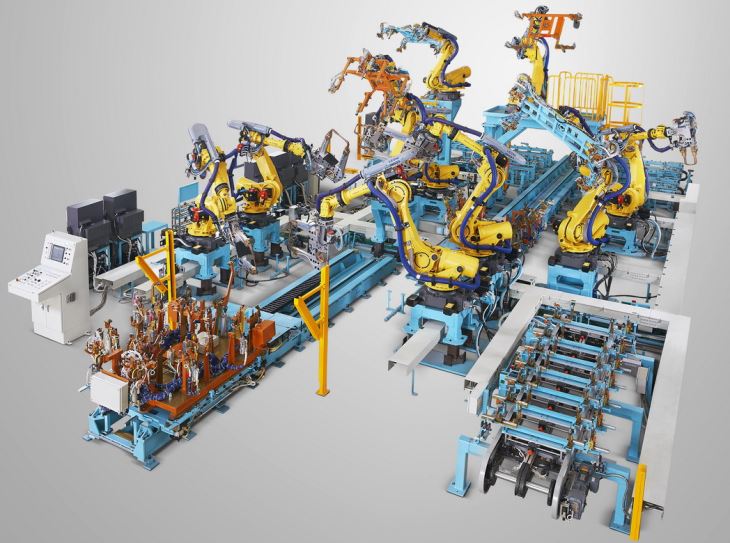
Multi - torch robotic MIG weld fixtures are widely used in industries such as automotive manufacturing. For instance, in the production of car bodies, multi - torch fixtures can weld multiple seams simultaneously, speeding up the assembly process. They are also used in the aerospace industry for welding large - scale components, in the construction of heavy machinery, and in the production of large - diameter pipes. You can learn more about the application of robotic welding fixtures in our Robotic Welding Fixture Line.
Key Differences in Comparison
- Welding Speed: As mentioned earlier, multi - torch fixtures can weld much faster than single - torch fixtures. In a production environment, this can lead to a significant increase in output. However, the actual speed advantage depends on the specific welding task and the design of the fixture.
- Cost: The cost difference between single - torch and multi - torch fixtures is substantial. Single - torch fixtures are more budget - friendly, while multi - torch fixtures require a higher initial investment. However, the long - term cost - effectiveness needs to be evaluated based on the production volume and the overall efficiency gains.
- Complexity: Multi - torch fixtures are more complex in terms of design, programming, and operation. They require more skilled operators and advanced control systems. On the other hand, single - torch fixtures are simpler and easier to manage, making them suitable for less experienced operators.
- Weld Quality: Both types of fixtures can produce high - quality welds. However, multi - torch fixtures can provide more consistent welds in mass production, while single - torch fixtures can offer higher precision in some cases.
Choosing the Right Fixture
When deciding between a single - torch and a multi - torch robotic MIG weld fixture, several factors need to be considered.
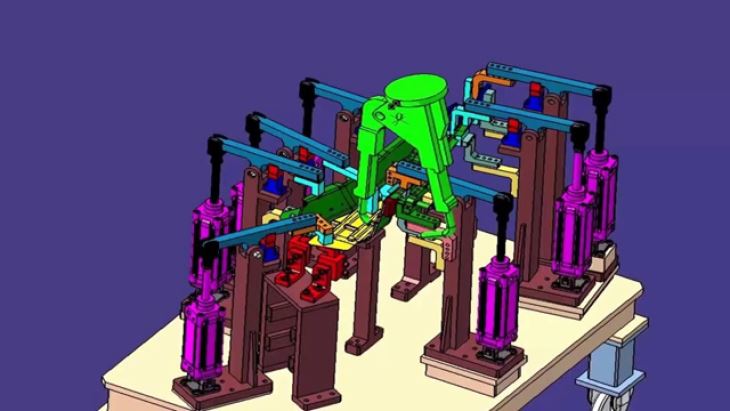
- Production Volume: If you have high - volume production requirements, a multi - torch fixture may be the better choice. It can significantly reduce the production time and increase the overall output. However, for low - volume or custom - made products, a single - torch fixture may be more suitable.
- Budget: As discussed, budget is an important factor. If you have a limited budget, a single - torch fixture can provide a cost - effective solution. But if you can afford the initial investment and expect long - term high - volume production, a multi - torch fixture may offer better returns.
- Welding Complexity: The complexity of the welding task also plays a crucial role. For simple welding jobs with individual welds, a single - torch fixture is sufficient. But for complex structures with multiple simultaneous welds, a multi - torch fixture is necessary.
Conclusion
In conclusion, both single - torch and multi - torch robotic MIG weld fixtures have their own unique advantages and applications. As a supplier of Robotic MIG Weld Fixtures, we understand the diverse needs of our customers and can provide customized solutions based on their specific requirements. Whether you are looking for a cost - effective single - torch fixture for small - scale production or a high - productivity multi - torch fixture for mass production, we have the expertise and experience to meet your needs. For more information about our Auto Pillar Parts Welding Fixture, please feel free to contact us for procurement discussions. We are committed to helping you achieve the best welding results in your manufacturing processes.
References
- AWS Welding Handbook, American Welding Society
- Robotics in Manufacturing: Principles, Programming, and Applications, by Peter Corke