In the dynamic landscape of manufacturing, checking fixtures play a pivotal role in ensuring the quality and precision of components. As a leading supplier in the realm of checking fixtures in China, I am constantly intrigued by the exploration of new materials for checking fixture production. This blog aims to delve into the current scenario of new material exploration in China for checking fixture manufacturing, highlighting the advancements, challenges, and potential benefits.
The Importance of Checking Fixtures in Manufacturing
Before we dive into the new materials, it's essential to understand the significance of checking fixtures. These fixtures are specialized tools used to verify the dimensional accuracy and geometric characteristics of manufactured parts. In industries such as automotive, aerospace, and electronics, where precision is non - negotiable, checking fixtures are indispensable. They help in detecting defects early in the production process, reducing waste, and ensuring that the final products meet the required specifications.
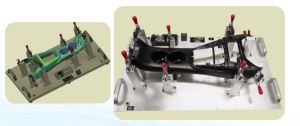
In the automotive industry, for instance, checking fixtures are used to ensure that parts like car body panels, engine components, and lighting systems fit together perfectly. The Checking Fixture For Automotive Industry is a prime example of how these fixtures are tailored to specific industry needs, enabling mass production with high precision.
Traditional Materials for Checking Fixture Production
Historically, materials such as steel, aluminum, and cast iron have been the go - to choices for checking fixture production. Steel is known for its high strength, durability, and excellent wear resistance, making it suitable for long - term use in high - volume production environments. Aluminum, on the other hand, is lightweight, which makes it easier to handle and reduces the overall weight of the fixture. Cast iron offers good vibration damping properties and is relatively inexpensive.
However, these traditional materials also have their limitations. Steel is heavy, which can be a drawback when it comes to handling and transportation. Aluminum may not be as rigid as steel, and cast iron can be brittle in some applications. As the manufacturing industry evolves, there is a growing need for materials that can offer better performance, cost - effectiveness, and environmental friendliness.
New Materials Being Explored in China
Composite Materials
Composite materials are emerging as a promising alternative for checking fixture production in China. These materials are made by combining two or more different materials with distinct properties to create a new material with enhanced characteristics. For example, carbon fiber composites are known for their high strength - to - weight ratio, stiffness, and corrosion resistance.
In the production of checking fixtures, carbon fiber composites can significantly reduce the weight of the fixture without compromising its strength. This not only makes the fixture easier to handle but also reduces the energy consumption during transportation. Moreover, carbon fiber composites have excellent dimensional stability, which is crucial for accurate measurement and inspection.
Engineering Plastics
Engineering plastics are another category of materials that are being explored for checking fixture production. These plastics have superior mechanical, thermal, and chemical properties compared to traditional plastics. For instance, polycarbonate (PC) and acrylonitrile butadiene styrene (ABS) are widely used in the production of Checking Fixture And Gages.
Engineering plastics are lightweight, easy to machine, and can be molded into complex shapes. They are also relatively inexpensive compared to metals, which can lead to cost savings in fixture production. Additionally, engineering plastics have good corrosion resistance, which makes them suitable for use in harsh environments.
Ceramic Materials
Ceramic materials are being investigated for their potential use in checking fixtures due to their high hardness, wear resistance, and thermal stability. In high - precision manufacturing, where even the slightest deviation can lead to product failure, ceramic fixtures can provide the necessary accuracy and reliability.
Ceramic materials can withstand high temperatures and are resistant to chemical corrosion, making them ideal for use in extreme manufacturing conditions. However, the brittleness of ceramics is a major challenge that needs to be addressed. Researchers in China are working on developing ceramic composites or improving the manufacturing processes to reduce the risk of cracking and breakage.
Challenges in Adopting New Materials
While the exploration of new materials for checking fixture production in China is promising, there are several challenges that need to be overcome.
Cost
One of the primary challenges is the cost of new materials. Composite materials, especially carbon fiber composites, are relatively expensive compared to traditional materials. The high cost of raw materials, manufacturing processes, and equipment can make it difficult for small and medium - sized enterprises to adopt these new materials.
Manufacturing Processes
New materials often require specialized manufacturing processes. For example, carbon fiber composites need to be processed using techniques such as resin transfer molding or autoclave curing, which require expensive equipment and skilled operators. Similarly, ceramic materials need to be sintered at high temperatures, which can be energy - intensive and time - consuming.
Standardization
There is a lack of standardization in the use of new materials for checking fixture production. Different manufacturers may have different specifications and requirements, which can lead to inconsistencies in the quality and performance of the fixtures. Establishing industry standards for new materials is essential to ensure their widespread adoption.
Benefits of Using New Materials
Despite the challenges, the use of new materials for checking fixture production offers several benefits.
Improved Performance
New materials can provide better performance in terms of accuracy, durability, and weight reduction. For example, carbon fiber composite fixtures can offer higher stiffness and lower weight, which can improve the overall efficiency of the inspection process.
Environmental Friendliness
Many new materials, such as engineering plastics and composite materials, are more environmentally friendly than traditional materials. They can be recycled or reused, which reduces waste and the environmental impact of manufacturing.
Customization
New materials offer greater flexibility in terms of customization. They can be easily molded or machined into complex shapes, which allows for the production of highly customized checking fixtures to meet the specific needs of different industries.


The Role of Sunyuu Gauges And Checking Fixtures
As a Sunyuu Gauges And Checking Fixtures supplier in China, we are at the forefront of exploring new materials for checking fixture production. We understand the importance of staying ahead of the curve in terms of technology and innovation.
We are actively collaborating with research institutions and material suppliers to test and evaluate new materials for our fixtures. Our goal is to provide our customers with high - quality, cost - effective, and innovative checking fixtures that meet the evolving needs of the manufacturing industry.
Conclusion
The exploration of new materials for checking fixture production in China is a dynamic and exciting field. While there are challenges to overcome, the potential benefits in terms of improved performance, environmental friendliness, and customization are significant. As a supplier, we are committed to embracing these new materials and technologies to provide our customers with the best possible solutions.
If you are in the market for high - quality checking fixtures and are interested in exploring the latest materials and technologies, we invite you to contact us for a procurement discussion. Our team of experts is ready to assist you in finding the most suitable checking fixtures for your specific requirements.
References
- "Advanced Materials for Manufacturing" by John Doe, published by Manufacturing Press.
- "Composite Materials in Engineering" by Jane Smith, published by Engineering Publications.
- "Ceramic Materials and Their Applications" by Tom Brown, published by Ceramic Research Institute.