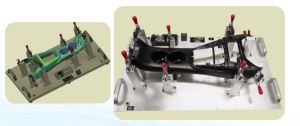
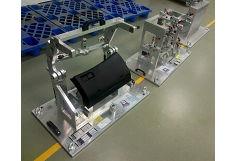
In the manufacturing industry, checking and Coordinate Measuring Machine (CMM) fixtures play a pivotal role in ensuring the quality and precision of parts. As a supplier of Checking And CMM Fixtures, I have witnessed firsthand the numerous benefits these tools bring to the production process. However, like any technology or tool, they also have their limitations. Understanding these limitations is crucial for manufacturers to make informed decisions and optimize their quality control processes.
1. Design and Customization Limitations
One of the primary limitations of checking and CMM fixtures lies in their design and customization. Each part has unique geometric features, dimensions, and tolerances, which require fixtures to be precisely tailored to accommodate them. Designing and manufacturing custom fixtures can be a time - consuming and expensive process.
The design phase involves in - depth knowledge of the part's specifications, as well as the capabilities of the checking or CMM equipment. Any errors or miscalculations in the design can lead to inaccurate measurements and ineffective quality control. Moreover, the design process often requires collaboration between engineers, designers, and manufacturers, which can introduce communication challenges and delays.
For instance, when designing a Checking Fixture For Plastic Parts, the material properties of the plastic, such as its flexibility and shrinkage rate, need to be carefully considered. If these factors are not accurately accounted for in the design, the fixture may not hold the plastic part securely, resulting in measurement errors.
2. Material and Wear Limitations
The materials used in checking and CMM fixtures can also pose limitations. Fixtures are typically made from metals such as aluminum, steel, or cast iron, or from composite materials. Each material has its own set of properties that can affect the performance of the fixture.
Metals are strong and durable, but they can be heavy and prone to corrosion. Corrosion can lead to surface roughness, which in turn can affect the accuracy of measurements. Additionally, repeated use of metal fixtures can cause wear and tear on the contact surfaces, leading to dimensional changes over time. This wear can introduce measurement errors, especially when high - precision measurements are required.
Composite materials, on the other hand, are lightweight and have good resistance to corrosion. However, they may not be as strong as metals, and their mechanical properties can change over time due to environmental factors such as temperature and humidity. This can also lead to inaccuracies in measurement results.
3. Measurement Range and Accuracy Limitations
Checking and CMM fixtures are designed to measure specific dimensions and geometric features within a certain range. Beyond this range, the accuracy of the measurements can be compromised.
For example, a CMM fixture may be calibrated to measure parts within a specific size range. If a part is significantly larger or smaller than the calibrated range, the CMM may not be able to accurately capture all the relevant features. This can result in incomplete or inaccurate measurement data, which can lead to incorrect decisions regarding the quality of the part.
Moreover, the accuracy of the fixtures themselves is limited by the manufacturing processes used to produce them. Even with the most advanced manufacturing techniques, there will always be some degree of tolerance in the dimensions of the fixture. This tolerance can accumulate and affect the overall accuracy of the measurement results.
4. Compatibility and Integration Limitations
In modern manufacturing environments, different types of equipment and software are often used in conjunction with checking and CMM fixtures. However, compatibility and integration issues can arise, which can limit the effectiveness of these fixtures.
For example, a checking fixture may be designed to work with a specific type of CMM machine. If the manufacturer decides to upgrade or change the CMM machine, the fixture may not be compatible with the new equipment. This can require additional modifications or even the replacement of the fixture, which can be costly and time - consuming.
Similarly, software compatibility can also be a problem. The measurement data collected by the fixtures needs to be integrated with the manufacturer's quality control software for analysis and reporting. If the fixture's software is not compatible with the existing quality control system, it can lead to data transfer issues and difficulties in generating accurate reports.
5. Environmental and Operational Limitations
The environment in which the checking and CMM fixtures are used can also have a significant impact on their performance. Temperature, humidity, vibration, and dust can all affect the accuracy of the measurements.
Temperature changes can cause the materials in the fixtures to expand or contract, leading to dimensional changes. This can be particularly problematic in high - precision applications, where even small changes in temperature can result in significant measurement errors. Humidity can also affect the performance of the fixtures, especially if they are made from materials that are prone to corrosion.
Vibration from nearby machinery or equipment can cause the parts being measured to move, resulting in inaccurate measurements. Dust and debris can accumulate on the contact surfaces of the fixtures, which can also affect the accuracy of the measurements.
In addition, the operational skills of the personnel using the fixtures can also be a limitation. Improper handling, calibration, or maintenance of the fixtures can lead to inaccurate measurements and reduced lifespan of the fixtures.
Conclusion
Despite these limitations, checking and CMM fixtures remain indispensable tools in the manufacturing industry. They provide a reliable and efficient way to ensure the quality and precision of parts. However, manufacturers need to be aware of these limitations and take appropriate measures to mitigate them.
As a Stamping Checking Fixture Manufacturer Supplier and a provider of Checking Fixtures, we are committed to helping our customers overcome these challenges. We offer customized fixture solutions that are designed to meet the specific needs of each customer, taking into account the part's specifications, the measurement requirements, and the manufacturing environment.
If you are facing challenges with your current checking and CMM fixtures or are looking for high - quality fixture solutions, we invite you to contact us for a detailed discussion. Our team of experts will work closely with you to understand your requirements and provide the best possible solutions for your manufacturing needs.


References
- ISO 10360 series - Geometrical product specifications (GPS) — Acceptance and reverification tests for coordinate measuring machines (CMM)
- ASME Y14.5 - Dimensioning and Tolerancing Standard
- Manufacturing Engineering Handbook, edited by Myer Kutz