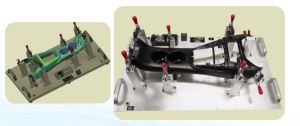
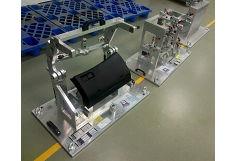
In the realm of manufacturing, checking fixtures play a pivotal role in ensuring the quality and precision of parts. As a prominent supplier in China, I've witnessed firsthand the evolution of materials used in checking fixtures. This blog aims to delve into the commonly used materials for checking fixtures in China, offering insights based on my experiences in the industry.
1. Aluminum Alloys
Aluminum alloys are one of the most popular materials for checking fixtures in China. Their widespread use can be attributed to several key advantages. Firstly, aluminum alloys have a relatively low density, which makes the checking fixtures lightweight. This is particularly beneficial when it comes to handling and transporting the fixtures, especially in large - scale manufacturing environments where frequent movement of fixtures may be required.
Secondly, aluminum alloys possess good corrosion resistance. In many manufacturing plants, the checking fixtures are exposed to various environmental conditions, including humidity and chemicals. The corrosion - resistant property of aluminum alloys ensures that the fixtures maintain their structural integrity over time, reducing the need for frequent replacements.
Another advantage is their excellent machinability. Aluminum alloys can be easily cut, drilled, and milled, allowing for the precise fabrication of complex shapes and features required in checking fixtures. This enables manufacturers to produce highly accurate fixtures that can meet the strict tolerances of modern manufacturing processes.
For example, in the automotive industry, where precision is crucial, aluminum alloy checking fixtures are widely used to inspect engine components, body parts, and interior trim pieces. These fixtures are designed to accurately measure the dimensions and geometries of the parts, ensuring that they meet the required specifications. You can learn more about our manufacturing capabilities at [Checking Fixture And Gage Manufacturer](/plastic - part - checking - fixture/checking - fixture - and - gage - manufacturer.html).
2. Steel
Steel is another material commonly employed in the production of checking fixtures in China. High - strength steels, in particular, are favored for their durability and rigidity. When dealing with heavy - duty parts or parts that require high - precision measurement under significant forces, steel checking fixtures are the go - to choice.
Steel has a high modulus of elasticity, which means it can withstand large loads without significant deformation. This property is essential for ensuring the long - term accuracy of the checking fixtures. Additionally, steel can be heat - treated to further enhance its hardness and wear resistance, making it suitable for applications where the fixtures will be in constant contact with abrasive surfaces.
In the aerospace industry, for instance, steel checking fixtures are used to inspect critical components such as turbine blades and aircraft structural parts. These parts often have complex geometries and require extremely high - precision measurement. The rigidity and durability of steel ensure that the checking fixtures can accurately measure these parts over an extended period. To explore our range of steel - based checking fixtures, visit [Checking And CMM Fixtures](/plastic - part - checking - fixture/checking - and - cmm - fixtures.html).
3. Composite Materials
Composite materials are gradually gaining popularity in the field of checking fixture manufacturing in China. Composites typically consist of a matrix material, such as epoxy resin, reinforced with fibers like carbon fiber or glass fiber.
One of the main advantages of composite materials is their high strength - to - weight ratio. They can offer similar levels of strength to steel while being significantly lighter. This makes composite checking fixtures easier to handle and reduces the overall weight of the manufacturing equipment.
Composite materials also have excellent dimensional stability. They are less affected by temperature and humidity changes compared to metals, which is crucial for maintaining the accuracy of the checking fixtures in different environmental conditions.
In the electronics industry, where small and delicate parts need to be inspected with high precision, composite checking fixtures are increasingly being used. Their low thermal expansion coefficient ensures that the fixtures do not deform due to temperature variations during the inspection process. For more information on our composite - based checking fixtures, refer to [Stamping Checking Fixture Manufacturer Supplier](/plastic - part - checking - fixture/stamping - checking - fixture - manufacturer.html).
4. Plastic Materials
Plastic materials are also commonly used in checking fixtures, especially for applications where cost - effectiveness and ease of production are important factors. Acrylic and polycarbonate are two types of plastics frequently used in this context.
Acrylic is known for its transparency, which allows for easy visual inspection of the parts being checked. It is also relatively easy to machine and can be formed into various shapes. In some cases, acrylic checking fixtures are used for inspecting parts with visible surface defects or for educational purposes, where the internal structure of the part needs to be observed.
Polycarbonate, on the other hand, offers high impact resistance and good dimensional stability. It can be used to manufacture checking fixtures for parts that are subject to rough handling or for applications where the fixtures need to withstand some degree of impact.

In the consumer goods industry, plastic checking fixtures are often used to inspect small parts such as buttons, switches, and connectors. These fixtures can be quickly and inexpensively produced, making them suitable for high - volume production environments.
5. Cast Iron
Cast iron has a long history of use in the manufacturing of checking fixtures in China. It is known for its good damping properties, which can help reduce vibrations during the inspection process. This is particularly important when using measuring instruments that are sensitive to vibrations, as it can improve the accuracy of the measurements.
Cast iron also has excellent wear resistance, making it suitable for applications where the checking fixtures will be in contact with moving parts or abrasive materials. It can maintain its surface finish over a long period, ensuring consistent measurement results.
In the machinery manufacturing industry, cast iron checking fixtures are commonly used to inspect large - scale components such as machine tool beds and engine blocks. Their stability and durability make them well - suited for these heavy - duty applications.

Conclusion
In conclusion, a variety of materials are commonly used for checking fixtures in China, each with its own unique set of properties and advantages. Aluminum alloys offer lightweight and corrosion - resistant solutions, steel provides durability and rigidity, composite materials bring high strength - to - weight ratio and dimensional stability, plastic materials offer cost - effectiveness and ease of production, and cast iron provides good damping and wear resistance.
As a supplier, we understand the importance of selecting the right material for each specific application. We are committed to providing high - quality checking fixtures that meet the diverse needs of our customers. Whether you are in the automotive, aerospace, electronics, consumer goods, or machinery manufacturing industry, we have the expertise and resources to develop the perfect checking fixtures for your parts.
If you are interested in our checking fixtures or would like to discuss your specific requirements, please feel free to reach out to us for a procurement negotiation. We look forward to working with you to ensure the quality and precision of your products.
References
- ASM Handbook Committee. (2001). ASM Handbook Volume 2: Properties and Selection: Nonferrous Alloys and Special - Purpose Materials. ASM International.
- Brandt, J. (2011). Composite Materials: Design and Applications. Cengage Learning.
- Kalpakjian, S., & Schmid, S. R. (2009). Manufacturing Engineering and Technology. Pearson.