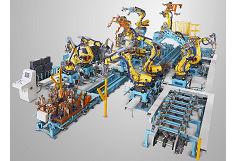
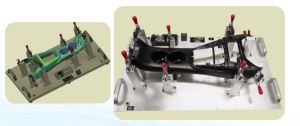
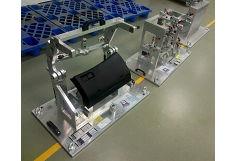
Hey there! As a supplier of rear seats welding jigs, I often get asked about the most suitable welding processes for these jigs. In this blog post, I'll share some insights on the welding processes that work best for rear seats welding jigs, and also give you a bit of background on why these processes are a good fit.
First off, let's talk about what rear seats welding jigs are. These are fixtures that hold the components of rear car seats in place during the welding process. They're crucial for ensuring that the seats are welded accurately and consistently, which is super important for safety and comfort.
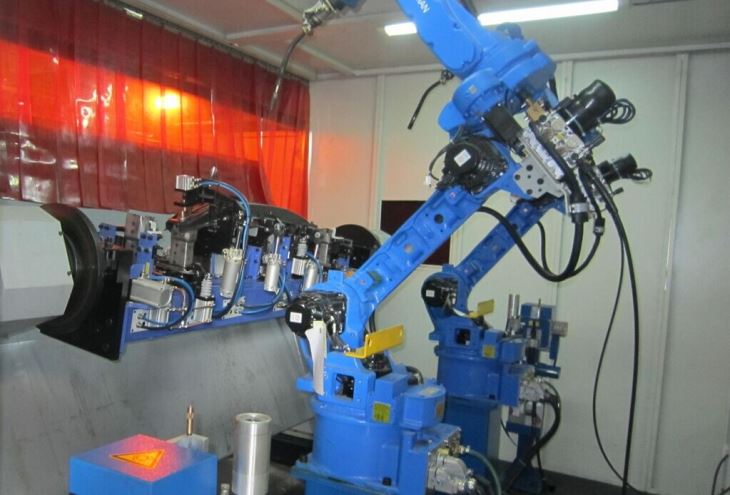

Now, let's dive into the welding processes.
Resistance Spot Welding
Resistance spot welding is one of the most common welding processes used for rear seats welding jigs. It's a process where two or more metal sheets are joined together by applying pressure and passing an electric current through them. The heat generated by the resistance to the current melts the metal at the contact points, creating a weld.
One of the big advantages of resistance spot welding is its speed. It can create strong welds in a very short time, which is great for mass production. It's also a relatively simple process, so it doesn't require a lot of specialized equipment or highly skilled operators.
Another benefit is that it produces clean welds with minimal distortion. This is important for rear seats, as any distortion could affect the fit and comfort of the seat.
However, resistance spot welding does have some limitations. It's mainly suitable for joining thin sheets of metal, and it may not be the best option for thicker materials. Also, the quality of the welds can be affected by factors like the surface condition of the metal and the amount of pressure applied.
MIG Welding
MIG (Metal Inert Gas) welding is another popular choice for rear seats welding jigs. In MIG welding, a continuous wire electrode is fed through a welding gun, and an inert gas is used to shield the weld from the atmosphere. The heat from the electric arc melts the wire and the base metal, creating a weld.
One of the advantages of MIG welding is its versatility. It can be used to weld a wide range of metals, including steel, aluminum, and stainless steel. It's also suitable for welding thicker materials compared to resistance spot welding.
MIG welding allows for better control over the welding process. You can adjust the welding parameters, such as the voltage, current, and wire feed speed, to achieve the desired weld quality. This makes it a good option for welding complex shapes and structures, which are common in rear seats.
On the downside, MIG welding requires more equipment and setup compared to resistance spot welding. It also produces more fumes and spatter, so proper ventilation is necessary.
TIG Welding
TIG (Tungsten Inert Gas) welding is a more precise and high - quality welding process. In TIG welding, a non - consumable tungsten electrode is used to create an electric arc, and a filler metal can be added if needed. An inert gas, usually argon, is used to protect the weld area.
TIG welding produces very high - quality welds with excellent appearance and strength. It's great for welding thin materials and for applications where precision is crucial. In the case of rear seats, TIG welding can be used for welding small, delicate components or for finishing touches.
The main drawback of TIG welding is its slow speed. It takes longer to create a weld compared to resistance spot welding and MIG welding. It also requires a high level of skill from the operator, as it's a more difficult process to master.
Laser Welding
Laser welding is a relatively new and advanced welding process that's becoming more popular in the automotive industry, including for rear seats welding jigs. In laser welding, a high - energy laser beam is focused on the joint area, melting the metal and creating a weld.
One of the biggest advantages of laser welding is its high precision. It can create very narrow and deep welds, which is ideal for joining complex shapes and thin materials. It also has a very small heat - affected zone, which means less distortion of the surrounding metal.
Laser welding is also very fast and can be automated easily. This makes it suitable for high - volume production. However, laser welding equipment is expensive, and it requires a high level of maintenance.
Which Process to Choose?
The choice of welding process for rear seats welding jigs depends on several factors. If you're in a high - volume production environment and working with thin sheets of metal, resistance spot welding might be the best option. It's fast, simple, and cost - effective.
If you need to weld a variety of metals or thicker materials, MIG welding could be a good choice. It offers more versatility and better control over the welding process.
For high - quality, precise welds on small or delicate components, TIG welding is the way to go, despite its slower speed and higher skill requirements.
And if you're looking for the latest technology, high precision, and automation capabilities, laser welding might be worth considering, even though it comes with a higher upfront cost.
As a rear seats welding jig supplier, we understand the importance of choosing the right welding process. We can help you select the most suitable process for your specific needs and provide jigs that are optimized for that process.
If you're interested in Front Bumper Welding Fixture, Car Stamping Parts checking fixture, or Automotive Seat Welding Fixture, we can also assist you.
If you're in the market for rear seats welding jigs or have any questions about the welding processes, don't hesitate to get in touch. We're here to help you make the best decisions for your production. Let's have a chat and see how we can work together to meet your needs.
References
- Welding Handbook, American Welding Society
- Automotive Manufacturing Technology, Society of Automotive Engineers