Auto welding jigs play a crucial role in the automotive manufacturing industry, ensuring precision, efficiency, and consistency in the welding process. As a leading supplier of auto welding jigs, I have witnessed firsthand the diverse range of jigs available in the market and their specific applications. In this blog post, I will explore the different types of auto welding jigs, their features, and how they contribute to the overall quality of automotive production.
1. Manual Welding Jigs
Manual welding jigs are the most basic type of auto welding jigs. They are typically used for small - scale production or in situations where flexibility is required. These jigs are operated by hand, allowing welders to have direct control over the welding process.
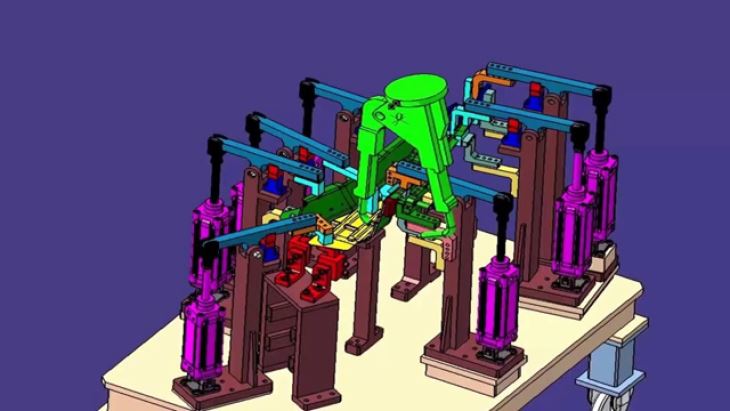
One of the key advantages of manual welding jigs is their simplicity. They are relatively easy to set up and can be adjusted quickly to accommodate different parts. For example, in a small automotive repair shop, a manual welding jig can be used to repair or modify auto body parts. The welder can position the parts accurately using the jig and then perform the welding operation.
However, manual welding jigs also have some limitations. They are labor - intensive, and the quality of the welds can be affected by the skill and experience of the welder. In high - volume production environments, the use of manual welding jigs may not be efficient enough.
2. Semi - Automatic Welding Jigs
Semi - automatic welding jigs combine the advantages of manual and automatic welding. These jigs are equipped with some automated features, such as part clamping and positioning, while still requiring some manual input from the welder.
The clamping mechanism in semi - automatic welding jigs ensures that the parts are held firmly in place during the welding process, reducing the risk of misalignment. This leads to more consistent welds and higher quality products. For instance, in the production of auto frames, semi - automatic welding jigs can be used to position and hold the frame components, and the welder can then focus on the actual welding operation.
Semi - automatic welding jigs are also more cost - effective than fully automatic jigs for medium - volume production. They offer a good balance between automation and operator control, making them a popular choice in many automotive manufacturing plants.
3. Fully Automatic Welding Jigs
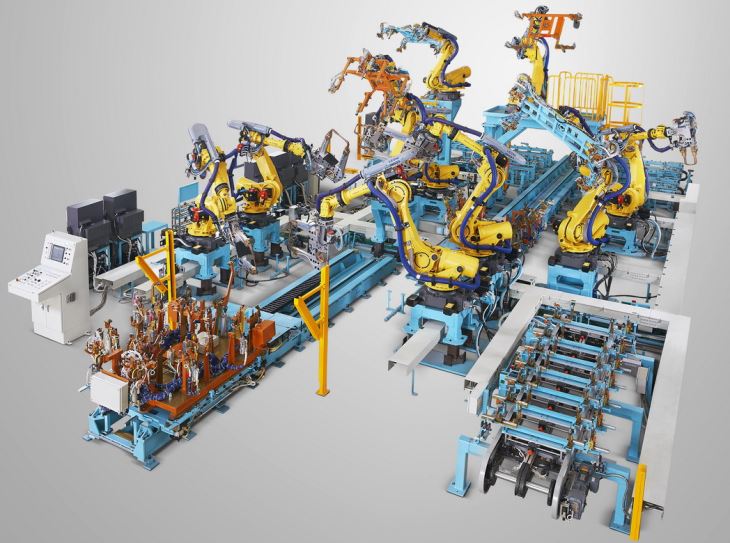
Fully automatic welding jigs are the most advanced type of auto welding jigs. They are designed for high - volume production and can operate with minimal human intervention. These jigs are integrated with robotic systems and advanced control software, allowing for precise and efficient welding operations.
Robotic welding is a key feature of fully automatic welding jigs. Robots can perform repetitive welding tasks with high accuracy and speed, reducing production time and improving product quality. For example, in the mass production of auto engines, fully automatic welding jigs with robotic arms can weld engine components with great precision, ensuring the integrity of the engine structure.
The control software in fully automatic welding jigs can also monitor and adjust the welding parameters in real - time, such as welding current, voltage, and speed. This ensures that the welds meet the required quality standards consistently. However, fully automatic welding jigs require a significant initial investment in terms of equipment and programming. They are best suited for large - scale automotive manufacturers with high production volumes.
4. Specialized Welding Jigs
In addition to the general types mentioned above, there are also specialized welding jigs designed for specific automotive parts or processes.
Auto Pillar Parts Welding Fixture
The Auto Pillar Parts Welding Fixture is a prime example of a specialized welding jig. Auto pillars are critical structural components of a vehicle, and their welding requires high precision. This fixture is designed to hold and position the pillar parts accurately during the welding process, ensuring proper alignment and strong welds. It takes into account the complex geometry of the pillars and provides a stable platform for welding, which is essential for the safety and durability of the vehicle.
Robotic Welding Fixture Line
The Robotic Welding Fixture Line is another specialized type. This type of fixture is used in conjunction with robotic welding systems to create a continuous and efficient welding production line. It can handle multiple parts simultaneously and transfer them between different welding stations automatically. The robotic welding fixture line is highly customizable, allowing it to be tailored to the specific requirements of different automotive models and production volumes.
5. Modular Welding Jigs
Modular welding jigs are designed to be flexible and adaptable. They consist of modular components that can be easily assembled and disassembled to create different configurations. This makes them suitable for a variety of automotive welding applications, especially when dealing with multiple product lines or frequent design changes.
The modular design allows for quick reconfiguration of the jig, reducing downtime between production runs. For example, if a manufacturer needs to switch from producing one type of auto body panel to another, they can simply re - arrange the modular components of the welding jig instead of investing in a new jig. This not only saves costs but also improves production efficiency.
6. Custom - Built Welding Jigs
In some cases, automotive manufacturers may require custom - built welding jigs to meet their unique production requirements. These jigs are designed and manufactured specifically for a particular vehicle model or welding process.
Custom - built welding jigs take into account the specific dimensions, materials, and welding requirements of the parts. They can incorporate advanced features such as special clamping mechanisms, integrated sensors, and custom - designed tooling. For example, if a manufacturer is developing a new electric vehicle with unique battery housing design, a custom - built welding jig can be created to ensure the proper welding of the battery housing components.
As a supplier of auto welding jigs, I understand the importance of providing high - quality and reliable jigs to automotive manufacturers. Each type of welding jig has its own advantages and is suitable for different production scenarios. Whether you are a small - scale repair shop or a large - scale automotive manufacturer, choosing the right type of auto welding jig is crucial for achieving optimal production results.
If you are in the market for auto welding jigs, I encourage you to contact us for a detailed discussion about your specific needs. Our team of experts can help you select the most appropriate type of jig and provide you with a customized solution that meets your production requirements. We are committed to delivering top - notch products and excellent customer service to ensure your success in the automotive manufacturing industry.
References
- ASM Handbook Volume 6: Welding, Brazing, and Soldering. ASM International.
- Automotive Manufacturing Technology: Processes and Systems. CRC Press.
- Welding Technology: Principles and Applications. Pearson Education.