Hey there! I'm a supplier from Checking Fixtures China, and today I wanna chat about the skills required for operating checking fixtures in China.
Understanding the Basics of Checking Fixtures
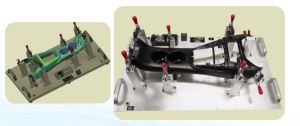
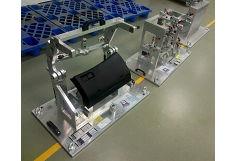
First off, let's get a bit of background on what checking fixtures are. Checking fixtures are essential tools used in manufacturing to ensure that parts meet the required specifications. They're like the quality control cops on the factory floor. In China, where manufacturing is a huge part of the economy, these fixtures play a super important role. Whether it's for the automotive industry, electronic devices, or other sectors, accurate checking fixtures can make or break a production line.
For example, in the automotive industry, the precision of parts is crucial. A small deviation in a car part can lead to big problems down the line. That's where Checking Fixture For Automotive Industry comes in. These fixtures are designed to check every little detail of automotive components, from the shape and size to the surface finish.


Technical Skills for Operating Checking Fixtures
- Measurement Skills
One of the most fundamental skills for operating checking fixtures is accurate measurement. You gotta know how to use various measuring tools like calipers, micrometers, and height gauges. These tools are the bread and butter of checking fixture operators. You need to be able to read measurements precisely and record them correctly. In China, with the high - volume production in many factories, a small measurement error can multiply quickly and cause a lot of waste. So, having a good eye for measurement is non - negotiable. - Knowledge of Geometric Dimensioning and Tolerancing (GD&T)
GD&T is like a secret code in the manufacturing world. It's a system of symbols and rules that define the shape, size, and orientation of parts. Operators of checking fixtures need to understand GD&T because it tells them exactly what the part should look like and how much variation is acceptable. For instance, if a part has a specified flatness tolerance, the operator needs to know how to use the checking fixture to verify that the part meets that tolerance. This knowledge is especially important when dealing with complex parts. And when it comes to Checking And CMM Fixtures, which often deal with high - precision measurements, GD&T knowledge becomes even more critical. - Fixture Setup and Calibration
Setting up the checking fixture correctly is another key skill. You need to know how to mount the part on the fixture properly, align it, and secure it. Any misalignment can lead to inaccurate measurements. And then there's calibration. Checking fixtures need to be calibrated regularly to ensure their accuracy. This involves adjusting the fixture to match a known standard. If you don't calibrate the fixture correctly, all your measurements will be off. In China, where quality control is a top priority, proper fixture setup and calibration are closely monitored.
Problem - Solving Skills
- Identifying Measurement Discrepancies
Sometimes, the measurements you get from the checking fixture don't match the specifications. When that happens, you need to be able to figure out what's going on. It could be a problem with the part itself, the fixture setup, or the measuring tool. You have to use your detective skills to identify the root cause. For example, if the measurement of a part's diameter is consistently off, you might need to check if the caliper is damaged or if the part has a manufacturing defect. - Troubleshooting Fixture Issues
Checking fixtures can break down or malfunction. Maybe a sensor isn't working properly, or a mechanical part is worn out. Operators need to be able to troubleshoot these issues. They should know how to do basic maintenance tasks like cleaning, lubricating, and replacing parts. In China, where factories often run 24/7, being able to quickly fix a fixture issue can save a lot of production time.
Communication Skills
- Reporting Results
Once you've completed the measurements using the checking fixture, you need to report the results clearly. This involves writing detailed reports that include the measurements, any discrepancies, and your recommendations. These reports are used by managers, engineers, and other stakeholders to make decisions about the production process. So, you need to be able to communicate your findings in a way that's easy for others to understand. - Collaborating with Other Departments
Checking fixture operators often need to work with other departments like engineering, production, and quality control. Good communication skills are essential for collaborating effectively. For example, if the engineering department makes a design change to a part, the operator needs to be informed so that they can adjust the checking fixture accordingly. And if the production department is having issues with a particular batch of parts, the operator can provide valuable information based on their measurements.
Software Skills
In today's digital age, many checking fixtures are integrated with software. Operators need to know how to use this software to control the fixture, record measurements, and generate reports. For example, some software can analyze the measurement data and provide visualizations of the part's quality. In China, as more and more factories are adopting smart manufacturing technologies, software skills are becoming increasingly important for checking fixture operators.
Training and Certification
In China, there are various training programs and certifications available for checking fixture operators. These programs can help operators improve their skills and stay up - to - date with the latest industry standards. For example, some certifications focus on specific types of checking fixtures or measurement techniques. Getting certified not only enhances an operator's resume but also gives them more confidence in their abilities.
Why Choose Our Checking Fixtures
As a supplier from Checking Fixtures China, we offer high - quality checking fixtures that are designed to meet the diverse needs of different industries. Our fixtures are made with precision and are easy to operate. We also provide comprehensive training and after - sales support to ensure that our customers can get the most out of our products.
If you're in the market for checking fixtures, whether it's Checking Fixture For Automotive Industry, Checking And CMM Fixtures, or Checking Fixture And Gages, we'd love to have a chat with you. We can discuss your specific requirements and provide you with the best solutions for your business. So, don't hesitate to reach out and start a conversation about your procurement needs.
References
- Manufacturing Engineering Handbook. It provides in - depth knowledge about various manufacturing processes and the role of checking fixtures.
- Geometric Dimensioning and Tolerancing textbooks. These are great resources for understanding GD&T concepts and applications.
- Industry - specific journals such as Automotive Manufacturing and Electronics Manufacturing, which often feature articles on the latest trends and best practices in checking fixture operation.