Hey there! As a supplier of Robotic MIG Weld Fixtures, I've got a ton of experience in ensuring top - notch quality for these essential pieces of equipment. In this blog, I'm gonna share some of the key quality - control measures we take to make sure our fixtures are the best in the market.
Design and Engineering Review
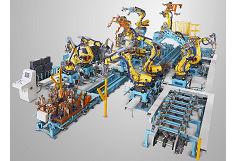
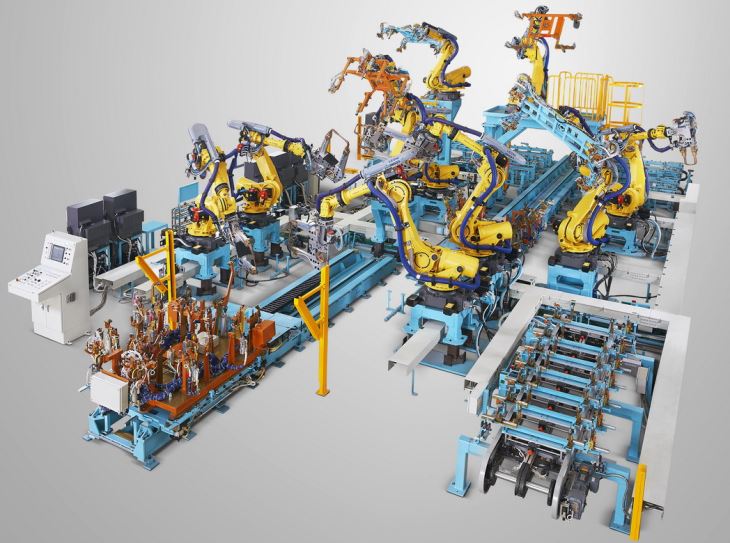
First off, it all starts with the design. We don't just jump into production right away. Our team of engineers conducts a thorough review of the design. They check if the fixture is going to be able to handle the specific welding requirements of our clients. For example, if it's for a Robotic Welding Fixture Line, we need to make sure it can withstand the continuous operation and high - precision demands of a full - fledged production line.
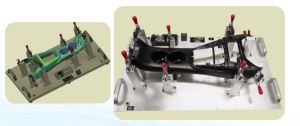
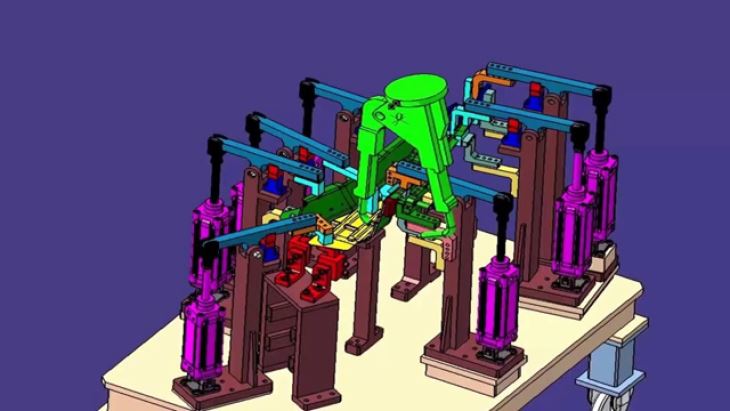
We use advanced 3D modeling software to simulate how the fixture will work in real - world scenarios. This helps us identify any potential issues early on, like interference between parts or improper alignment. By catching these problems during the design phase, we save a lot of time and money in the long run.
Material Selection
The materials we choose for our Robotic MIG Weld Fixtures are crucial. We only source from trusted suppliers who can provide us with high - quality metals and alloys. For the main structural components, we often use steel because of its strength and durability. But we don't just pick any steel; we look for the right grade that can resist wear and tear from the welding process.
When it comes to the parts that come into direct contact with the weld, we use materials that can handle high temperatures without deforming. This ensures that the fixture maintains its accuracy over time. We also test the materials for their chemical composition and mechanical properties to make sure they meet our strict standards.
Manufacturing Process Control
During the manufacturing process, we have a bunch of controls in place. We use CNC machining for most of the parts because it offers high precision. The machines are programmed to cut and shape the parts to exact specifications. We have operators constantly monitoring the machining process to make sure everything is going as planned.
After the parts are machined, we perform a series of inspections. We use measuring tools like calipers, micrometers, and coordinate measuring machines (CMMs) to check the dimensions of the parts. If a part is even slightly out of tolerance, it's either re - worked or scrapped. This strict approach helps us maintain the quality of the final product.
Assembly and Fit - Up Checks
Once all the parts are ready, it's time for assembly. Our technicians are highly skilled and follow detailed assembly instructions. They make sure that all the parts fit together perfectly. We do a lot of fit - up checks during the assembly process. For example, we check if the clamps are aligning correctly and if the定位 pins are in the right position.
We also use fixtures to hold the parts in place during assembly. These fixtures are designed to ensure that the final product has the correct geometry. After assembly, we perform a final inspection to make sure everything is in order.
Welding Quality Assurance
Since these are MIG weld fixtures, the welding quality is of utmost importance. We have certified welders who follow strict welding procedures. They use the right welding parameters, like voltage, current, and wire feed speed, to ensure a strong and consistent weld.
We also perform non - destructive testing (NDT) on the welded joints. This includes methods like ultrasonic testing and magnetic particle testing to detect any internal defects in the weld. If a defect is found, the weld is re - worked until it passes the test.
Function Testing
Before a fixture leaves our factory, we put it through a series of function tests. We simulate the actual welding process to make sure the fixture works as intended. We check if the clamps can hold the workpieces firmly, if the定位 pins are guiding the parts correctly, and if the overall fixture can withstand the forces and vibrations during welding.
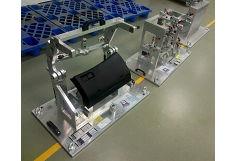
For example, if it's an Auto Pillar Parts Welding Fixture, we test it with real - life auto pillar parts to make sure it can produce high - quality welds. If any issues are found during the function testing, we make the necessary adjustments until the fixture meets our quality standards.
Documentation and Traceability
We keep detailed documentation for every Robotic MIG Weld Fixture we produce. This includes the design drawings, material certificates, inspection reports, and test results. This documentation helps us track the history of each fixture and provides our customers with the confidence that the product has been manufactured to the highest standards.
If there are any quality issues in the future, we can easily trace back the problem to its source. This traceability is also important for compliance with industry regulations.
Continuous Improvement
We're always looking for ways to improve our quality - control measures. We collect feedback from our customers and use it to make changes to our processes. We also keep an eye on the latest technologies and industry trends to see if there are any new methods or materials that we can adopt.
By continuously improving, we can stay ahead of the competition and provide our customers with even better products.
Why Choose Our Robotic MIG Weld Fixtures
Our strict quality - control measures mean that you're getting a reliable and high - quality product. When you choose our fixtures, you can expect:
- Precision: Our fixtures are designed and manufactured to very tight tolerances, ensuring accurate welding every time.
- Durability: With high - quality materials and excellent workmanship, our fixtures can withstand the rigors of continuous use.
- Customization: We can customize our fixtures to meet your specific welding requirements.
If you're in the market for a Robotic MIG Weld Fixture, I encourage you to reach out to us. We'd love to have a chat about your needs and how we can provide you with the best solution. Whether you're a small - scale workshop or a large - scale manufacturing plant, we've got the expertise and the products to meet your demands. So, don't hesitate to contact us for a quote or to discuss your project in more detail.
References
- AWS D1.1/D1.1M:2020, Structural Welding Code - Steel.
- ISO 9001:2015, Quality management systems — Requirements.
- ASME B46.1:2019, Surface Texture (Surface Roughness, Waviness, and Lay).