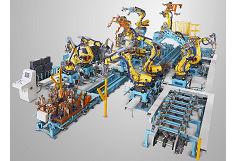
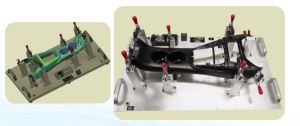
Hey there! As a supplier of rear seats welding jigs, I've had my fair share of experiences in this industry. Over the years, I've seen a lot of different jigs come and go, and I've learned what makes a good one stand out. So, in this blog post, I'm gonna share with you the key features of a top-notch rear seats welding jig.
1. Precision and Accuracy
First off, precision and accuracy are non - negotiable when it comes to a good rear seats welding jig. You see, the rear seats of a car are a crucial part of the vehicle's interior. They need to fit perfectly, not just for comfort but also for safety reasons. A welding jig that can't hold tight tolerances will result in seats that are misaligned or have uneven welds.
Imagine a scenario where the jig is off by just a few millimeters. The seat might not fit properly in the car, which could lead to rattling noises, or even worse, it might not be securely attached. That's a big no - no in the automotive industry. A high - quality jig should be able to position the seat components with an accuracy of within a fraction of a millimeter. This ensures that every weld is in the right place, and the final product meets the strict quality standards of the car manufacturers.
2. Durability
Another key feature is durability. Welding jigs are used in a harsh industrial environment. They're constantly exposed to heat, sparks, and mechanical stress. A flimsy jig won't last long, and you'll end up spending more money on replacements.
A good rear seats welding jig should be made from high - strength materials like steel or aluminum alloys. These materials can withstand the rigors of the welding process. The joints and connections should be well - engineered to prevent any loosening or breakage over time. For example, the clamps that hold the seat components in place should be made of a hard - wearing material that can grip firmly without deforming.
3. Flexibility
Flexibility is also super important. The automotive industry is always evolving, and car manufacturers are constantly coming up with new seat designs. A good welding jig should be able to adapt to these changes.
It should have adjustable features that allow it to accommodate different seat sizes, shapes, and configurations. For instance, some jigs come with modular components that can be easily swapped out or repositioned. This means that you can use the same jig for multiple seat models, which saves a lot of money and time. Instead of having to buy a new jig for every new seat design, you can just make a few adjustments to the existing one.

4. Ease of Use
Let's talk about ease of use. A complicated jig is not only frustrating for the operators but also increases the chances of errors. A good rear seats welding jig should be user - friendly.
The controls should be intuitive, and the setup process should be quick and straightforward. For example, the clamps should be easy to open and close, and the components should be easy to load and unload. Also, the jig should have clear markings and instructions, so even new operators can use it without much training. This improves productivity and reduces the risk of mistakes during the welding process.
5. Safety Features
Safety is always a top priority in any industrial setting. A good rear seats welding jig should have several safety features.
It should be designed to prevent operators from getting injured by the welding process. For example, it might have shields or guards to protect against sparks and heat. The electrical components should be properly insulated to prevent electrical shocks. Also, the jig should be stable and secure, so it doesn't tip over during use. This protects the operators and also ensures the quality of the welds.
6. Compatibility with Welding Equipment
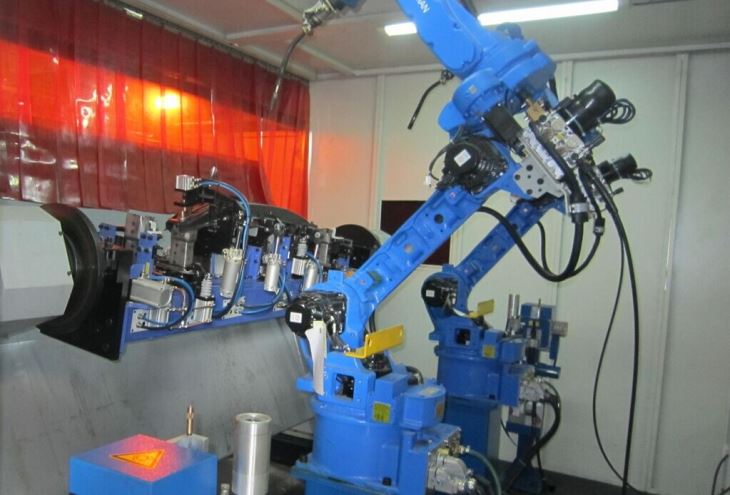
The jig needs to be compatible with the welding equipment that you're using. Different welding processes, such as MIG, TIG, or spot welding, have different requirements.
A good rear seats welding jig should be designed to work seamlessly with the specific welding equipment. For example, it should have the right mounting points and connections for the welding torch or electrodes. This ensures that the welding process is efficient and that the welds are of high quality.
7. Cost - Effectiveness
Last but not least, cost - effectiveness is a key consideration. Of course, you want a high - quality jig, but you also don't want to break the bank.
A good rear seats welding jig should offer a good balance between price and performance. It should be reasonably priced, especially considering its durability, flexibility, and other features. You should also look at the long - term costs. A more expensive jig that lasts longer and requires less maintenance might actually be more cost - effective in the long run than a cheaper one that needs to be replaced frequently.
If you're in the market for a rear seats welding jig, or you're interested in our Front Bumper Welding Fixture, Car Stamping Parts checking fixture, or Automotive Seat Welding Fixture, don't hesitate to reach out. We're here to help you find the perfect solution for your needs. Whether you're a small workshop or a large automotive manufacturer, we've got the expertise and the products to meet your requirements. Contact us today to start a discussion about your specific needs and let's work together to get you the best welding jig for your rear seats.
References
- Automotive Manufacturing Handbook
- Industrial Welding Technology Guides