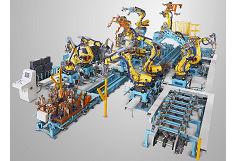
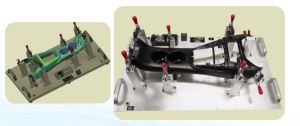
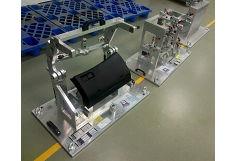
As a supplier of Checking Fixtures, I've witnessed firsthand how environmental factors can significantly impact these precision tools. Checking fixtures are essential in various industries, especially in automotive manufacturing, for ensuring the accuracy and quality of parts. In this blog, I'll explore the key environmental factors that can affect checking fixtures and why it's crucial to consider them.
Temperature
Temperature is one of the most critical environmental factors that can influence the performance of checking fixtures. Most materials expand or contract with changes in temperature. For instance, metals typically expand when heated and contract when cooled. This thermal expansion and contraction can cause dimensional changes in the checking fixture, leading to inaccurate measurements.


In a manufacturing environment, the temperature can vary due to factors such as the operation of machinery, the presence of heating or cooling systems, and external weather conditions. If a checking fixture is not designed to compensate for these temperature variations, it may produce false readings. For example, in an automotive plant where the temperature can rise significantly during the day due to the operation of large machinery, a checking fixture made of a material with a high coefficient of thermal expansion may expand and give inaccurate measurements of automotive parts.
To mitigate the effects of temperature, checking fixtures can be made from materials with low coefficients of thermal expansion, such as Invar, a nickel-iron alloy known for its extremely low thermal expansion. Additionally, temperature-controlled environments can be used to ensure that the checking fixture operates within a narrow temperature range. Regular calibration of the checking fixture can also help to account for any minor temperature-related changes.
Humidity
Humidity refers to the amount of water vapor in the air. High humidity levels can cause corrosion and rust on metal components of checking fixtures, especially if they are not properly protected. Corrosion can damage the surface of the fixture, affecting its accuracy and durability. For example, if a checking fixture is used in a coastal area where the humidity is high, the metal parts may start to corrode over time, leading to pitting and surface roughness.
On the other hand, low humidity can cause materials to dry out and become brittle. This is particularly true for plastic components of checking fixtures. Brittle materials are more prone to cracking and breaking, which can render the checking fixture useless.
To protect checking fixtures from the effects of humidity, proper storage and maintenance are essential. Fixtures should be stored in a dry environment, and if necessary, humidity control systems can be installed in the storage area. Coating the metal parts with anti-corrosion agents can also help to prevent rust and corrosion.
Dust and Particles
Dust and other particles in the environment can accumulate on the surface of checking fixtures, affecting their accuracy. Even small particles can interfere with the contact between the fixture and the part being measured, leading to inaccurate readings. In a manufacturing environment, dust can be generated from processes such as machining, grinding, and sanding.
To prevent dust and particles from affecting checking fixtures, regular cleaning is necessary. Fixtures should be cleaned using appropriate cleaning agents and tools to ensure that all particles are removed. Additionally, protective covers can be used to shield the checking fixture when it is not in use.
Vibration
Vibration can also have a significant impact on the performance of checking fixtures. In a manufacturing plant, there are many sources of vibration, such as the operation of machinery, the movement of vehicles, and even the footsteps of workers. Vibration can cause the checking fixture to move or shift, leading to inaccurate measurements.
To reduce the effects of vibration, checking fixtures can be installed on vibration-damping platforms. These platforms are designed to absorb and dissipate the energy from vibrations, preventing them from reaching the fixture. Additionally, the fixture can be securely fastened to its mounting surface to minimize movement.
Chemical Exposure
Checking fixtures may be exposed to various chemicals in a manufacturing environment, such as cleaning agents, lubricants, and solvents. These chemicals can react with the materials of the fixture, causing damage and affecting its performance. For example, some chemicals may dissolve or corrode plastic components, while others may cause discoloration or degradation of metal parts.
To protect checking fixtures from chemical exposure, it's important to choose materials that are resistant to the chemicals they are likely to encounter. Additionally, proper handling and storage of chemicals can help to prevent accidental spills and exposure. If a fixture does come into contact with a chemical, it should be cleaned immediately to minimize damage.
Importance of Considering Environmental Factors
As a Checking Fixture Supplier In China, I understand the importance of considering environmental factors when designing and manufacturing checking fixtures. By taking these factors into account, we can ensure that our fixtures are accurate, reliable, and durable. This is especially crucial in industries such as the automotive industry, where the quality of parts is of utmost importance.
Checking Fixtures used in the automotive industry, for example, need to be able to withstand the harsh conditions of the manufacturing environment. They must provide accurate measurements to ensure that automotive parts meet the strict quality standards. A single inaccurate measurement can lead to defective parts, which can compromise the safety and performance of the vehicle.
Conclusion
In conclusion, environmental factors such as temperature, humidity, dust, vibration, and chemical exposure can have a significant impact on the performance and durability of checking fixtures. As a checking fixture supplier, it's our responsibility to design and manufacture fixtures that can withstand these environmental challenges. By using appropriate materials, implementing proper storage and maintenance procedures, and considering the specific environmental conditions of the application, we can ensure that our checking fixtures provide accurate and reliable measurements.
If you're in the market for high-quality checking fixtures, whether for the automotive industry or other applications, I encourage you to Contact Us to discuss your requirements. Our team of experts can provide you with customized solutions that meet your specific needs and environmental conditions.
References
- "Materials Science and Engineering: An Introduction" by William D. Callister Jr. and David G. Rethwisch
- "Manufacturing Engineering and Technology" by Serope Kalpakjian and Steven R. Schmid
- Industry standards and guidelines related to checking fixture design and use