Hey there! As a supplier of Robotic MIG Weld Fixtures, I've seen firsthand the ins and outs of both manual and robotic MIG weld fixtures. In this blog, I'm gonna break down the key differences between these two types of fixtures, so you can make an informed decision for your welding projects.
1. Precision and Consistency
One of the most significant differences between manual and robotic MIG weld fixtures lies in precision and consistency.
Manual MIG weld fixtures rely on the skill and experience of the welder. A highly skilled welder can achieve excellent results, but there's always a margin for human error. Fatigue, distractions, or slight variations in technique can lead to inconsistencies in the weld quality. For example, the bead width, penetration depth, and overall appearance of the weld may vary from one joint to another.
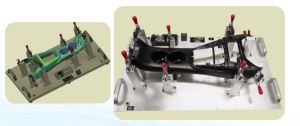
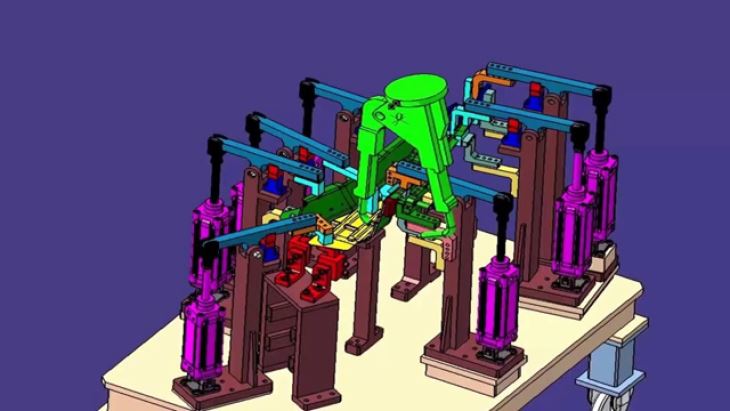
On the other hand, robotic MIG weld fixtures offer a high level of precision and consistency. Robots are programmed to perform the same welding task repeatedly with minimal variation. They can maintain a constant travel speed, torch angle, and wire feed rate, ensuring that each weld is identical to the next. This is especially crucial in industries where tight tolerances are required, such as automotive manufacturing. For instance, the Auto Pillar Parts Welding Fixture used in robotic welding can produce consistent welds on car pillar parts, which is essential for the structural integrity of the vehicle.
2. Speed and Productivity
When it comes to speed and productivity, robotic MIG weld fixtures have a clear advantage.
Manual welding is a time - consuming process. Welders need to take breaks, adjust their position, and set up each weld individually. Additionally, the speed of manual welding is limited by the physical capabilities of the welder. Even the most experienced welder can only work at a certain pace.
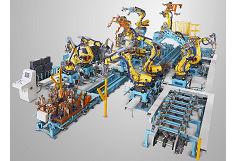
Robotic MIG weld fixtures, however, can work continuously without breaks. They can move quickly between welding points and perform multiple welds simultaneously in some cases. The Robotic Welding Fixture Line is designed to optimize the welding process, reducing the overall cycle time. This increased productivity can lead to significant cost savings in the long run, as more parts can be welded in a shorter period.
3. Flexibility
Flexibility is another aspect where manual and robotic MIG weld fixtures differ.
Manual weld fixtures are highly flexible. Welders can easily adapt to changes in the workpiece, such as different shapes, sizes, or welding positions. They can make on - the - spot adjustments based on their visual inspection of the joint. This makes manual welding a great choice for small - batch production or custom welding jobs where each part may be unique.
Robotic MIG weld fixtures, while becoming more flexible with advancements in technology, still have some limitations. Programming a robot for a new welding task can be time - consuming and requires specialized skills. However, once the robot is programmed, it can repeat the task accurately. For large - scale production of standardized parts, the lack of flexibility is less of an issue, as the same welding program can be used for thousands of parts.
4. Initial Investment and Operating Costs
The initial investment and operating costs are important factors to consider when choosing between manual and robotic MIG weld fixtures.
Manual MIG weld fixtures generally have a lower initial investment. You only need to purchase basic welding equipment and fixtures, which are relatively inexpensive compared to a robotic welding system. The operating costs are also relatively low, as you mainly need to pay for the welder's labor, welding consumables, and electricity.
Robotic MIG weld fixtures, on the other hand, require a significant upfront investment. You need to purchase the robot, the welding power source, the control system, and the fixtures. Additionally, there are costs associated with programming and training the operators. However, in the long term, the operating costs can be lower. Robots can reduce labor costs as they can replace multiple welders, and they also consume less welding consumables due to their precise control.
5. Safety
Safety is a crucial consideration in any welding operation.
Manual welding exposes welders to various hazards, such as heat, radiation, fumes, and sparks. Welders need to wear protective gear, such as welding helmets, gloves, and aprons, to protect themselves from these hazards. Despite these precautions, there is still a risk of accidents, such as burns or eye injuries.
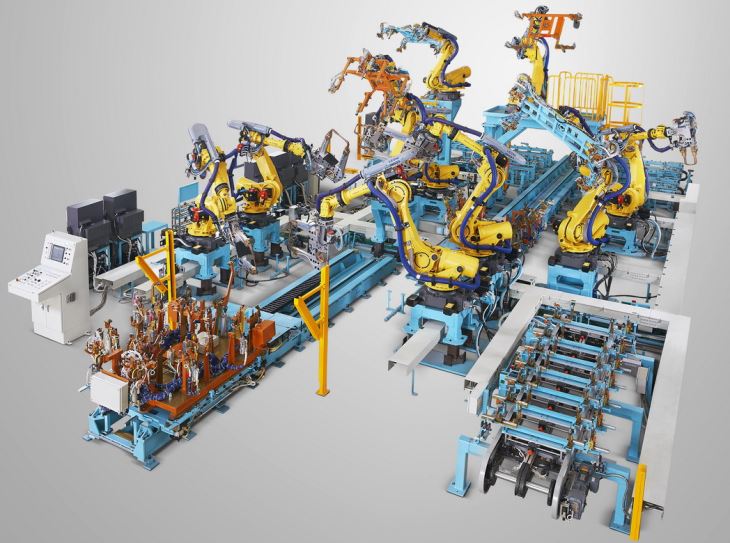
Robotic MIG weld fixtures can improve safety in the workplace. Since the robot performs the welding, the operator can be located at a safe distance from the welding area. The robot is enclosed in a safety cage, which prevents unauthorized access and protects the operator from the welding hazards. This reduces the risk of workplace injuries and creates a safer working environment.
6. Quality Control
Quality control is essential in welding to ensure that the final product meets the required standards.
In manual welding, quality control is mainly based on the welder's visual inspection and experience. While experienced welders can detect most defects, there is still a chance of human error. Some defects, such as internal porosity or lack of fusion, may not be visible to the naked eye.
Robotic MIG weld fixtures offer better quality control. The welding process is monitored by sensors and control systems, which can detect any deviations from the programmed parameters. If a defect is detected, the robot can stop the welding process immediately, and the operator can take corrective action. This real - time monitoring ensures that the weld quality is consistent and meets the required standards.
Conclusion
In conclusion, both manual and robotic MIG weld fixtures have their own advantages and disadvantages. Manual weld fixtures are more flexible, have a lower initial investment, and are suitable for small - batch production and custom jobs. Robotic weld fixtures, on the other hand, offer higher precision, consistency, speed, and productivity, and are better for large - scale production of standardized parts. They also improve safety and quality control in the workplace.
If you're in the market for a MIG weld fixture and are considering a robotic solution, I'd love to have a chat with you. We can discuss your specific needs, and I can show you how our Robotic MIG Weld Fixtures can benefit your business. Whether you're in the automotive, aerospace, or any other industry that requires high - quality welding, we've got the expertise and the products to meet your requirements. So, don't hesitate to reach out for a procurement discussion.
References
- Welding Handbook, American Welding Society
- Industrial Robotics: Technology, Programming, and Applications, by Peter Corke