In the realm of modern manufacturing, the auto welding process stands as a cornerstone, particularly in the automotive and metal - fabrication industries. At the heart of an efficient and precise auto welding operation lies the auto welding jig. As a seasoned auto welding jig supplier, I've witnessed firsthand the transformative impact these tools have on production lines. In this blog, I'll delve into the numerous advantages of using an auto welding jig, offering insights that will help you understand why they are indispensable in today's manufacturing landscape.
1. Enhanced Precision and Consistency
One of the most significant advantages of using an auto welding jig is the remarkable improvement in precision and consistency. In manual welding, the quality of welds can vary significantly from one operator to another and even within the work of a single operator. Small variations in hand - steadiness, electrode angle, or travel speed can lead to inconsistent weld bead sizes, penetration depths, and overall joint quality.
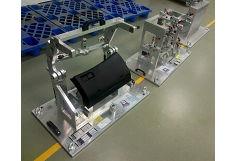
Auto welding jigs, on the other hand, hold the workpieces in a fixed and precisely defined position. This means that each weld is made under the exact same conditions, resulting in highly consistent welds across multiple parts. For example, in the production of automotive frames, where the integrity of each weld is crucial for vehicle safety, the use of an auto welding jig ensures that every joint meets the strict quality standards. This consistency not only improves the overall quality of the final product but also reduces the likelihood of defects and rework, saving both time and money.
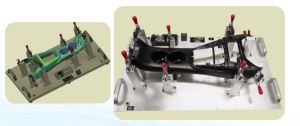
When it comes to complex geometries, such as Auto Pillar Parts Welding Fixture, the precision offered by a dedicated welding jig is even more critical. These fixtures are designed to hold the auto pillar parts in the correct orientation, allowing for accurate welding of multiple joints with minimal distortion.
2. Increased Productivity
Time is money in the manufacturing world, and auto welding jigs are a powerful tool for boosting productivity. By holding the workpieces in place, jigs eliminate the need for constant manual re - positioning during the welding process. This allows operators to focus solely on the welding operation, reducing the time spent on setup and alignment.
In high - volume production environments, the time saved per part can quickly add up. For instance, in a large - scale automotive manufacturing plant, where thousands of parts are welded every day, the use of auto welding jigs can significantly increase the number of parts produced per hour. Moreover, the consistent weld quality achieved with jigs means fewer rejects and less time spent on rework, further enhancing overall productivity.
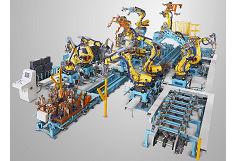
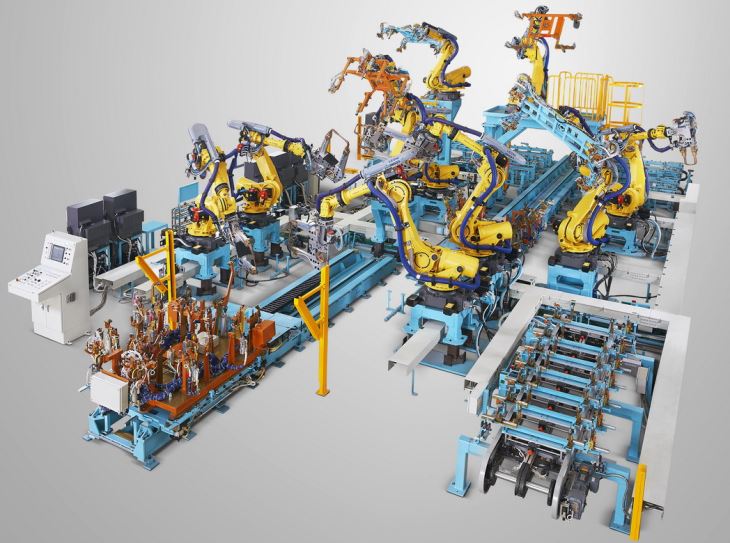
Robotic welding systems are often paired with auto welding jigs to achieve even greater productivity gains. The Robotic Welding Fixture Line is a prime example of this synergy. Robots can work at a faster pace than human operators and can operate continuously without fatigue. When combined with a well - designed welding jig, robots can perform precise and rapid welding operations, maximizing the output of the production line.
3. Improved Operator Safety
Welding is a hazardous process that exposes operators to various risks, including heat, fumes, and electrical hazards. Auto welding jigs can play a crucial role in improving operator safety. By holding the workpieces securely, jigs reduce the need for operators to manually hold or position parts close to the welding arc. This minimizes the risk of burns, electric shocks, and exposure to harmful fumes.
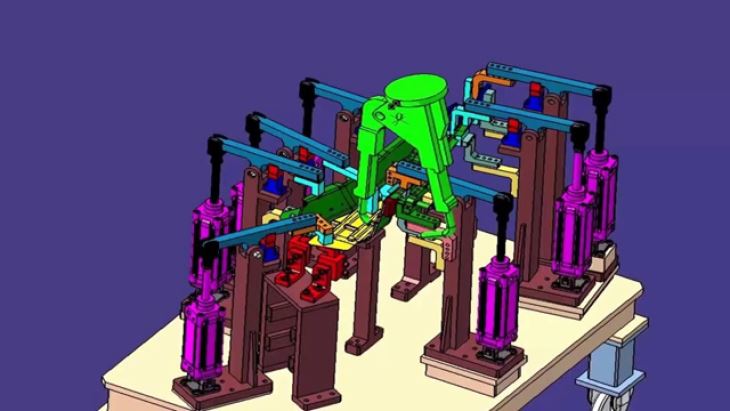
In addition, many modern auto welding jigs are designed with safety features such as interlocks and guards. These features prevent operators from accessing the welding area while the machine is in operation, further reducing the risk of accidents. For example, a jig may be equipped with a safety door that automatically closes when the welding process starts and only opens once the process is complete.
4. Cost - Effectiveness
While the initial investment in an auto welding jig may seem significant, it offers long - term cost savings. As mentioned earlier, the improved precision and consistency of welds result in fewer defects and rework. This reduces the cost of materials wasted on defective parts and the labor cost associated with re - welding.
Moreover, the increased productivity achieved with auto welding jigs means that more parts can be produced in less time. This allows manufacturers to meet higher production demands without having to hire additional labor or invest in more expensive equipment. Over time, the cost savings from reduced waste, increased productivity, and lower labor costs can far outweigh the initial cost of the jig.
In addition, auto welding jigs are often designed to be modular and adjustable. This means that they can be easily reconfigured to accommodate different workpiece sizes and geometries, providing a high degree of flexibility and cost - effectiveness. Instead of purchasing a new jig for each new product design, manufacturers can modify an existing jig, saving both time and money.
5. Better Quality Control
Quality control is a critical aspect of manufacturing, and auto welding jigs play an important role in ensuring that products meet the required quality standards. The precise positioning of workpieces provided by jigs allows for accurate measurement and inspection of welds. For example, non - destructive testing methods such as ultrasonic testing or X - ray inspection can be more effectively carried out when the parts are held in a fixed position by a jig.
Jigs also make it easier to implement statistical process control (SPC) techniques. By collecting data on the weld quality of each part produced, manufacturers can identify trends and potential issues early on. This allows for timely adjustments to the welding process, ensuring that the quality of the final product remains consistent.
6. Flexibility and Adaptability
Modern auto welding jigs are highly flexible and adaptable to different manufacturing needs. They can be designed to accommodate a wide range of workpiece sizes, shapes, and materials. Whether you're welding small, intricate parts or large, heavy - duty components, there's an auto welding jig that can meet your requirements.
Furthermore, as product designs change over time, auto welding jigs can be modified or upgraded to suit the new specifications. This adaptability ensures that manufacturers can continue to use their existing jigs, reducing the need for costly new investments. For example, a jig that was originally designed for welding steel parts can be re - engineered to handle aluminum or other non - ferrous metals.
Contact for Procurement and Collaboration
If you're looking to enhance the efficiency, precision, and quality of your auto welding operations, an auto welding jig is the solution you need. As a leading auto welding jig supplier, we have a wide range of products to meet your specific requirements. Whether you need a custom - designed jig for a unique application or a standard jig for high - volume production, we can provide you with the right solution.
We understand that every manufacturing process is unique, and we're committed to working closely with you to develop the perfect auto welding jig for your needs. Our team of experienced engineers and technicians will work with you from the initial design stage to ensure that the jig meets your exact specifications.
Don't miss out on the numerous advantages that auto welding jigs can offer. Contact us today to discuss your procurement needs and start a collaboration that will take your manufacturing process to the next level.
References
- ASME Boiler and Pressure Vessel Code, Section IX: Welding and Brazing Qualifications.
- AWS D1.1/D1.1M: Structural Welding Code - Steel.
- ISO 9001:2015 Quality management systems - Requirements.