When it comes to the precision measurement of cupholders, selecting the right CMM (Coordinate Measuring Machine) holding jig is crucial. As a dedicated Cupholder CMM holding jig supplier, I understand the intricacies involved in this selection process. In this blog, I will share valuable insights on how to choose a Cupholder CMM holding jig based on measurement requirements.

Understanding the Basics of Cupholder CMM Holding Jigs
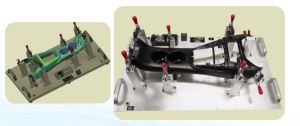
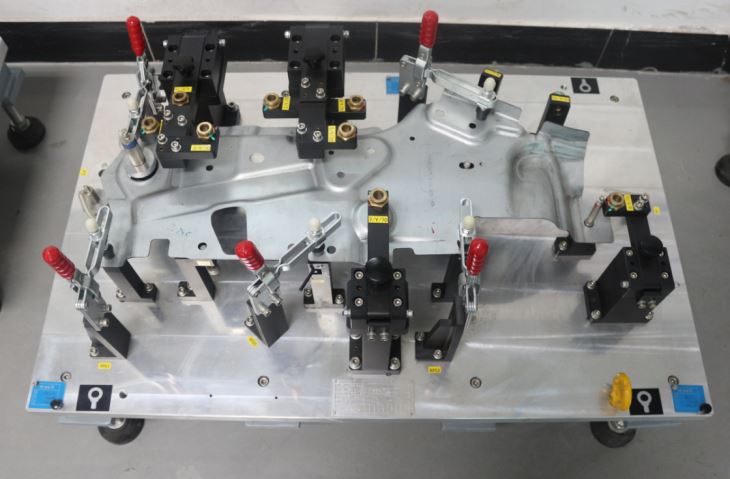
Before delving into the selection process, it's essential to grasp the fundamental role of Cupholder CMM holding jigs. These jigs are designed to securely hold cupholders in place during the measurement process on a CMM. By providing a stable and repeatable positioning of the cupholder, the holding jig ensures accurate and reliable measurement results.
The Cupholder CMM Holding Fixture is a specialized tool that plays a vital role in the quality control of cupholders. It helps in maintaining the correct orientation and position of the cupholder, minimizing errors caused by movement or misalignment during measurement.
Key Measurement Requirements
The first step in selecting a Cupholder CMM holding jig is to clearly define the measurement requirements. This involves considering several factors, including:
Dimensional Accuracy
The primary purpose of using a CMM is to measure the dimensions of the cupholder with high precision. Therefore, the holding jig should be able to hold the cupholder in such a way that the measurement points are easily accessible and the measurement results are accurate. The jig should provide a stable platform that minimizes any deformation or movement of the cupholder during measurement.
Geometric Tolerances
In addition to dimensional accuracy, geometric tolerances such as flatness, straightness, and roundness also need to be measured. The holding jig should be designed to ensure that the cupholder is held in a way that allows for accurate measurement of these geometric features. For example, if the cupholder has a curved surface, the jig should provide proper support to prevent any distortion of the surface during measurement.
Surface Finish
The surface finish of the cupholder can also affect the measurement results. The holding jig should be designed to avoid any damage to the surface of the cupholder, especially if the surface finish is critical for the functionality or aesthetics of the product. A smooth and non-abrasive surface on the holding jig can help in maintaining the integrity of the cupholder's surface during measurement.
Material Compatibility
The material of the cupholder can also influence the selection of the holding jig. Different materials may have different properties, such as hardness, flexibility, and thermal expansion. The holding jig should be made of a material that is compatible with the cupholder material to ensure a secure and stable hold without causing any damage to the cupholder.
Types of Cupholder CMM Holding Jigs
There are several types of Cupholder CMM holding jigs available in the market, each designed to meet specific measurement requirements. Some of the common types include:
Customized Jigs
Customized jigs are designed specifically for a particular cupholder or a set of cupholders with similar characteristics. These jigs are tailored to the specific measurement requirements of the cupholder, providing a high level of accuracy and repeatability. Customized jigs are often used when the cupholder has complex geometries or unique features that require a specialized holding solution.
Universal Jigs
Universal jigs are designed to be flexible and adaptable to different types of cupholders. These jigs typically have adjustable features that allow for the holding of cupholders with different sizes and shapes. Universal jigs are a cost-effective solution when there is a need to measure a variety of cupholders with similar measurement requirements.
Modular Jigs
Modular jigs are composed of individual modules that can be combined and configured to create a customized holding solution. These jigs offer a high degree of flexibility and can be easily modified to accommodate different cupholders or measurement requirements. Modular jigs are often used in situations where there is a need for frequent changes in the measurement setup.
Considerations for Jig Design
When selecting a Cupholder CMM holding jig, it's important to consider the design of the jig. A well-designed jig can significantly improve the measurement accuracy and efficiency. Some of the key design considerations include:
Accessibility
The holding jig should provide easy access to the measurement points on the cupholder. This allows for quick and efficient measurement without the need for excessive repositioning or manipulation of the cupholder. The jig should also be designed to minimize any interference with the CMM probe, ensuring smooth and accurate measurement.
Stability
The holding jig should be stable and rigid enough to prevent any movement or vibration of the cupholder during measurement. This can be achieved by using high-quality materials and a robust design. The jig should also be properly secured to the CMM table to ensure a stable measurement environment.
Ease of Use
The holding jig should be easy to use and operate. It should be simple to load and unload the cupholder, and the adjustment of the jig should be straightforward. This helps in reducing the time and effort required for measurement, improving the overall productivity.
Compatibility with the CMM
The holding jig should be compatible with the specific CMM being used. This includes considerations such as the size and shape of the CMM table, the type of probe used, and the software requirements. Ensuring compatibility between the jig and the CMM can help in achieving optimal measurement results.
Importance of Quality and Precision
As a Cupholder CMM holding jig supplier, I understand the importance of providing high-quality and precise jigs. The quality of the holding jig directly affects the accuracy and reliability of the measurement results. Therefore, it's essential to choose a supplier who has a reputation for manufacturing high-quality jigs.
A high-quality holding jig is made of durable materials that can withstand the rigors of repeated use. It is also designed and manufactured with high precision, ensuring that it meets the strictest quality standards. By using a high-quality holding jig, you can be confident in the accuracy of your measurement results and the quality of your cupholders.
Conclusion
Selecting the right Cupholder CMM holding jig based on measurement requirements is a critical step in ensuring accurate and reliable measurement of cupholders. By clearly defining the measurement requirements, considering the key factors such as dimensional accuracy, geometric tolerances, surface finish, and material compatibility, and choosing the appropriate type of jig, you can achieve optimal measurement results.
As a trusted Cupholder CMM holding jig supplier, I am committed to providing high-quality jigs that meet the specific needs of my customers. If you are in the market for a Cupholder CMM holding jig, I encourage you to contact me to discuss your requirements and explore the best solutions for your measurement needs.
References
- ISO 10360-1:2019, Geometrical product specifications (GPS) — Acceptance and reverification tests for coordinate measuring machines (CMM) — Part 1: CMMs used for dimensional measurements
- ASME Y14.5-2018, Dimensioning and Tolerancing
- ASTM E456-15, Standard Terminology Relating to Quality and Statistics