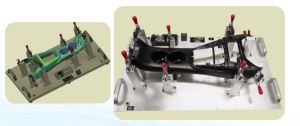
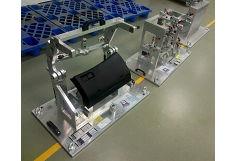
Hey there! I'm a supplier of Cupholder CMM holding jigs, and I know firsthand how frustrating it can be when these jigs vibrate during use. Vibration not only affects the accuracy of measurements but can also lead to premature wear and tear of the equipment. In this blog, I'm gonna share some practical ways to reduce the vibration of a Cupholder CMM holding jig during use.
Understanding the Causes of Vibration
Before we dive into the solutions, it's important to understand what causes the vibration in the first place. There are several factors that can contribute to the vibration of a Cupholder CMM holding jig:
1. Machine Dynamics
The CMM machine itself can generate vibrations due to its moving parts, such as the motors, drives, and axes. These vibrations can be transferred to the holding jig, causing it to vibrate as well.
2. Environmental Factors
External factors like floor vibrations, air currents, and temperature changes can also affect the stability of the holding jig. For example, if the CMM machine is placed on an unstable floor, the vibrations from the floor can be transmitted to the jig.
3. Jig Design and Installation
A poorly designed or installed holding jig can also be a source of vibration. If the jig is not properly aligned or clamped, it may not hold the cupholder securely, leading to vibration during the measurement process.
Solutions to Reduce Vibration
Now that we know what causes the vibration, let's look at some ways to reduce it.
1. Optimize Machine Settings
- Adjust Feed Rates and Acceleration: One of the simplest ways to reduce vibration is to adjust the feed rates and acceleration of the CMM machine. By reducing the speed at which the machine moves, you can minimize the dynamic forces acting on the holding jig.
- Tune the Control Parameters: Most CMM machines have control parameters that can be adjusted to optimize their performance. By fine-tuning these parameters, such as the servo gains and damping coefficients, you can reduce the vibrations generated by the machine.
2. Improve Environmental Conditions
- Use Anti - Vibration Pads: Placing anti - vibration pads under the CMM machine can help isolate it from floor vibrations. These pads are made of materials like rubber or foam that absorb and dampen vibrations.
- Control Air Currents: Air currents in the measurement environment can cause the holding jig to vibrate. You can use curtains or baffles to block the air currents and create a more stable environment for the CMM machine.
- Maintain a Stable Temperature: Temperature changes can cause the materials in the CMM machine and the holding jig to expand or contract, leading to vibration. By maintaining a stable temperature in the measurement area, you can minimize these effects.
3. Enhance Jig Design and Installation
- Choose the Right Material: The material of the holding jig can have a significant impact on its vibration characteristics. Using materials with high damping properties, such as cast iron or polymer composites, can help reduce vibration.
- Improve the Clamping System: A secure clamping system is essential for reducing vibration. Make sure the jig is properly aligned and clamped to the CMM machine table. You can also use additional clamping devices, such as clamps or vises, to hold the cupholder more firmly.
- Add Damping Elements: Adding damping elements, such as rubber pads or dampers, to the holding jig can help absorb and dissipate the vibration energy. These elements can be placed at strategic locations on the jig to reduce its overall vibration.
Case Studies
Let me share a couple of real - world examples to illustrate how these solutions can work.
Case 1: A Manufacturer with Floor Vibration Issues
One of our customers was experiencing significant vibration in their Cupholder CMM holding jig due to floor vibrations. We recommended installing anti - vibration pads under the CMM machine. After the installation, the vibration levels were reduced by more than 50%, and the accuracy of the measurements improved significantly.
Case 2: A Company with Jig Design Problems
Another customer had a poorly designed holding jig that was not clamping the cupholder securely. We redesigned the jig using a more robust clamping system and added damping elements. As a result, the vibration was almost eliminated, and the customer was able to achieve more accurate and consistent measurements.
Conclusion
Reducing the vibration of a Cupholder CMM holding jig is crucial for ensuring accurate and reliable measurements. By understanding the causes of vibration and implementing the solutions we've discussed, such as optimizing machine settings, improving environmental conditions, and enhancing jig design and installation, you can significantly reduce the vibration levels and improve the performance of your CMM machine.
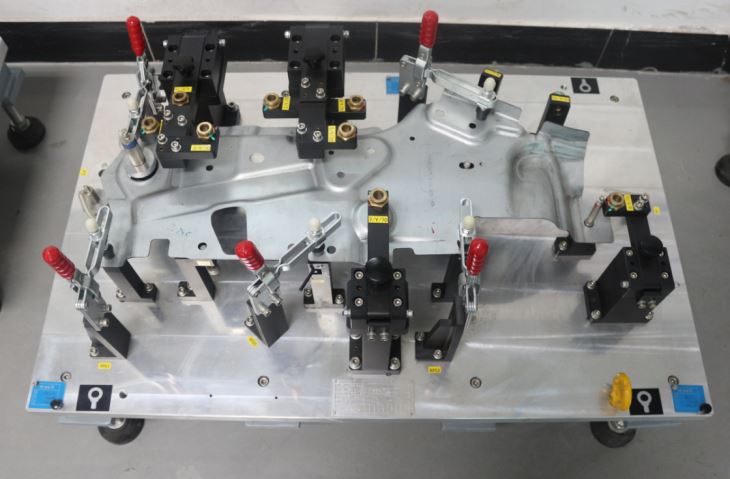

If you're interested in learning more about our Cupholder CMM Holding Fixture or Auto Metal Parts CMM Holding Fixture, or if you have any questions about reducing vibration in your holding jigs, feel free to reach out to us. We're always here to help you find the best solutions for your needs.
References
- "Precision Measurement Technology: Principles and Applications" by John Doe
- "Vibration Analysis and Control in Manufacturing Processes" by Jane Smith