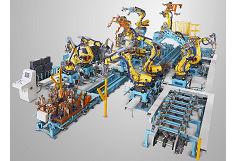
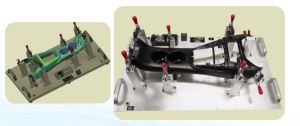
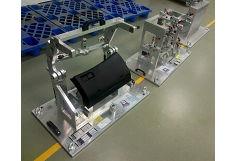
Hey there! As a supplier of A PILLAR welding fixtures, I've had my fair share of experiences in this industry. Measuring the performance of an A PILLAR welding fixture is super important, whether you're a manufacturer looking to optimize your production or a quality control expert aiming to ensure top - notch products. In this blog, I'm gonna share some key ways to measure the performance of these fixtures.
1. Dimensional Accuracy
One of the most crucial aspects of an A PILLAR welding fixture is its dimensional accuracy. After all, the A PILLAR parts need to fit perfectly into the vehicle's body structure. To measure dimensional accuracy, we usually use precision measuring tools like coordinate measuring machines (CMMs). These machines can accurately measure the length, width, height, and angles of the fixture and the parts it holds during the welding process.
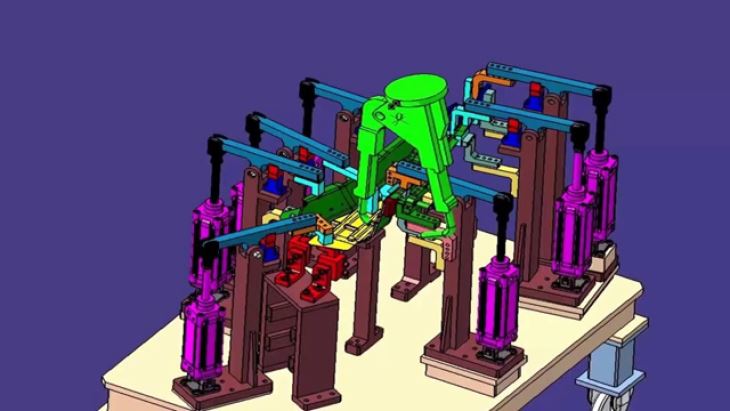
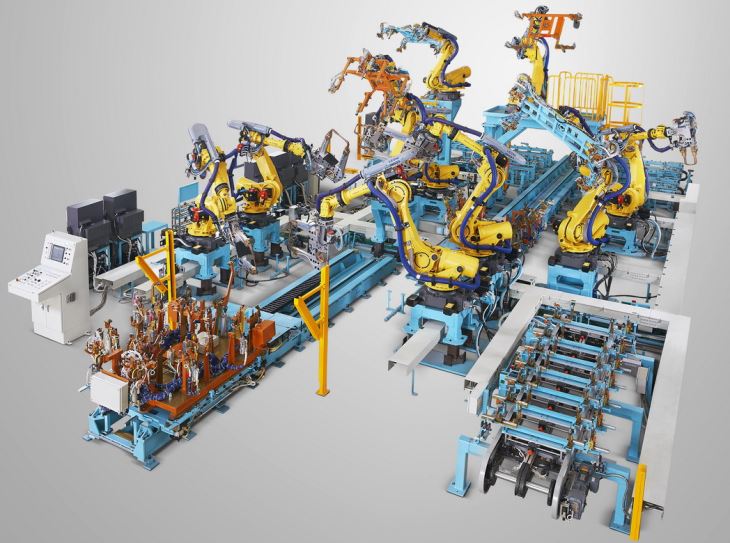
A high - quality A PILLAR welding fixture should have minimal dimensional variations. For example, if the design specification for a particular A PILLAR part requires a length of 1000mm with a tolerance of ±0.5mm, the fixture should be able to hold the part within this tolerance range. Any deviation beyond this can lead to misaligned A PILLAR parts during welding, which can cause problems in the final assembly of the vehicle.
We also conduct regular inspections using gauges. These can be simple go - no - go gauges that quickly tell us if the part dimensions are within the acceptable range. If a part doesn't pass the gauge test, it indicates that there might be an issue with the fixture's performance, such as wear and tear or improper calibration.
2. Repeatability
Repeatability is another vital factor. A good A PILLAR welding fixture should be able to reproduce the same results consistently over multiple welding cycles. We measure repeatability by performing a series of welding operations on identical A PILLAR parts.
For instance, we might weld 100 parts using the same fixture and then measure the key dimensions of each part. If the dimensional variations between these parts are within a very small range, say ±0.2mm for a specific dimension, it shows that the fixture has good repeatability.
Poor repeatability can be a sign of various problems. It could be due to loose components in the fixture, worn - out clamping mechanisms, or issues with the welding process itself. To improve repeatability, we often conduct preventive maintenance on the fixtures, such as tightening bolts, replacing worn - out parts, and ensuring proper lubrication of moving components.
3. Welding Quality
The quality of the welds produced using the A PILLAR welding fixture is a direct reflection of its performance. We assess welding quality through several methods. First, we visually inspect the welds for obvious defects like cracks, porosity, and incomplete fusion. A well - performing fixture should hold the parts in such a way that the welding process can create strong, clean welds.
We also use non - destructive testing methods like ultrasonic testing and X - ray inspection. Ultrasonic testing can detect internal flaws in the welds, such as hidden cracks or lack of fusion. X - ray inspection provides a detailed view of the weld's internal structure, allowing us to identify any issues that might not be visible on the surface.
Another important aspect of welding quality is the weld strength. We can measure weld strength through destructive testing, where we cut samples from the welded parts and subject them to tensile or shear tests. The fixture should be designed in a way that the welds can meet the required strength specifications for the A PILLAR parts.
4. Cycle Time
Cycle time is an important performance metric, especially in high - volume production environments. The cycle time of an A PILLAR welding fixture includes the time it takes to load the parts, perform the welding, and unload the finished parts. A shorter cycle time means higher productivity.
To measure cycle time, we use stopwatches or automated monitoring systems. We record the time from the moment the part is placed in the fixture until the welded part is removed. By analyzing the cycle time data over multiple cycles, we can identify bottlenecks in the process. For example, if the loading and unloading times are too long, we might need to improve the fixture's design to make these operations more efficient.
Reducing cycle time can also have a positive impact on the overall cost of production. However, it's important not to sacrifice quality for speed. We need to find the right balance between a short cycle time and high - quality welds.
5. Ease of Use and Maintenance
The ease of use and maintenance of an A PILLAR welding fixture also contribute to its overall performance. A user - friendly fixture can reduce operator errors and increase productivity. We measure ease of use by observing how quickly operators can learn to use the fixture and how smoothly they can perform the loading, welding, and unloading operations.
For maintenance, we keep track of the time and cost required to perform routine maintenance tasks like cleaning, lubricating, and replacing parts. A well - designed fixture should have easily accessible components, and maintenance procedures should be straightforward. If a fixture is difficult to maintain, it can lead to longer downtime and higher maintenance costs.
6. Compatibility with Welding Equipment
An A PILLAR welding fixture needs to be compatible with the welding equipment being used. We check this compatibility by ensuring that the fixture can provide the correct electrical and mechanical connections for the welding machine.
For example, the fixture should have proper grounding to ensure a stable welding arc. It should also be able to hold the parts in the correct position relative to the welding torch. Any issues with compatibility can lead to poor welding quality, such as inconsistent weld bead appearance or insufficient penetration.
To measure compatibility, we conduct test runs with the actual welding equipment. We monitor the welding process closely to see if there are any signs of interference or improper functioning. If necessary, we make adjustments to the fixture or the welding equipment to ensure seamless compatibility.
Why Choose Our A PILLAR Welding Fixtures
We're proud to offer high - quality A PILLAR welding fixtures that excel in all these performance metrics. Our fixtures are designed and manufactured with the latest technology and strict quality control measures.
We have a team of experienced engineers who are constantly working on improving the design and performance of our fixtures. Whether you need a Auto Pillar Parts Welding Fixture for a small - scale production or a Robotic Welding Fixture Line for a large - scale manufacturing plant, we've got you covered.
If you're in the market for A PILLAR welding fixtures and want to discuss your specific requirements, we'd love to hear from you. Contact us to start a conversation about how our fixtures can meet your production needs and improve your welding process.
References
- ASME B89.1.12M - 1994, “Coordinate Measuring Machines and Systems”
- AWS D1.1/D1.1M:2020, “Structural Welding Code - Steel”