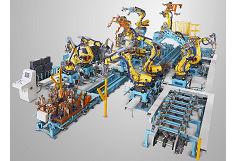
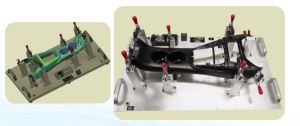
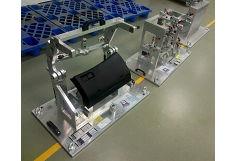
As a supplier of Checking Fixtures, validating a newly designed checking fixture is a critical process that ensures its accuracy, reliability, and suitability for its intended purpose. In this blog, I'll share the comprehensive steps and considerations involved in validating a newly designed checking fixture.


1. Initial Review of Design Specifications
The validation process begins with a thorough review of the design specifications. This involves collaborating closely with the engineering team that designed the fixture. We examine the blueprints, 3D models, and technical documentation to understand the intended functionality, tolerance requirements, and the part it is designed to check.
For instance, if it's a Checking Fixture For Plastic Parts, we need to ensure that the fixture can accurately measure the complex geometries and surface finishes typical of plastic components. The design should account for factors such as material shrinkage, warping, and the flexibility of the plastic.
2. Material and Build Quality Assessment
The quality of materials used in the construction of the checking fixture is paramount. We inspect the raw materials to ensure they meet the required standards. High - quality materials not only enhance the durability of the fixture but also contribute to its measurement accuracy.
We check for proper machining and fabrication processes. The surfaces should be smooth, free from burrs, and have the correct dimensions. For example, if the fixture has precision holes for pins or probes, these holes must be drilled with high accuracy to ensure proper alignment and measurement.
3. Dimensional Inspection
Dimensional inspection is a crucial step in validating a checking fixture. We use a variety of precision measuring instruments such as coordinate measuring machines (CMMs), calipers, micrometers, and gauges.
We measure all critical dimensions of the fixture and compare them with the design specifications. Any deviations outside the acceptable tolerance range need to be addressed. This includes linear dimensions, angles, and surface flatness. For a complex Checking Fixtures, multiple measurements may be required at different locations to ensure overall accuracy.
4. Functional Testing
Functional testing involves using the checking fixture to measure actual parts. We select a representative sample of parts that cover the expected range of dimensions and features.
We place the parts on the fixture and perform the measurement procedures as intended. This includes checking for proper part fit, alignment, and the ability of the fixture to detect any out - of - tolerance conditions. For example, if the fixture is designed to check the alignment of holes in a part, we use appropriate probes or pins to verify that the holes are in the correct position within the specified tolerance.
During functional testing, we also assess the ease of use of the fixture. Operators should be able to handle the fixture comfortably and perform the measurements efficiently. Any issues with the ergonomics or the operation of the fixture need to be resolved.
5. Repeatability and Reproducibility Testing
Repeatability and reproducibility (R&R) testing are essential to ensure the consistency of the checking fixture. Repeatability refers to the ability of the fixture to give the same measurement results when used repeatedly by the same operator on the same part. Reproducibility, on the other hand, is the ability of different operators to obtain the same measurement results using the fixture.
We conduct R&R studies by having multiple operators measure the same set of parts using the fixture. The data collected is then analyzed using statistical methods. A low R&R value indicates good consistency and reliability of the fixture. If the R&R results are not satisfactory, we need to identify the sources of variation, such as operator technique, fixture wear, or environmental factors, and take corrective actions.
6. Comparison with Reference Standards
We compare the measurements obtained from the newly designed checking fixture with those from established reference standards. This can be a master part with known and verified dimensions or a calibrated measurement device.
By comparing the results, we can determine the accuracy of the fixture. Any significant differences between the fixture's measurements and the reference standards need to be investigated and corrected. For example, if the reference standard indicates a certain dimension, and the fixture consistently measures a different value, there may be an issue with the fixture's calibration or design.
7. Environmental Considerations
The performance of a checking fixture can be affected by environmental factors such as temperature, humidity, and vibration. We test the fixture under different environmental conditions to ensure its stability and accuracy.
For example, changes in temperature can cause the fixture materials to expand or contract, which may affect the measurement results. We need to determine the acceptable environmental range for the fixture and provide appropriate guidelines for its use. If necessary, we may also incorporate environmental compensation mechanisms into the fixture design.
8. Documentation and Traceability
Throughout the validation process, we maintain detailed documentation. This includes records of all inspections, tests, measurements, and any corrective actions taken. The documentation serves as a proof of the fixture's validation and provides a reference for future maintenance and calibration.
We also ensure traceability of the measurement results. This means that we can link the measurements obtained from the fixture to the specific parts, operators, and measurement conditions. Traceability is important for quality control and for meeting regulatory requirements.
9. Final Approval and Release
After completing all the validation steps and ensuring that the fixture meets all the requirements, we give the final approval. The fixture is then ready for release for production use.
We provide the customer with a validation report that summarizes the results of all the tests and inspections. This report gives the customer confidence in the quality and performance of the checking fixture.
Contact for Purchase and Collaboration
If you are in the market for high - quality Checking Fixture And Gages or have specific requirements for a custom - designed checking fixture, we are here to assist you. Our team of experts can work closely with you to understand your needs and provide the best solutions. Whether you need a simple fixture for basic measurements or a complex one for advanced quality control, we have the experience and capabilities to deliver. Reach out to us to start a discussion about your project.
References
- "Measurement Systems Analysis" by AIAG (Automotive Industry Action Group).
- "Fundamentals of Precision Measurement" by Peter J. Schmitt.
- Technical standards related to checking fixtures from ISO (International Organization for Standardization).