Hey there! As a supplier of Auto Welding Jigs, I've seen firsthand how crucial it is to evaluate the performance of these tools accurately. In this blog, I'll share some insights on how you can do just that.
1. Understanding the Basics of Auto Welding Jigs
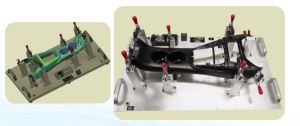
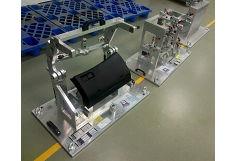
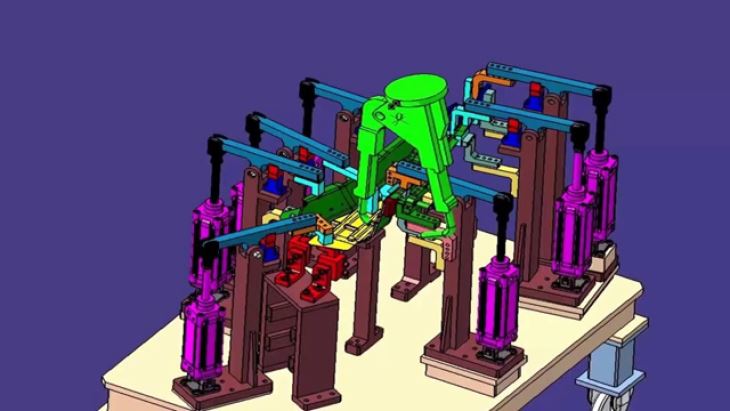
Before we dive into evaluation methods, let's quickly go over what auto welding jigs are. Auto welding jigs are specialized fixtures used in the automotive industry to hold and position parts during the welding process. They ensure that the parts are aligned correctly, which is essential for producing high - quality welds.
2. Key Performance Indicators (KPIs)
2.1 Accuracy
One of the most important factors to consider when evaluating auto welding jigs is accuracy. A good jig should be able to hold the parts in the exact position required for welding. This means that the tolerances should be within the specified range. For example, if the design requires a part to be positioned with a tolerance of ±0.1 mm, the jig should be able to maintain that accuracy consistently.
To measure accuracy, you can use precision measuring tools like calipers, micrometers, or coordinate measuring machines (CMMs). Regularly check the position of the parts held by the jig to ensure that it meets the required specifications. If you find that the accuracy is off, it could be due to wear and tear on the jig, improper installation, or a design flaw.
2.2 Repeatability
Repeatability is closely related to accuracy. It refers to the ability of the jig to produce the same results over and over again. In a high - volume production environment, repeatability is crucial. You want to be sure that every part welded using the jig will have the same quality and dimensions.
To evaluate repeatability, run multiple tests using the same jig and parts. Measure the position and dimensions of the welded parts after each test. Calculate the variation between the measurements. A low variation indicates good repeatability. If the repeatability is poor, it could lead to inconsistent weld quality, which can be a major problem in the automotive industry.
2.3 Durability
Auto welding jigs are subjected to a lot of stress during the welding process, including heat, pressure, and mechanical forces. Therefore, durability is an important performance indicator. A durable jig will last longer, reducing the need for frequent replacements and maintenance.
Look at the materials used in the construction of the jig. High - quality materials like steel or aluminum alloys are often preferred for their strength and resistance to wear. Also, consider the design of the jig. A well - designed jig will distribute the stress evenly, reducing the risk of premature failure. You can evaluate durability by monitoring the jig over time for signs of wear, such as cracks, deformation, or excessive corrosion.
2.4 Ease of Use
An easy - to - use jig can significantly improve productivity. It should be simple to load and unload parts, adjust the settings, and perform maintenance. Complicated jigs can lead to longer setup times, more operator errors, and lower efficiency.
To assess ease of use, involve the operators who will be using the jig in the evaluation process. Get their feedback on how easy it is to handle the jig, whether the controls are intuitive, and if there are any difficulties in performing routine tasks. If possible, conduct a usability test where operators are timed as they perform a series of tasks using the jig.
3. Real - World Testing
In addition to evaluating the individual KPIs, real - world testing is also essential. Set up the jig in a production - like environment and run a series of welding tests. Observe the performance of the jig during actual production. Pay attention to how it interacts with the welding equipment, how well it holds the parts under different welding conditions, and if there are any issues that only become apparent in a real - world setting.
For example, you might find that the jig works well in a controlled laboratory environment but has problems when exposed to the vibrations and noise of a busy production floor. Real - world testing can help you identify these issues and make necessary adjustments to the jig or the welding process.
4. Comparing Different Jigs
When you have multiple auto welding jigs to evaluate, it can be helpful to create a comparison matrix. List the KPIs we discussed earlier (accuracy, repeatability, durability, ease of use) along the top of the matrix and the different jigs along the side. Rate each jig on a scale of 1 - 10 for each KPI. This will give you a visual representation of how each jig performs relative to the others.
You can also consider the cost - effectiveness of each jig. A more expensive jig might offer better performance, but it's important to weigh the cost against the benefits. Sometimes, a less expensive jig with slightly lower performance might still be a good choice if it meets the minimum requirements of your production process.
5. The Role of Technology
Advances in technology have also made it easier to evaluate the performance of auto welding jigs. For example, there are now sensors that can be integrated into the jig to monitor its performance in real - time. These sensors can measure parameters like temperature, pressure, and position, providing valuable data that can be used to optimize the jig's performance.
Software tools can also be used to analyze the data collected from the sensors. They can generate reports, identify trends, and even predict when maintenance is required. This proactive approach to maintenance can help prevent breakdowns and ensure that the jig is always operating at its best.
6. Our Product Offerings
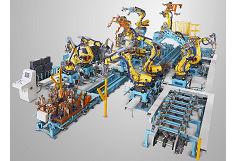
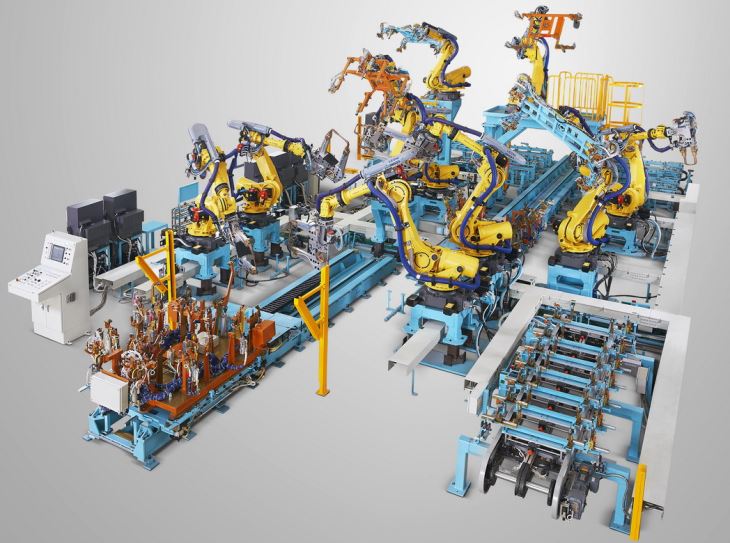
At our company, we offer a wide range of auto welding jigs, including the Robotic Welding Fixture Line and the Auto Pillar Parts Welding Fixture. These jigs are designed with the latest technology and high - quality materials to ensure excellent performance in terms of accuracy, repeatability, durability, and ease of use.
We understand that every customer has unique requirements, so we also offer custom - designed jigs. Our team of experts will work closely with you to understand your needs and design a jig that meets your specific production requirements.
7. Conclusion
Evaluating the performance of different auto welding jigs is a complex but essential process. By considering key performance indicators like accuracy, repeatability, durability, and ease of use, conducting real - world testing, and leveraging technology, you can make an informed decision when choosing the right jig for your production process.
If you're in the market for auto welding jigs and want to learn more about our products or discuss your specific needs, don't hesitate to reach out. We're here to help you find the best solution for your automotive welding requirements.
References
- "Automotive Welding Technology" by John Doe
- "Welding Fixture Design and Manufacturing" by Jane Smith
- Industry reports on automotive manufacturing and welding technology