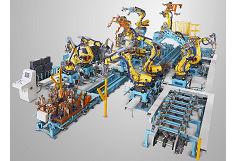
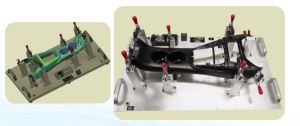
When embarking on a welding project, selecting the right Robotic MIG Weld Fixture is crucial for achieving high - quality results, enhancing efficiency, and ensuring the safety of the operation. As a supplier of Robotic MIG Weld Fixtures, I've witnessed firsthand the impact that the correct fixture can have on a project. In this blog, I'll guide you through the key factors to consider when choosing the appropriate fixture for your specific welding needs.
Understanding Your Welding Project
The first step in choosing the right Robotic MIG Weld Fixture is to thoroughly understand your welding project. This includes the type of materials you'll be working with, the complexity of the weld joints, and the production volume.
Material Compatibility
Different materials require different welding techniques and fixtures. For example, welding aluminum requires a different approach compared to steel. Aluminum is a softer and more thermally conductive material, which means that the fixture needs to be designed to handle its unique properties. It may require a fixture with better heat dissipation to prevent warping. On the other hand, steel is more rigid and can withstand higher temperatures, so the fixture design can be more focused on providing a stable clamping force.
Weld Joint Complexity
The complexity of the weld joints in your project also plays a significant role in fixture selection. Simple butt joints or lap joints may require a basic fixture that provides a stable surface for the parts to be joined. However, if your project involves more complex joints such as T - joints or corner joints, you'll need a fixture that can accurately position and hold the parts at the correct angles. Some fixtures come with adjustable clamps and定位 pins that can be customized to accommodate different joint configurations.
Production Volume
The production volume of your welding project is another important factor. If you're working on a high - volume production line, you'll need a fixture that is durable, reliable, and can be quickly set up and adjusted. A fixture with a modular design can be a great option for high - volume production as it allows for easy replacement of worn - out parts and can be adapted to different part sizes and shapes. For low - volume or prototype projects, a more flexible and customizable fixture may be more suitable, as it can be easily modified to accommodate changes in the design.
Evaluating Fixture Design Features
Once you have a clear understanding of your welding project, it's time to evaluate the design features of the Robotic MIG Weld Fixtures available in the market.
Clamping Mechanism
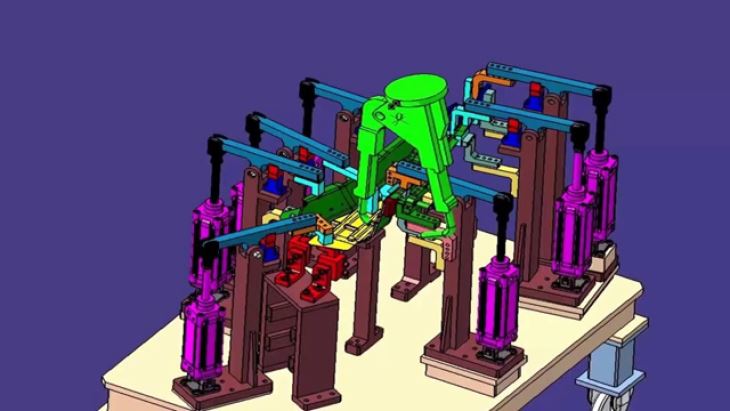
The clamping mechanism is one of the most important features of a weld fixture. It needs to provide a secure and stable hold on the parts being welded to prevent movement during the welding process. There are several types of clamping mechanisms available, including manual clamps, pneumatic clamps, and hydraulic clamps. Manual clamps are the most basic and are suitable for small - scale projects or when precise control is required. Pneumatic clamps offer a faster and more consistent clamping force, making them ideal for high - volume production. Hydraulic clamps, on the other hand, provide the highest clamping force and are often used for heavy - duty welding applications.
Adjustability
A good Robotic MIG Weld Fixture should be adjustable to accommodate different part sizes and shapes. This can be achieved through adjustable clamps,定位 pins, and sliding mechanisms. Adjustable fixtures are more versatile and can be used for multiple projects, reducing the need for multiple fixtures. For example, a fixture with adjustable定位 pins can be easily reconfigured to hold parts of different lengths or widths.
Accessibility
Accessibility is also an important consideration. The fixture should allow easy access to the weld joints for the welding torch. This means that the clamps and other components of the fixture should not obstruct the path of the torch. Some fixtures are designed with open - frame structures or removable sections to provide better access to the weld area.
Precision and Repeatability
Precision and repeatability are crucial for ensuring consistent weld quality. The fixture should be able to position the parts accurately and hold them in place with a high degree of repeatability. This is especially important for high - precision welding projects where even small deviations can affect the quality of the final product. Look for fixtures that are made from high - quality materials and have been precision - machined to ensure accurate positioning.
Considering the Robotic Welding System
The Robotic MIG Weld Fixture needs to be compatible with your robotic welding system. This includes the type of robot, its payload capacity, and its reach.
Robot Compatibility
Different robots have different programming capabilities and motion profiles. The fixture should be designed to work seamlessly with your robot. For example, if your robot has a limited range of motion, the fixture should be positioned in such a way that the weld joints are within the robot's reach. Some fixtures are specifically designed for certain robot models to ensure optimal compatibility.
Payload Capacity
The payload capacity of the robot is another important factor. The fixture, along with the parts being welded, should not exceed the robot's payload capacity. If the fixture is too heavy, it can affect the robot's performance and may even cause damage to the robot. Make sure to choose a fixture that is lightweight yet strong enough to hold the parts securely.
Cost - Benefit Analysis
Cost is always a consideration when choosing a Robotic MIG Weld Fixture. However, it's important to look beyond the initial purchase price and consider the long - term benefits.
Initial Cost
The initial cost of the fixture includes the purchase price, shipping costs, and any installation fees. While it may be tempting to choose the cheapest option, remember that a low - quality fixture may result in poor weld quality, increased downtime, and higher maintenance costs in the long run.
Operating Costs
Operating costs include the cost of energy, maintenance, and replacement parts. A fixture that is energy - efficient and requires minimal maintenance can save you money in the long term. For example, a pneumatic fixture may consume less energy compared to a hydraulic fixture.
Return on Investment (ROI)
The ROI of a fixture can be calculated by considering the savings in labor costs, increased productivity, and improved weld quality. A high - quality fixture that can increase the production speed and reduce the number of defective parts can provide a significant return on investment over time.
Exploring Our Product Range
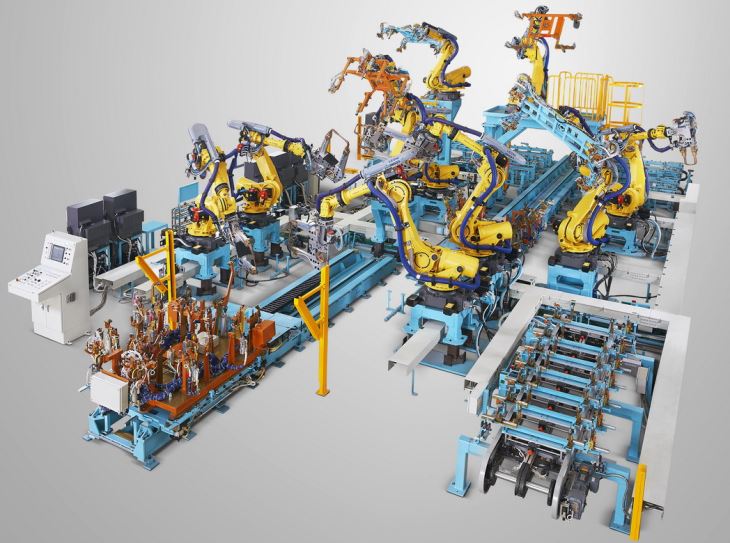
At our company, we offer a wide range of Robotic MIG Weld Fixtures to meet the diverse needs of our customers. Our Robotic Welding Fixture Line is designed for high - volume production and features modular designs for easy customization. We also have the Auto Pillar Parts Welding Fixture, which is specifically designed for welding auto pillar parts with high precision.
Conclusion
Choosing the right Robotic MIG Weld Fixture for your welding project is a complex decision that requires careful consideration of multiple factors. By understanding your project requirements, evaluating fixture design features, considering the robotic welding system, and conducting a cost - benefit analysis, you can make an informed decision. If you're still unsure about which fixture is right for your project, our team of experts is here to help. We can provide you with detailed information about our products and assist you in selecting the most suitable fixture for your needs. Contact us today to start a conversation about your welding project and how our Robotic MIG Weld Fixtures can help you achieve your goals.
References
- AWS Welding Handbook, American Welding Society
- Welding Technology: Principles and Applications, John R. Walker
- Robotic Welding: Technology, Programming, and Applications, Peter B. Luh