In the dynamic world of manufacturing, welding is a fundamental process that plays a crucial role in joining metal components. The speed at which welding operations are carried out can significantly impact production efficiency, cost - effectiveness, and overall output. An auto welding jig, a specialized tool used to hold and position workpieces during welding, has a profound influence on welding speed. As an auto welding jig supplier, I have witnessed firsthand how these jigs can revolutionize the welding process.
Understanding the Basics of Auto Welding Jigs
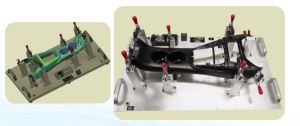
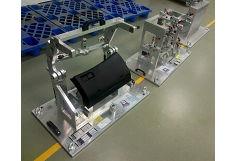
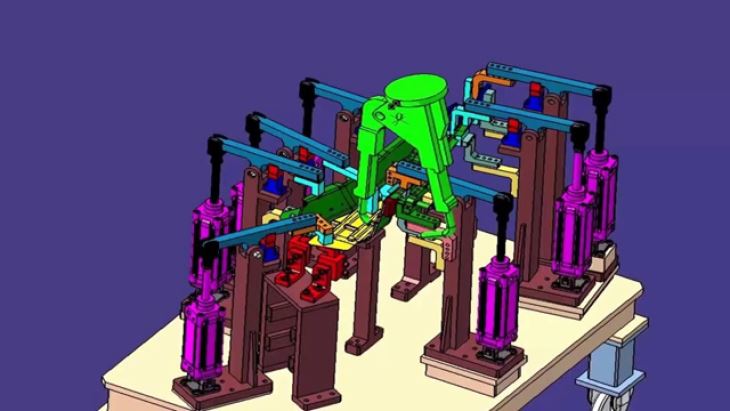
Auto welding jigs are precision - engineered devices designed to ensure accurate and consistent positioning of parts during welding. They are customized to fit specific workpiece geometries and welding requirements. These jigs typically consist of a base plate, clamping mechanisms, and alignment features. The base plate provides a stable foundation for the workpiece, while the clamping mechanisms hold the parts firmly in place, preventing movement during the welding process. Alignment features, such as pins and guides, ensure that the parts are correctly positioned relative to each other, guaranteeing a high - quality weld.
How Auto Welding Jigs Enhance Welding Speed
1. Reduced Setup Time
One of the primary ways an auto welding jig affects welding speed is by reducing setup time. In traditional welding processes, workers often spend a significant amount of time manually positioning and aligning parts before welding. This can be a time - consuming and error - prone task, especially when dealing with complex geometries or large - scale production. Auto welding jigs streamline this process by providing a pre - defined and repeatable setup. Once the jig is properly installed and calibrated, workers can quickly place the parts into the jig, and the alignment is automatically achieved. For example, in the production of Auto Pillar Parts Welding Fixture, which requires precise alignment of multiple components, an auto welding jig can reduce the setup time from hours to just minutes. This allows for more welding operations to be carried out in a given time frame, thereby increasing the overall welding speed.
2. Improved Welding Consistency
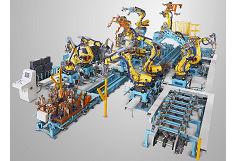
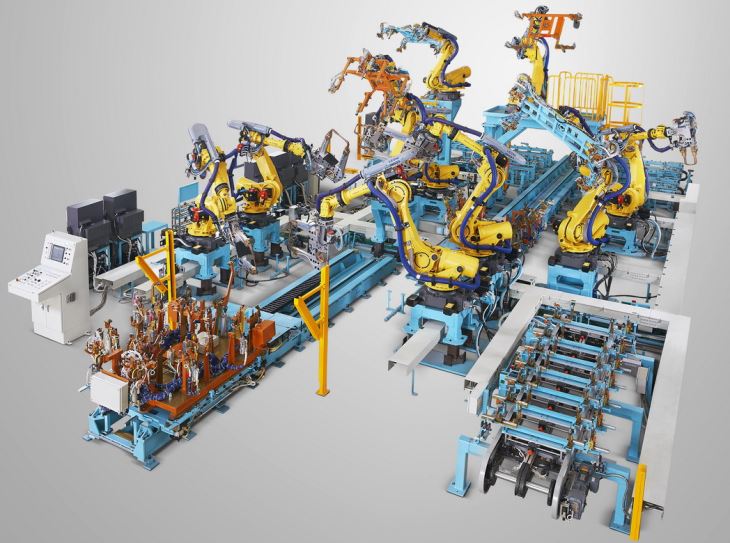
Consistency is key in welding. When parts are not properly aligned or held in place during welding, it can lead to inconsistent welds, which may require rework or cause quality issues. Auto welding jigs ensure that each part is positioned accurately and held firmly throughout the welding process. This results in consistent welds with uniform quality. Welders can then focus on the actual welding operation rather than constantly adjusting the position of the parts. For instance, in a Robotic Welding Fixture Line, where robots are used for welding, the use of auto welding jigs allows the robots to follow a pre - programmed path more precisely. Since the parts are always in the same position, the welding parameters can be optimized, and the robots can work at a higher speed without the risk of producing defective welds. This consistency not only improves the quality of the final product but also speeds up the welding process by eliminating the need for rework.
3. Facilitation of Multi - Part Welding
Many welding applications involve joining multiple parts together. Without an auto welding jig, it can be extremely challenging to weld multiple parts simultaneously or in a sequential manner while maintaining proper alignment. Auto welding jigs are designed to hold multiple parts in the correct position relative to each other, enabling multi - part welding operations. This means that instead of welding each part individually, which can be time - consuming, multiple parts can be welded together in a single operation. For example, in the manufacturing of automotive frames, an auto welding jig can hold several frame components in place, allowing the welder to create a series of welds in a single pass. This significantly reduces the overall welding time compared to welding each component separately.
4. Ergonomic Benefits for Welders
Welding is a physically demanding job, and improper positioning of parts can make it even more strenuous for welders. Auto welding jigs are designed with ergonomics in mind. They can be adjusted to bring the workpiece to a comfortable working height and angle for the welder. This reduces fatigue and allows welders to work more efficiently. When welders are less fatigued, they can maintain a higher welding speed over a longer period. For example, a well - designed auto welding jig can position the workpiece at a height where the welder does not have to bend or stretch excessively, enabling them to focus on the welding process and work at a faster pace.
Case Studies: Real - World Impact on Welding Speed
Case Study 1: Automotive Manufacturing
In an automotive manufacturing plant, the production of car bodies involves numerous welding operations. Before the implementation of auto welding jigs, the setup time for each welding station was approximately 30 minutes per part, and the welding process itself took an average of 15 minutes per part. After introducing custom - designed auto welding jigs, the setup time was reduced to just 5 minutes per part, and the welding time decreased to 10 minutes per part. This resulted in a significant increase in the number of car bodies produced per day, from 50 to 80, demonstrating the substantial impact of auto welding jigs on welding speed in a high - volume production environment.
Case Study 2: Heavy Machinery Manufacturing
A heavy machinery manufacturer was facing challenges in welding large and complex components for their equipment. The manual alignment of parts was not only time - consuming but also led to frequent rework due to misalignment. By using auto welding jigs, the setup time was cut in half, and the rework rate dropped from 20% to less than 5%. The welding speed increased by approximately 30%, allowing the manufacturer to meet their production targets more efficiently and reduce costs associated with rework.
Factors to Consider When Choosing an Auto Welding Jig
1. Workpiece Complexity
The complexity of the workpiece is a crucial factor in choosing an auto welding jig. For simple workpieces with straightforward geometries, a basic jig with standard clamping and alignment features may be sufficient. However, for complex workpieces with irregular shapes or multiple components, a more sophisticated jig with advanced alignment and positioning capabilities may be required.
2. Production Volume
The production volume also plays a role in jig selection. For low - volume production, a less expensive and more flexible jig may be appropriate. In contrast, for high - volume production, a custom - designed, high - precision jig that can withstand continuous use and provide consistent results is necessary.
3. Welding Process
Different welding processes, such as MIG, TIG, or spot welding, may have specific requirements for workpiece positioning and clamping. The auto welding jig should be compatible with the chosen welding process to ensure optimal performance.
Conclusion
In conclusion, auto welding jigs have a profound impact on welding speed. By reducing setup time, improving welding consistency, facilitating multi - part welding, and providing ergonomic benefits, these jigs can significantly enhance the efficiency of the welding process. As an auto welding jig supplier, I understand the importance of providing high - quality, customized jigs that meet the specific needs of our customers. Whether you are in the automotive, heavy machinery, or any other manufacturing industry, investing in the right auto welding jig can lead to substantial improvements in your welding operations.
If you are interested in learning more about how our auto welding jigs can improve your welding speed and overall production efficiency, we invite you to contact us for a detailed consultation. Our team of experts is ready to work with you to find the best solutions for your specific welding requirements. Let's start a conversation about how we can help you take your welding operations to the next level.
References
- "Welding Handbook", American Welding Society
- "Manufacturing Engineering and Technology", S. Kalpakjian and S. Schmid
- Industry case studies and white papers on welding automation and fixture design