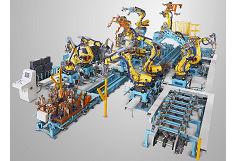
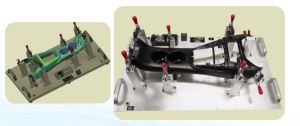
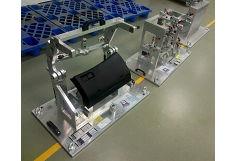
In the manufacturing industry, the pursuit of increased productivity is a constant goal. One of the key technologies that have revolutionized the welding process is the Robotic MIG Weld Fixture. As a supplier of Robotic MIG Weld Fixtures, I have witnessed firsthand how these innovative tools can significantly enhance productivity in welding operations.
1. Precise Positioning and Repeatability
One of the primary ways a Robotic MIG Weld Fixture increases productivity is through its ability to provide precise positioning of workpieces. In traditional welding, manual positioning can be time - consuming and prone to errors. A small misalignment can lead to defective welds, which require rework. Rework not only wastes time but also materials, driving up costs.
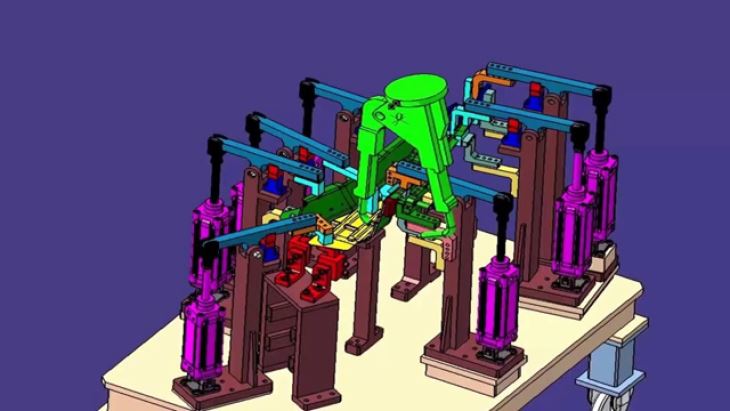
Robotic MIG Weld Fixtures are designed with high - precision components. They can hold workpieces in the exact position required for welding, ensuring that each weld is consistent. This repeatability is crucial in mass production. For example, in the automotive industry, where thousands of similar parts need to be welded, a Robotic MIG Weld Fixture can ensure that every car body part has the same high - quality welds.
The precise positioning also allows the welding robot to operate at optimal speed. Since the robot knows exactly where to place the weld, it can move quickly between welding points, reducing the overall cycle time for each workpiece. This is in contrast to manual welding, where the welder may need to constantly adjust the position of the torch and the workpiece, resulting in slower welding speeds.
2. Reduced Setup Time
Setting up a welding operation can be a labor - intensive and time - consuming process. With traditional fixtures, it may take hours or even days to set up the equipment for a new batch of workpieces, especially if the parts have complex shapes.
Robotic MIG Weld Fixtures, on the other hand, can significantly reduce setup time. Many of these fixtures are modular in design, which means that they can be easily reconfigured for different workpieces. For instance, if a manufacturer needs to switch from welding one type of automotive bracket to another, the Robotic MIG Weld Fixture can be quickly adjusted by changing a few modular components.
In addition, some advanced Robotic MIG Weld Fixtures are equipped with programmable features. The operator can simply input the specifications of the new workpiece into the control system, and the fixture will automatically adjust its position and clamping force. This not only saves time but also reduces the need for highly skilled setup technicians, as the process can be carried out by less - experienced workers under the guidance of the control system.
3. Enhanced Safety and Reduced Downtime
Safety is a major concern in welding operations. Manual welding exposes workers to hazards such as heat, fumes, and radiation. Accidents can lead to injuries, which result in lost work time and increased insurance costs.
Robotic MIG Weld Fixtures can improve safety by removing the need for workers to be in close proximity to the welding area. The robot performs the actual welding, while the operator can monitor the process from a safe distance. This reduces the risk of accidents and injuries, leading to fewer work - related absences and a more stable workforce.
Moreover, the use of Robotic MIG Weld Fixtures can reduce downtime caused by human error. In manual welding, fatigue or inattention can lead to mistakes, such as incorrect weld settings or improper workpiece positioning. These mistakes may require the welding process to be stopped and restarted, causing delays. Robotic systems, on the other hand, operate with consistent precision and are not subject to fatigue, resulting in fewer interruptions to the production process.
4. Integration with Other Manufacturing Processes
Robotic MIG Weld Fixtures can be easily integrated with other manufacturing processes, such as material handling and quality control. For example, they can be connected to an automated conveyor system, which transports workpieces to and from the welding station. This seamless integration eliminates the need for manual handling of parts between different stages of the manufacturing process, further reducing the overall production time.
In terms of quality control, Robotic MIG Weld Fixtures can be equipped with sensors that monitor the welding process in real - time. These sensors can detect defects such as porosity or incomplete fusion and immediately alert the operator. This allows for quick corrective action, preventing defective parts from entering the next stage of production. By integrating quality control directly into the welding process, manufacturers can save time and resources that would otherwise be spent on post - production inspections and rework.
5. Examples of Applications
Let's take a look at some specific applications where Robotic MIG Weld Fixtures have increased productivity. In the automotive industry, Auto Pillar Parts Welding Fixture is widely used. These fixtures ensure the precise welding of car body pillars, which are critical structural components. The high - speed and high - precision welding provided by the Robotic MIG Weld Fixture allows automotive manufacturers to produce a large number of cars in a shorter time frame.
Another example is the use of Robotic Welding Fixture Line in the manufacturing of industrial machinery. These lines can be customized to weld various parts of the machinery, such as frames and brackets. The modular design of the fixtures enables quick changeovers between different parts, increasing the flexibility and productivity of the manufacturing process.
Conclusion
In conclusion, Robotic MIG Weld Fixtures offer numerous benefits that can significantly increase productivity in welding operations. From precise positioning and reduced setup time to enhanced safety and integration with other manufacturing processes, these fixtures are a valuable asset for any manufacturer looking to improve efficiency and reduce costs.
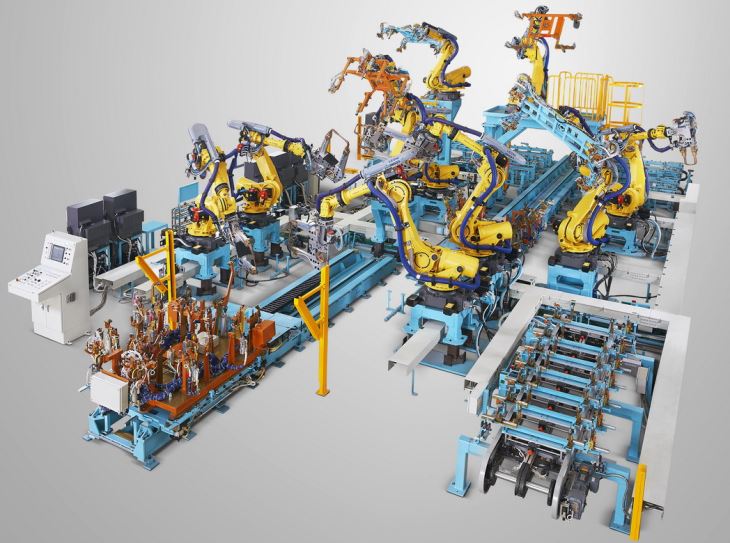
If you are interested in exploring how our Robotic MIG Weld Fixtures can meet your specific manufacturing needs and increase your productivity, we invite you to contact us for a detailed discussion. Our team of experts is ready to provide you with customized solutions and support throughout the implementation process.
References
- ASM Handbook, Volume 6: Welding, Brazing, and Soldering. ASM International.
- Welding Handbook, Volume 1: Welding Science and Technology. American Welding Society.
- Industrial Robotics: Technology, Programming, and Applications. Peter Corke.