In the dynamic landscape of automotive manufacturing, welding processes play a pivotal role in ensuring the structural integrity and quality of vehicles. Among the various welding techniques, spot welding stands out as a widely used method due to its efficiency and effectiveness in joining metal sheets. As an established Auto Welding Jig supplier, I often encounter inquiries about the compatibility of our auto welding jigs with spot welding applications. In this blog post, I aim to delve into this topic, exploring the feasibility, advantages, and considerations of using an auto welding jig for spot welding.
Understanding Spot Welding
Spot welding is a resistance welding process that involves applying pressure and an electric current to two or more overlapping metal sheets at specific points, creating a series of welds known as "spots." This process is commonly used in the automotive industry for joining body panels, frames, and other components. Spot welding offers several advantages, including high speed, low heat input, and minimal distortion, making it an ideal choice for mass production.
The Role of Auto Welding Jigs
Auto welding jigs are specialized fixtures designed to hold and position workpieces during the welding process. They play a crucial role in ensuring the accuracy, consistency, and repeatability of welds. By securely holding the workpieces in place, auto welding jigs prevent movement and misalignment, resulting in high-quality welds with minimal defects. Additionally, auto welding jigs can be customized to accommodate different workpiece geometries and welding requirements, making them versatile tools in the automotive manufacturing process.
Can an Auto Welding Jig be Used for Spot Welding?
The short answer is yes, an auto welding jig can be used for spot welding. In fact, auto welding jigs are often essential for achieving precise and consistent spot welds. By providing a stable and accurate positioning platform, auto welding jigs ensure that the electrodes are properly aligned with the workpiece, resulting in uniform weld quality. Additionally, auto welding jigs can be designed to accommodate multiple electrodes, allowing for simultaneous spot welding of multiple points, increasing productivity and efficiency.
Advantages of Using an Auto Welding Jig for Spot Welding
- Improved Weld Quality: Auto welding jigs ensure accurate positioning of the electrodes, resulting in consistent and high-quality spot welds. This reduces the risk of weld defects, such as porosity, cracks, and incomplete fusion, improving the overall strength and durability of the welded joints.
- Increased Productivity: By allowing for simultaneous spot welding of multiple points, auto welding jigs can significantly increase productivity. This is particularly beneficial in high-volume production environments, where time is of the essence.
- Enhanced Safety: Auto welding jigs provide a secure and stable platform for the welding process, reducing the risk of accidents and injuries. Additionally, they can be equipped with safety features, such as guards and interlocks, to further enhance operator safety.
- Customization Options: Auto welding jigs can be customized to accommodate different workpiece geometries and welding requirements. This flexibility allows manufacturers to optimize their welding processes and achieve the best possible results.
Considerations When Using an Auto Welding Jig for Spot Welding
- Electrode Design: The design of the electrodes is critical for achieving high-quality spot welds. The electrodes should be properly sized and shaped to ensure good contact with the workpiece and efficient heat transfer. Additionally, the electrodes should be made of a material with high electrical conductivity and wear resistance.
- Welding Parameters: The welding parameters, such as current, voltage, and time, need to be carefully adjusted to ensure optimal weld quality. These parameters depend on several factors, including the material thickness, electrode design, and workpiece geometry.
- Maintenance and Inspection: Regular maintenance and inspection of the auto welding jig and electrodes are essential for ensuring consistent weld quality. This includes cleaning the electrodes, checking for wear and damage, and adjusting the welding parameters as needed.
- Operator Training: Proper operator training is crucial for ensuring the safe and effective use of auto welding jigs for spot welding. Operators should be trained on the correct operation of the equipment, as well as the proper maintenance and inspection procedures.
Our Auto Welding Jig Solutions for Spot Welding
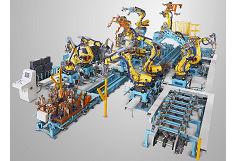
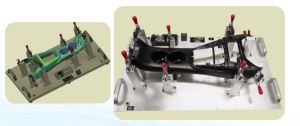
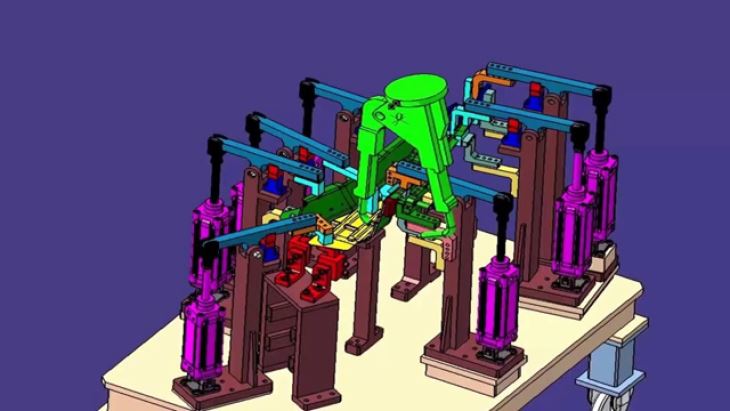
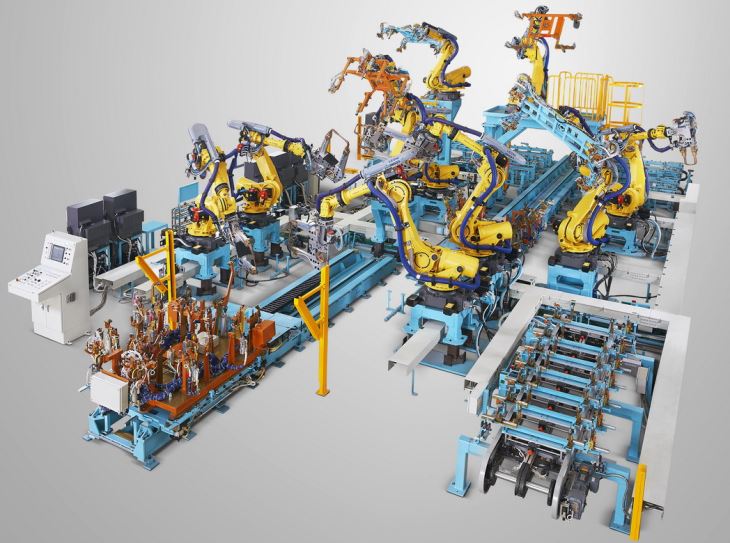
As a leading Auto Welding Jig supplier, we offer a wide range of solutions for spot welding applications. Our Robotic Welding Fixture Line is designed for use with robotic welding systems, providing precise and consistent positioning of the workpiece for spot welding. Our Auto Pillar Parts Welding Fixture is specifically designed for welding automotive pillar parts, ensuring accurate alignment and high-quality welds.
Conclusion
In conclusion, an auto welding jig can be effectively used for spot welding, offering several advantages in terms of weld quality, productivity, safety, and customization. However, it is important to consider the electrode design, welding parameters, maintenance and inspection, and operator training when using an auto welding jig for spot welding. As an Auto Welding Jig supplier, we are committed to providing our customers with high-quality solutions that meet their specific spot welding requirements. If you are interested in learning more about our auto welding jig solutions for spot welding, please feel free to contact us for a consultation. We look forward to working with you to optimize your welding processes and achieve the best possible results.
References
- American Welding Society. (2020). Welding Handbook, Volume 2: Welding Processes.
- AWS D1.3:2021. Structural Welding Code - Sheet Steel.
- ISO 14323:2017. Resistance welding - Weldability - General requirements and testing methods.