Can an auto door CMM holding jig be used in high - temperature environments?
Hey there! I'm a supplier of auto door CMM holding jigs, and today I wanna talk about whether these jigs can be used in high - temperature environments.
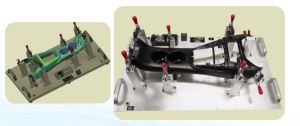
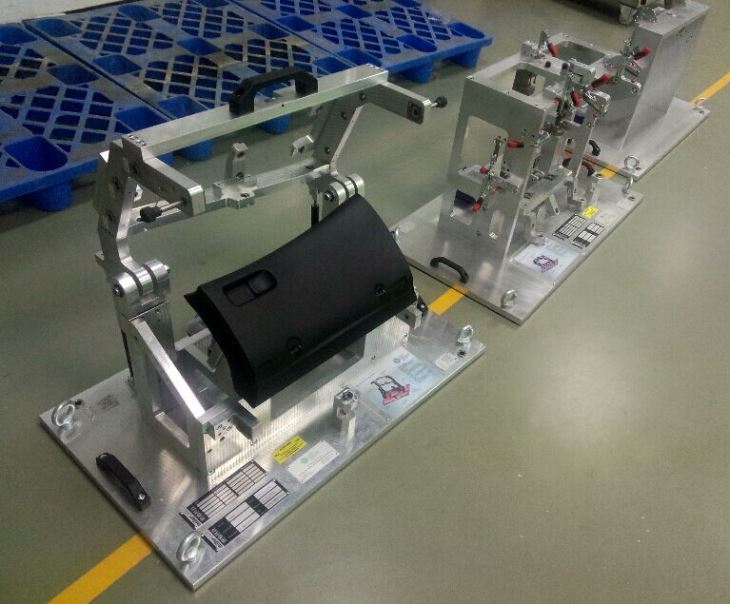
First off, let's understand what an auto door CMM holding jig is. It's a crucial tool in the automotive industry. CMM stands for Coordinate Measuring Machine, and the holding jig is designed to securely hold auto door parts in place during the measurement process. This ensures accurate and reliable measurements of the door parts' dimensions and geometries. You can check out more about Gauges For Automotive Door Parts Manufacturer and Auto Door CMM Holding Fixture on our website.
Now, let's get into the high - temperature environment question. High - temperature environments can have a significant impact on materials and components. For an auto door CMM holding jig, several factors come into play when considering its use in such conditions.
Material Considerations
The materials used to make the holding jig are super important. Most of our jigs are made from a variety of materials, including metals and plastics. Metals like aluminum and steel are commonly used due to their strength and durability. However, they also have their limitations in high - temperature environments.
Aluminum has a relatively low melting point compared to some other metals. In extremely high - temperature situations, aluminum can start to deform, which will definitely affect the accuracy of the jig. Steel, on the other hand, is more heat - resistant, but it can still expand when heated. This expansion can lead to changes in the dimensions of the jig, causing measurement errors.
Plastics are another option for making jigs. They are lightweight and can be easily molded into complex shapes. But plastics are generally not very heat - resistant. High temperatures can cause plastics to soften, warp, or even melt. This means that if you're thinking about using a plastic - based auto door CMM holding jig in a high - temperature environment, you're likely to run into some serious problems.
Thermal Expansion
Thermal expansion is a big deal when it comes to using jigs in high - temperature environments. When a material is heated, it expands. The amount of expansion depends on the material's coefficient of thermal expansion (CTE). Different materials have different CTE values.
For an auto door CMM holding jig, even a small amount of thermal expansion can be a problem. Since the jig is used for precise measurements, any change in its dimensions can lead to inaccurate readings. For example, if the jig expands by just a few thousandths of an inch, it can cause significant errors in the measurement of the auto door parts.
To minimize the effects of thermal expansion, we can use materials with low CTE values. However, finding the right balance between low CTE and other properties like strength and cost can be challenging.
Impact on Measurement Accuracy
The main purpose of an auto door CMM holding jig is to ensure accurate measurements. In a high - temperature environment, as we've discussed, the jig's dimensions can change due to thermal expansion or material deformation. This directly affects the measurement accuracy.
If the jig expands or warps, it may not hold the auto door parts in the correct position. As a result, the CMM will measure incorrect dimensions, which can lead to quality control issues in the automotive manufacturing process. Incorrect measurements can cause problems such as poor - fitting doors, which can affect the overall safety and performance of the vehicle.
Solutions for High - Temperature Use
If you need to use an auto door CMM holding jig in a high - temperature environment, there are some solutions we can consider.
One option is to use special heat - resistant materials. There are some advanced alloys and ceramics that have excellent heat - resistance properties and relatively low CTE values. These materials can withstand high temperatures without significant deformation, which helps to maintain the accuracy of the jig.
Another solution is to implement temperature compensation techniques. This involves measuring the temperature of the jig and the surrounding environment and then adjusting the measurement results accordingly. By using temperature sensors and software algorithms, we can account for the thermal expansion of the jig and get more accurate measurements.
Real - World Applications
In some automotive manufacturing processes, high - temperature environments are unavoidable. For example, in paint - baking ovens, the temperature can reach several hundred degrees Celsius. If you need to measure the auto door parts during or after the painting process, you'll need a holding jig that can withstand these high temperatures.
In these situations, our Door Parts CMM Holding Fixture can be customized to meet the specific requirements of high - temperature use. We work closely with our customers to understand their needs and develop solutions that ensure accurate measurements even in challenging environments.
Conclusion
So, can an auto door CMM holding jig be used in high - temperature environments? The answer is yes, but with some challenges. It all comes down to the materials used, thermal expansion, and the impact on measurement accuracy.
We, as a supplier, are constantly researching and developing new materials and techniques to make our jigs more suitable for high - temperature applications. If you're in the automotive industry and need to use auto door CMM holding jigs in high - temperature environments, we're here to help.
If you're interested in our products or have any questions about using our jigs in high - temperature conditions, don't hesitate to get in touch with us. We can have a detailed discussion about your specific requirements and find the best solution for you.

References
- "Materials Science and Engineering: An Introduction" by William D. Callister Jr. and David G. Rethwisch
- Automotive Manufacturing Handbook, various industry - specific research papers on CMM measurement and high - temperature applications.