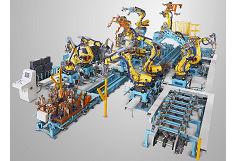
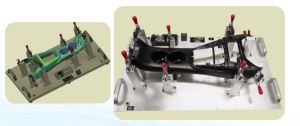
In the automotive manufacturing industry, the A-pillar is a critical structural component that plays a vital role in vehicle safety and aesthetics. Welding fixtures are essential tools in the production process, ensuring precise and consistent welding of A-pillar parts. However, a common question arises: Can an A-pillar welding fixture be used for welding irregularly-shaped A-pillar parts? As an A-pillar welding fixture supplier, I will delve into this topic to provide a comprehensive answer.
Understanding A-Pillar Welding Fixtures
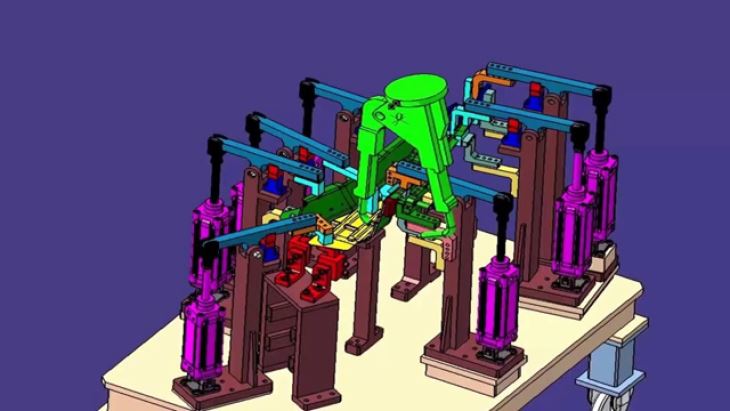
A-pillar welding fixtures are designed to hold A-pillar parts in place during the welding process. They are engineered to provide accurate positioning, alignment, and clamping, ensuring that the welded joints meet the required specifications. These fixtures are typically customized to fit the specific shape and dimensions of the A-pillar parts, taking into account factors such as material thickness, curvature, and welding requirements.
The primary function of an A-pillar welding fixture is to maintain the integrity and quality of the welded joints. By holding the parts firmly in place, the fixture minimizes distortion and ensures that the welds are strong and durable. Additionally, the fixture helps to improve productivity by reducing the time required for manual positioning and alignment, allowing for faster and more efficient welding operations.
Challenges of Welding Irregularly-Shaped A-Pillar Parts
Irregularly-shaped A-pillar parts present unique challenges in the welding process. Unlike standard A-pillar parts with simple geometries, irregularly-shaped parts may have complex curvatures, non-uniform cross-sections, and intricate features. These variations can make it difficult to achieve accurate positioning and alignment, leading to issues such as misalignment, distortion, and poor weld quality.
One of the main challenges of welding irregularly-shaped A-pillar parts is the need for precise fixture design. The fixture must be able to accommodate the unique shape and dimensions of the part while providing adequate support and clamping. This requires a high level of expertise in fixture design and engineering, as well as advanced manufacturing techniques to ensure the fixture's accuracy and reliability.
Another challenge is the potential for interference between the fixture and the part during the welding process. Irregularly-shaped parts may have protruding features or complex geometries that can interfere with the fixture's clamping mechanism or welding equipment. This can lead to damage to the fixture or the part, as well as issues with weld quality and productivity.
Can an A-Pillar Welding Fixture Be Used for Welding Irregularly-Shaped A-Pillar Parts?
The answer to this question is yes, an A-pillar welding fixture can be used for welding irregularly-shaped A-pillar parts, but it requires careful consideration and customization. With the right design and engineering, a welding fixture can be tailored to accommodate the unique shape and dimensions of the part, providing accurate positioning, alignment, and clamping.
To ensure the successful use of an A-pillar welding fixture for irregularly-shaped parts, the following factors should be considered:
- Fixture Design: The fixture design should be based on a detailed analysis of the part's geometry and welding requirements. This may involve using advanced modeling and simulation techniques to optimize the fixture's design and ensure its compatibility with the part.
- Material Selection: The material used for the fixture should be chosen based on its strength, durability, and resistance to wear and corrosion. Additionally, the material should be able to withstand the high temperatures and pressures associated with the welding process.
- Manufacturing Process: The manufacturing process used to produce the fixture should be precise and accurate, ensuring that the fixture meets the required specifications. This may involve using advanced machining techniques, such as CNC machining, to achieve the necessary tolerances.
- Testing and Validation: Before the fixture is used in production, it should be thoroughly tested and validated to ensure its performance and reliability. This may involve conducting mock welding operations using the actual part and welding equipment to verify the fixture's functionality and accuracy.
Benefits of Using an A-Pillar Welding Fixture for Irregularly-Shaped A-Pillar Parts
Despite the challenges, there are several benefits to using an A-pillar welding fixture for irregularly-shaped A-pillar parts:
- Improved Weld Quality: By providing accurate positioning and alignment, the fixture helps to ensure that the welded joints are strong, durable, and free from defects. This can improve the overall quality and reliability of the A-pillar, enhancing the safety and performance of the vehicle.
- Increased Productivity: The use of a welding fixture can significantly reduce the time required for manual positioning and alignment, allowing for faster and more efficient welding operations. This can increase productivity and reduce production costs, making the manufacturing process more competitive.
- Consistency and Repeatability: A welding fixture ensures that each A-pillar part is welded in the same position and orientation, resulting in consistent and repeatable weld quality. This can improve the overall quality and consistency of the finished product, reducing the need for rework and scrap.
- Customization and Flexibility: A welding fixture can be customized to accommodate the unique shape and dimensions of the part, providing a high level of flexibility and adaptability. This allows for the production of a wide range of A-pillar parts, including those with irregular shapes and complex geometries.
Conclusion
In conclusion, an A-pillar welding fixture can be used for welding irregularly-shaped A-pillar parts, but it requires careful consideration and customization. By working with an experienced A-pillar welding fixture supplier, automotive manufacturers can ensure that their welding fixtures are designed and engineered to meet the specific requirements of their irregularly-shaped A-pillar parts. This can help to improve weld quality, increase productivity, and reduce production costs, making the manufacturing process more efficient and competitive.
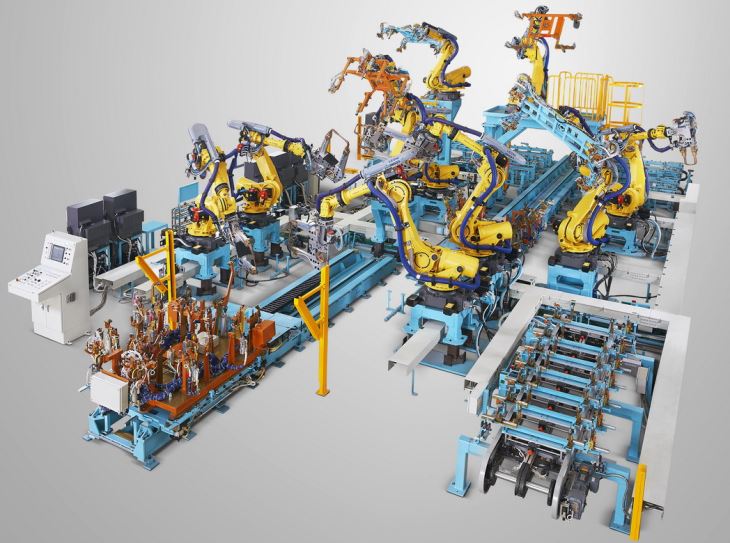
If you are interested in learning more about our Auto Pillar Parts Welding Fixture or Robotic Welding Fixture Line, or if you have any questions about welding irregularly-shaped A-pillar parts, please contact us. Our team of experts is ready to assist you in finding the best solution for your welding needs.
References
- Smith, J. (2020). Automotive Welding Fixtures: Design, Manufacturing, and Applications. New York: Wiley.
- Johnson, M. (2019). Welding Technology for Automotive Manufacturing. London: Elsevier.
- Brown, R. (2018). Advanced Fixture Design for Precision Welding. Berlin: Springer.