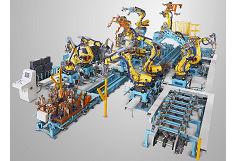
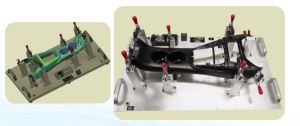
Can a Robotic MIG Weld Fixture be used for aluminum welding?
Hey there! I'm a supplier of Robotic MIG Weld Fixtures, and I often get asked if these fixtures can be used for aluminum welding. Well, let's dive right into it and find out.
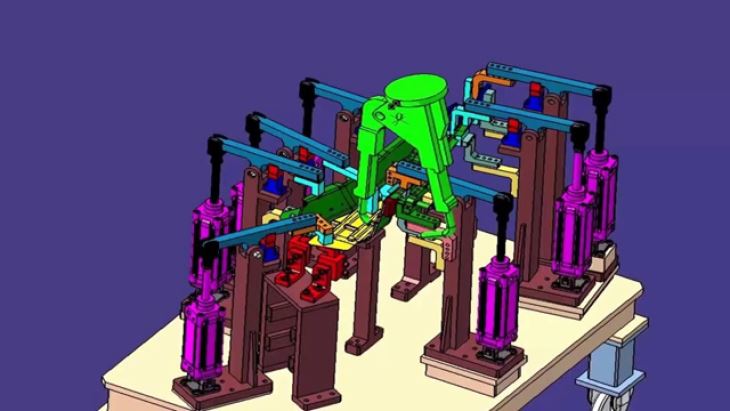
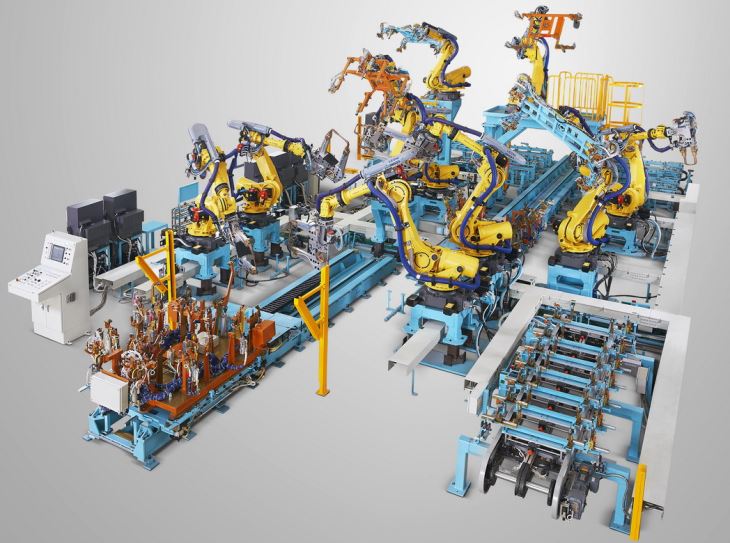
First off, let's understand what a Robotic MIG Weld Fixture is. It's a tool that holds the workpiece in place during the welding process, allowing for precise and consistent welds. These fixtures are designed to work with MIG (Metal Inert Gas) welding, which is a popular welding method that uses a continuous wire electrode and a shielding gas to protect the weld from contamination.
Now, when it comes to aluminum welding, there are some unique challenges. Aluminum has a high thermal conductivity, which means it dissipates heat quickly. This can make it difficult to maintain a stable arc and achieve a good weld. Additionally, aluminum has a thin oxide layer on its surface that needs to be removed before welding to ensure proper fusion.
So, can a Robotic MIG Weld Fixture handle these challenges? The answer is yes, but with some considerations.
One of the key factors in using a Robotic MIG Weld Fixture for aluminum welding is the choice of shielding gas. For aluminum, a mixture of argon and helium is often used. Argon provides good arc stability, while helium helps to increase the heat input and penetration. The fixture needs to be designed to accommodate the flow of this shielding gas to ensure proper protection of the weld.
Another important aspect is the electrode. Aluminum requires a specific type of electrode, usually made of aluminum alloy. The fixture should be able to hold and feed this electrode smoothly to maintain a consistent weld bead.
The design of the fixture itself also plays a crucial role. It needs to be able to securely hold the aluminum workpiece in place, taking into account its thermal expansion and contraction during the welding process. A well-designed fixture will minimize distortion and ensure accurate alignment of the parts being welded.
In addition, the fixture should be made of materials that are compatible with aluminum. Some metals can react with aluminum, causing contamination or other issues. Stainless steel or aluminum alloys are commonly used for the construction of the fixture to avoid these problems.
Now, let's talk about some of the benefits of using a Robotic MIG Weld Fixture for aluminum welding.
One of the main advantages is the increased productivity. Robotic welding systems can work at a much faster pace than manual welding, which means more parts can be welded in less time. This is especially important in high-volume production environments.
The precision and consistency provided by the fixture also result in higher-quality welds. With a robotic system, the weld parameters can be accurately controlled, reducing the chances of defects such as porosity or lack of fusion.
Another benefit is the improved safety. By using a robotic fixture, the operator can be kept at a safe distance from the welding arc, reducing the risk of burns and other injuries.
At our company, we have a range of Robotic MIG Weld Fixtures that are specifically designed for aluminum welding. Our Auto Pillar Parts Welding Fixture is a great example. It's designed to hold and position auto pillar parts during the welding process, ensuring precise and consistent welds.
We also offer a Robotic Welding Fixture Line that can be customized to meet the specific needs of your production line. Whether you're welding small aluminum components or large structures, our fixtures can be tailored to fit your requirements.
If you're considering using a Robotic MIG Weld Fixture for aluminum welding, here are some tips to keep in mind.
First, make sure to properly clean and prepare the aluminum surface before welding. This will help to remove the oxide layer and ensure good fusion.
Second, test the fixture and the welding parameters on a sample workpiece before starting production. This will allow you to make any necessary adjustments and ensure that the weld quality meets your standards.
Finally, work with a reliable supplier who has experience in aluminum welding and can provide you with the support and guidance you need.
In conclusion, a Robotic MIG Weld Fixture can definitely be used for aluminum welding, but it requires careful consideration of the welding process, materials, and design. By choosing the right fixture and following the proper procedures, you can achieve high-quality, efficient, and safe aluminum welding.
If you're interested in learning more about our Robotic MIG Weld Fixtures or have any questions about aluminum welding, don't hesitate to contact us. We're here to help you find the best solution for your welding needs.
References
- Welding Handbook, American Welding Society
- Aluminum Welding: Principles and Practices, James F. Lancaster