Hey there! As a supplier of Robotic MIG Weld Fixtures, I often get asked if these fixtures can be integrated with other welding equipment. Well, the short answer is yes, and in this blog, I'm gonna dive deep into how and why it works.
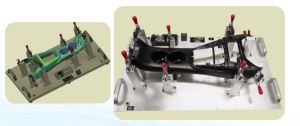
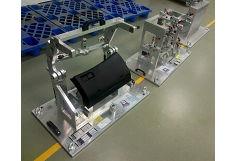
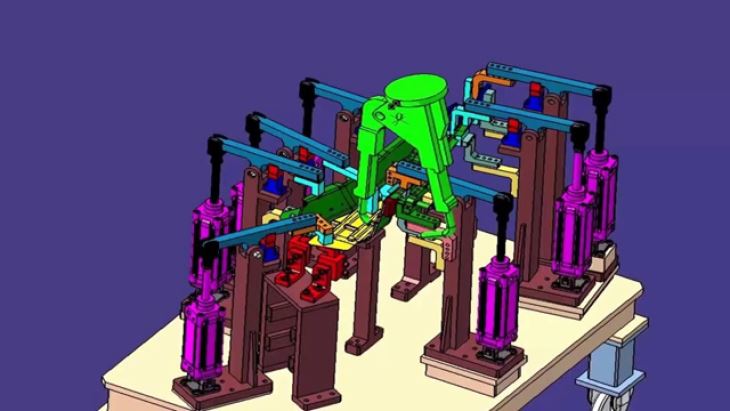
First off, let's understand what a Robotic MIG Weld Fixture is. It's a tool that holds the workpiece in place during the MIG (Metal Inert Gas) welding process. This ensures precise and consistent welds, which is super important in industries like automotive, aerospace, and manufacturing. Now, when it comes to integrating it with other welding equipment, there are a few key factors to consider.
Compatibility
One of the most crucial aspects is compatibility. Different welding equipment has different specifications, and the Robotic MIG Weld Fixture needs to be able to work seamlessly with them. For example, if you're using a particular type of welding power source, the fixture should be able to handle the voltage, current, and wire feed speed requirements. Most modern Robotic MIG Weld Fixtures are designed with a high degree of flexibility to accommodate a wide range of welding equipment. They often come with adjustable settings that can be fine - tuned to match the specific needs of the other equipment in the welding setup.
Communication and Control
In today's high - tech welding environments, communication between different pieces of equipment is essential. A good Robotic MIG Weld Fixture can be integrated with other welding equipment through various communication protocols. For instance, it can be connected to a robotic welding arm using Ethernet or other industrial communication standards. This allows for real - time data exchange, such as the position of the workpiece, the welding parameters, and the status of the fixture. With this kind of integration, the entire welding process can be automated and optimized. The robotic arm can adjust its movements based on the feedback from the fixture, ensuring that the welds are of the highest quality.
Safety
Safety is always a top priority in welding. When integrating a Robotic MIG Weld Fixture with other equipment, safety features need to be considered. The fixture should be designed to work in harmony with the safety systems of the other welding equipment. For example, if there is an emergency stop button on the welding power source, the fixture should also respond immediately to that signal. Additionally, the fixture should have its own safety mechanisms, such as sensors that detect if the workpiece is properly positioned or if there is any abnormal movement during the welding process.
Benefits of Integration
There are several benefits to integrating a Robotic MIG Weld Fixture with other welding equipment. Firstly, it improves efficiency. By automating the process and ensuring that all the equipment works together smoothly, the welding time can be significantly reduced. This means more parts can be welded in less time, increasing the overall productivity of the manufacturing process.
Secondly, it enhances the quality of the welds. Since the fixture holds the workpiece firmly and the equipment can communicate and adjust parameters in real - time, the welds are more consistent and of higher quality. This reduces the number of defective parts and the need for rework.
Thirdly, it reduces labor costs. With an integrated system, fewer operators are required to monitor and control the welding process. The automated nature of the system allows one operator to oversee multiple welding stations, saving on labor expenses.
Examples of Integration
Let's take a look at some real - world examples of how a Robotic MIG Weld Fixture can be integrated with other equipment. In the automotive industry, a Robotic MIG Weld Fixture can be integrated with a robotic welding cell. The fixture holds the auto pillar parts in place, and the robotic arm performs the welding operations. This setup can be further enhanced by integrating it with a welding power source that can adjust the welding parameters based on the type of material and the thickness of the auto pillar parts. You can learn more about Auto Pillar Parts Welding Fixture on our website.
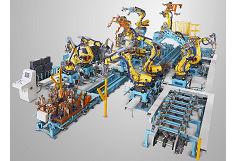
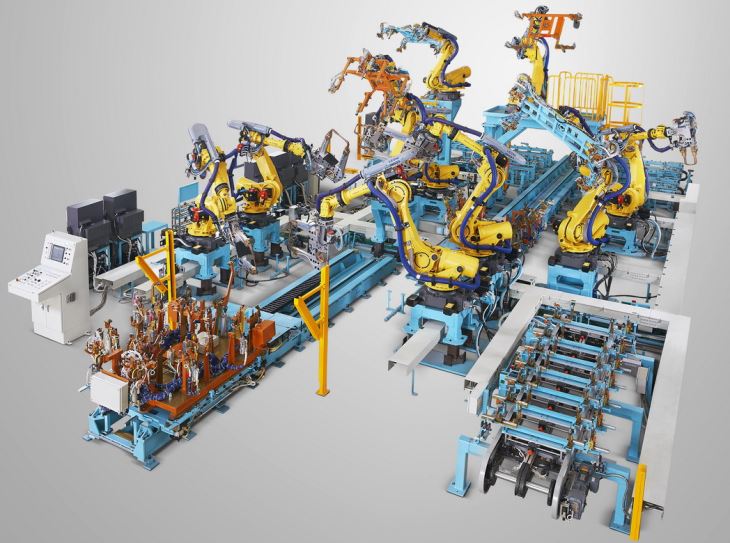
Another example is in a large - scale manufacturing plant where multiple welding stations are set up. A Robotic MIG Weld Fixture can be integrated into a Robotic Welding Fixture Line. This line can consist of several welding robots, power sources, and other auxiliary equipment. The fixture ensures that each workpiece is in the correct position for welding, and the entire line can be programmed to operate in a synchronized manner.
Challenges of Integration
Of course, integrating a Robotic MIG Weld Fixture with other welding equipment isn't without its challenges. One of the main challenges is the initial setup and configuration. It requires a certain level of technical expertise to ensure that all the equipment is properly connected and calibrated. There may also be compatibility issues between different brands and models of equipment, which need to be resolved through careful testing and adjustment.
Another challenge is the cost. Integrating advanced welding equipment can be expensive, especially when it comes to purchasing the necessary communication devices and software. However, in the long run, the benefits of increased efficiency and quality often outweigh the initial investment.
Conclusion
In conclusion, a Robotic MIG Weld Fixture can definitely be integrated with other welding equipment. With the right approach, it can bring numerous benefits to the welding process, including improved efficiency, higher quality welds, and reduced labor costs. While there are challenges to overcome, the rewards are well worth it.
If you're in the market for a Robotic MIG Weld Fixture and are interested in integrating it with your existing welding equipment, I'd love to have a chat with you. We can discuss your specific needs and come up with a customized solution that works best for your business. Feel free to reach out and let's start the conversation about how we can take your welding operations to the next level.
References
- Welding Handbook, American Welding Society
- Industrial Robotics: Technology, Programming, and Applications, by Michael P. Groover