In the world of manufacturing, welding jigs play a crucial role in ensuring the accuracy, efficiency, and quality of welding processes. As a leading supplier of Auto Welding Jigs, I often encounter inquiries about the differences between semi - auto and fully - auto welding jigs. Understanding these differences is essential for businesses to make informed decisions that align with their production needs, budget, and long - term goals.
Definition and Basic Concepts
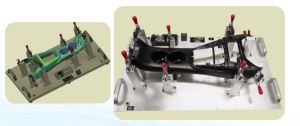
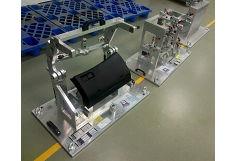
A welding jig is a device used to hold, support, and position workpieces during the welding process. It ensures that the parts are correctly aligned and held in place, reducing the chances of errors and improving the overall quality of the weld.
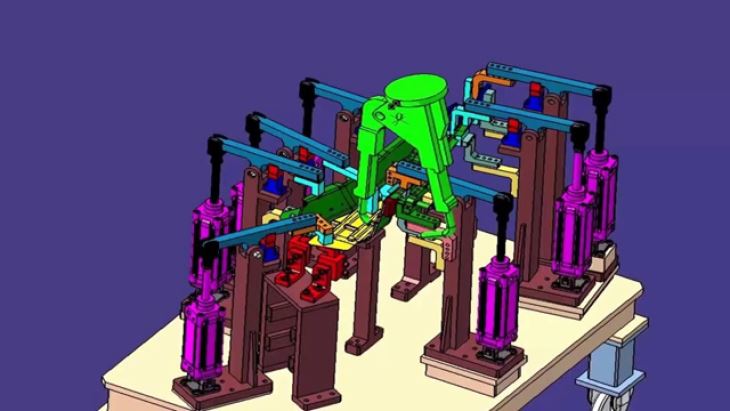
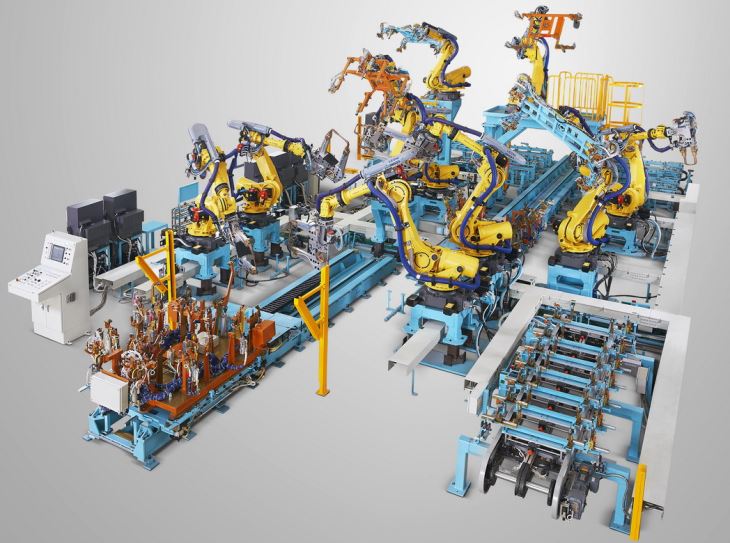
Semi - auto welding jigs require some level of manual intervention. Operators are still involved in certain aspects of the process, such as loading and unloading workpieces, starting and stopping the welding operation, or making minor adjustments. The welding itself may be carried out by automated equipment, but the overall process has a significant human - controlled element.
On the other hand, fully - auto welding jigs are designed to operate with minimal human intervention. These jigs are integrated into automated production lines, where workpieces are automatically loaded, welded, and unloaded. The entire process is controlled by pre - programmed software and sensors, which monitor and adjust the welding parameters in real - time.
Key Differences
1. Automation Level
The most obvious difference between semi - auto and fully - auto welding jigs lies in their automation levels. Semi - auto jigs strike a balance between manual labor and automation. They are suitable for small - to - medium - scale production runs or for tasks that require some degree of human judgment. For example, when welding parts with irregular shapes or when dealing with complex joint configurations, operators can use their skills to ensure proper alignment and adjust the welding process as needed.
Fully - auto welding jigs, however, offer the highest level of automation. They are ideal for large - scale production where consistency and high - speed operation are crucial. Once the system is set up and programmed, it can run continuously, producing a large number of identical parts with minimal variation. This not only increases productivity but also reduces the risk of human error.
2. Cost
Cost is another significant factor to consider. Semi - auto welding jigs are generally more affordable upfront. They require less sophisticated equipment and programming, which translates into lower purchase and installation costs. Additionally, the training required for operators to use semi - auto jigs is usually less extensive, further reducing the overall cost.
Fully - auto welding jigs, on the other hand, involve a higher initial investment. The cost of the automated equipment, software development, and integration into the production line can be substantial. However, in the long run, fully - auto jigs can lead to cost savings through increased productivity, reduced labor costs, and improved quality control.
3. Production Efficiency
In terms of production efficiency, fully - auto welding jigs have a clear advantage. They can operate at a much faster pace than semi - auto jigs, as there is no need to wait for human operators to perform tasks such as loading and unloading. The automated process also allows for continuous operation, minimizing downtime between welding cycles.
Semi - auto jigs, while slower, can still offer good efficiency for smaller production volumes. The manual intervention can sometimes speed up the process in cases where quick adjustments are needed. However, as the production volume increases, the limitations of semi - auto jigs become more apparent, and the overall efficiency may decline.
4. Quality and Consistency
Fully - auto welding jigs excel in providing consistent quality. The pre - programmed software ensures that each weld is performed with the same parameters, such as welding current, voltage, and travel speed. This results in uniform weld quality across all parts, reducing the likelihood of defects and rework.
Semi - auto jigs, while capable of producing high - quality welds, are more prone to variation due to human factors. Operators may make small mistakes or inconsistencies in their actions, which can affect the quality of the weld. However, with proper training and supervision, the quality of semi - auto welded parts can still meet high standards.
5. Flexibility
Semi - auto welding jigs offer greater flexibility compared to fully - auto jigs. They can be easily adapted to different workpiece sizes, shapes, and welding requirements. Operators can quickly make changes to the setup or welding process as needed, making them suitable for job - shop environments where a variety of parts need to be welded.
Fully - auto welding jigs, once programmed, are less flexible. Changing the production to accommodate different parts may require significant reprogramming and reconfiguration of the system. However, some advanced fully - auto systems are designed with modular components and flexible programming, which can reduce the time and cost associated with changeovers.
Applications
Both semi - auto and fully - auto welding jigs have their own niche applications in the automotive industry.
Semi - auto welding jigs are commonly used for the production of Auto Pillar Parts Welding Fixture. These parts often have complex geometries and require some level of manual adjustment during the welding process. The ability of semi - auto jigs to combine human skills with automated welding ensures high - quality results.
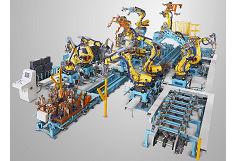
Fully - auto welding jigs are widely used in Robotic Welding Fixture Line. In large - scale automotive production, where high - volume and consistent quality are essential, fully - auto systems can work in tandem with robotic arms to perform multiple welding operations simultaneously. This significantly increases the production speed and efficiency.
Making the Right Choice
When choosing between a semi - auto and a fully - auto welding jig, businesses need to consider several factors. First, they should evaluate their production volume. If the production volume is low to medium, a semi - auto jig may be a more cost - effective option. For high - volume production, a fully - auto jig is likely to provide better long - term returns.
Second, the complexity of the parts to be welded is important. If the parts have irregular shapes or require frequent adjustments, a semi - auto jig may be more suitable. However, if the parts are standardized and the welding process is repetitive, a fully - auto jig can ensure consistent quality and high productivity.
Finally, the budget and available resources should also be taken into account. A business with limited capital may find it more feasible to start with a semi - auto jig and gradually upgrade to a fully - auto system as the production volume increases.
Conclusion
As a supplier of Auto Welding Jigs, I understand the importance of choosing the right type of welding jig for your specific needs. Whether you opt for a semi - auto or a fully - auto welding jig, each has its own advantages and disadvantages. By carefully considering the factors mentioned above, you can make an informed decision that will enhance your production efficiency, improve quality, and ultimately increase your competitiveness in the market.
If you are interested in learning more about our Auto Welding Jigs or need assistance in choosing the right solution for your production line, please feel free to contact us. Our team of experts is ready to provide you with professional advice and support to ensure that you get the most out of your welding operations.
References
- Groover, M. P. (2010). Fundamentals of Modern Manufacturing: Materials, Processes, and Systems. John Wiley & Sons.
- ASM Handbook, Volume 6: Welding, Brazing, and Soldering. ASM International.