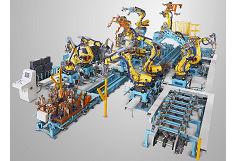
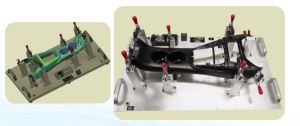
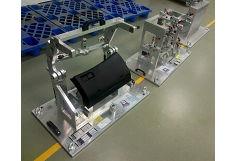
Hey there! As a supplier of rear seats welding jigs, I've been in the game for quite a while, and I've seen firsthand how crucial software requirements are for an automatic rear seats welding jig. In this blog, I'm gonna break down what those software requirements are and why they matter.
1. Programming and Control Software
First off, we need some solid programming and control software. This software is like the brain of the automatic rear seats welding jig. It's responsible for telling the jig what to do, when to do it, and how to do it.
User - Friendly Interface
The software should have a user - friendly interface. You don't want a complex, hard - to - understand interface that only a rocket scientist can operate. A simple and intuitive interface allows operators to easily input welding parameters, such as welding time, current, and pressure. For example, a touch - screen interface with clear icons and menus can make the operation process a breeze. You can quickly adjust settings without having to dig through a bunch of complicated code.
Customization Capabilities
Another important aspect is the ability to customize welding programs. Different rear seats may have different welding requirements. Some may need more spot welds in certain areas, while others may require a different welding sequence. The software should allow users to create and save custom welding programs. This way, you can easily switch between different seat models and ensure that each one is welded to perfection. For instance, if you're working on a luxury car's rear seats, which may have more intricate designs, you can customize the program to meet its specific needs.
Compatibility with Hardware
The programming and control software must be compatible with the hardware of the welding jig. It needs to communicate effectively with the motors, sensors, and other components of the jig. If there's a compatibility issue, it can lead to malfunctions, inaccurate welding, or even damage to the equipment. So, when choosing the software, make sure it's designed to work seamlessly with your particular welding jig model.
2. Monitoring and Diagnostic Software
Monitoring and diagnostic software is essential for ensuring the smooth operation of the automatic rear seats welding jig.
Real - Time Monitoring
This software should provide real - time monitoring of the welding process. It can track important parameters such as welding current, voltage, temperature, and electrode wear. By monitoring these parameters in real - time, operators can detect any abnormalities immediately. For example, if the welding current suddenly drops, it could indicate a problem with the power supply or a faulty electrode. With real - time monitoring, you can take corrective action right away, minimizing downtime and reducing the risk of producing defective products.
Fault Diagnosis
In addition to real - time monitoring, the software should also have fault diagnosis capabilities. It can analyze the data collected during the welding process and identify potential problems. For instance, if there are inconsistent welds, the software can pinpoint whether it's due to a problem with the electrode alignment, the welding pressure, or the power supply. This helps in quickly troubleshooting issues and getting the jig back up and running as soon as possible.
Data Logging
Data logging is another useful feature. The software can record all the welding data, including the time, date, welding parameters, and any faults that occurred. This data can be used for quality control purposes, as well as for analyzing the performance of the welding jig over time. You can look back at the data to see if there are any recurring issues or trends, and then make improvements accordingly.
3. Safety Software
Safety should always be a top priority when it comes to operating an automatic rear seats welding jig. Safety software plays a crucial role in ensuring the well - being of the operators and the integrity of the equipment.
Emergency Stop Function
The software should have an emergency stop function. In case of an emergency, such as a fire, a mechanical failure, or a safety hazard, the operator can quickly press a button to stop the welding process. This function should be easily accessible and reliable. It can prevent serious accidents and protect both the operators and the equipment.
Safety Interlocks
Safety interlocks are another important feature. The software can be programmed to ensure that certain safety conditions are met before the welding process starts. For example, it can check if the protective guards are in place, if the operator is wearing the appropriate safety gear, and if all the sensors are working properly. If any of these safety conditions are not met, the software will prevent the jig from starting, reducing the risk of accidents.
Warning Systems
The safety software should also include warning systems. It can alert operators when there's a potential safety issue, such as high temperature, low pressure, or a malfunctioning component. These warnings can be in the form of visual alerts on the control panel or audible alarms. This gives the operators enough time to take appropriate action and avoid any dangerous situations.
4. Integration with Other Systems
The automatic rear seats welding jig software should be able to integrate with other systems in the manufacturing process.
Integration with Production Planning Systems
It can be integrated with production planning systems to optimize the production schedule. For example, it can receive information about the number of rear seats to be welded, the order in which they should be processed, and the expected delivery time. This way, the welding jig can operate more efficiently, reducing production lead times and improving overall productivity.
Integration with Quality Control Systems
Integration with quality control systems is also beneficial. The welding jig software can send data about the welding quality, such as the strength of the welds and the number of defective products, to the quality control system. This allows for real - time quality assessment and helps in identifying any quality issues early on. If there are too many defective welds, the system can automatically adjust the welding parameters or alert the operators to take corrective action.
5. Software Updates and Support
Software is constantly evolving, and it's important to keep the software of the automatic rear seats welding jig up - to - date.
Regular Updates
The software vendor should provide regular updates to improve performance, add new features, and fix any bugs. These updates can enhance the functionality of the software, making the welding process more efficient and accurate. For example, an update may include a new algorithm for optimizing the welding sequence, which can save time and reduce energy consumption.
Technical Support
In addition to updates, reliable technical support is crucial. If you encounter any problems with the software, you need to be able to get help quickly. The software vendor should have a dedicated support team that can answer your questions, provide troubleshooting guidance, and assist you in resolving any issues. Whether it's a software glitch or a problem with the installation, having good technical support can minimize downtime and keep your production running smoothly.
Conclusion
In conclusion, the software requirements for an automatic rear seats welding jig are diverse and crucial. From programming and control to monitoring, safety, integration, and support, each aspect plays a vital role in ensuring the efficient, accurate, and safe operation of the welding jig. If you're in the market for a rear seats welding jig, make sure to pay close attention to the software features.
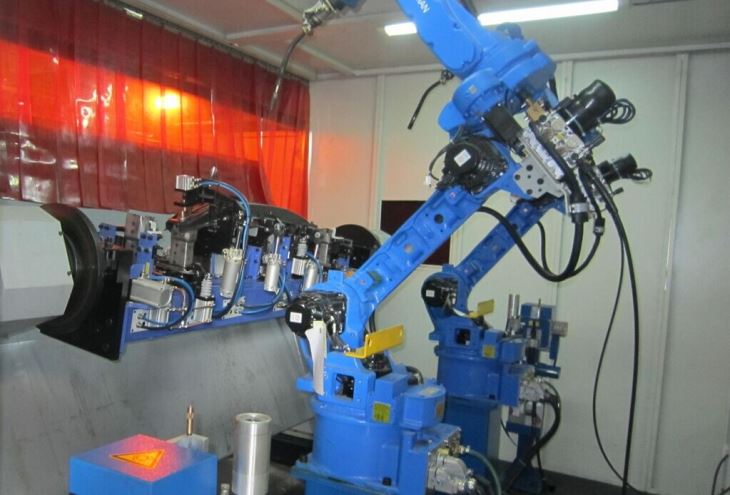

If you're interested in our Automotive Seat Welding Fixture, Car Stamping Parts checking fixture, or Front Bumper Welding Fixture, feel free to reach out to us for more information and to discuss your specific needs. We're here to help you find the best welding solution for your production line.
References
- Welding Handbook, American Welding Society
- Automotive Manufacturing Technology, Society of Automotive Engineers