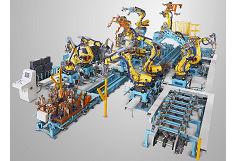
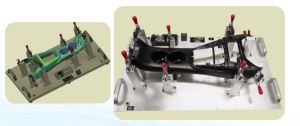
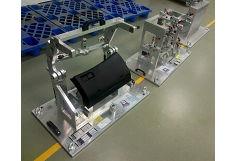
As a supplier of Robotic MIG Weld Fixtures, I've witnessed firsthand the transformative impact of ergonomic design in the welding industry. Ergonomics, the science of designing and arranging things people use so that the people and things interact most efficiently and safely, plays a crucial role in the functionality and usability of these fixtures. In this blog, I'll delve into the key ergonomic design features of a Robotic MIG Weld Fixture and explain why they matter.
1. Adjustable Workpiece Positioning
One of the most significant ergonomic features of a Robotic MIG Weld Fixture is its ability to adjust the workpiece's position. This allows welders to work at a comfortable height and angle, reducing the risk of musculoskeletal disorders (MSDs) such as back pain, neck strain, and shoulder injuries. Our fixtures are equipped with adjustable clamps and supports that can be easily repositioned to accommodate different workpiece sizes and shapes. This flexibility ensures that welders can maintain a neutral posture throughout the welding process, minimizing fatigue and improving productivity.
For example, in the automotive industry, where complex parts like Auto Pillar Parts Welding Fixture are commonly welded, adjustable positioning is essential. These fixtures can be customized to hold the pillars at the optimal angle for welding, reducing the need for welders to contort their bodies into awkward positions. This not only improves the quality of the welds but also enhances the overall safety and well - being of the workers.
2. Intuitive Control Interface
A user - friendly control interface is another critical ergonomic feature. Our Robotic MIG Weld Fixtures are designed with an intuitive control panel that allows welders to easily operate the fixture and the robotic welding system. The interface features large, clearly labeled buttons and a touch - screen display, making it easy to navigate through different functions and settings.
This simplicity of use reduces the learning curve for new operators and minimizes the risk of errors. Welders can quickly adjust parameters such as welding speed, current, and voltage, as well as control the movement of the robotic arm. By providing easy - to - understand controls, we ensure that welders can focus on the quality of the welds rather than struggling with complex machinery.
3. Accessibility and Visibility
Ergonomic design also emphasizes accessibility and visibility. Our fixtures are designed to provide easy access to the workpiece for loading, unloading, and inspection. The open - frame design allows welders to reach all areas of the workpiece without obstruction, reducing the need for excessive stretching or bending.
In addition, proper lighting is integrated into the fixture to ensure good visibility during the welding process. Adequate lighting helps welders to accurately position the welding torch and monitor the quality of the welds. This is particularly important in high - precision welding applications, where even a small error can lead to significant defects.
4. Reduced Vibration and Noise
Vibration and noise are common hazards in welding operations. Excessive vibration can cause hand - arm vibration syndrome (HAVS), while high - level noise can lead to hearing loss. Our Robotic MIG Weld Fixtures are engineered to minimize vibration and noise levels.
We use high - quality materials and advanced manufacturing techniques to dampen vibrations. The fixtures are also equipped with noise - reducing enclosures and insulation, which help to create a more comfortable working environment. By reducing these physical stressors, we improve the long - term health and productivity of the welders.
5. Modular Design
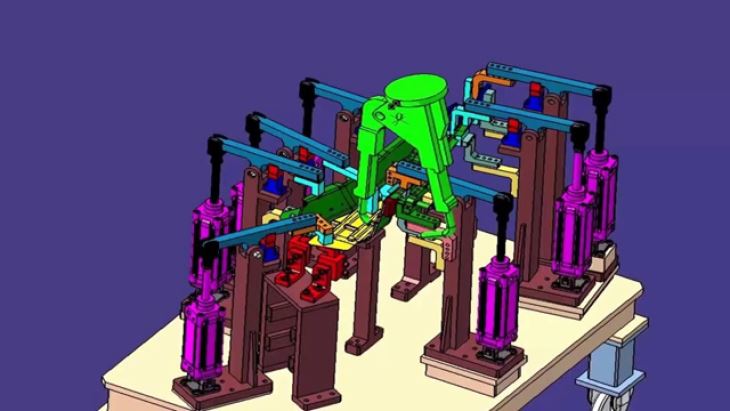
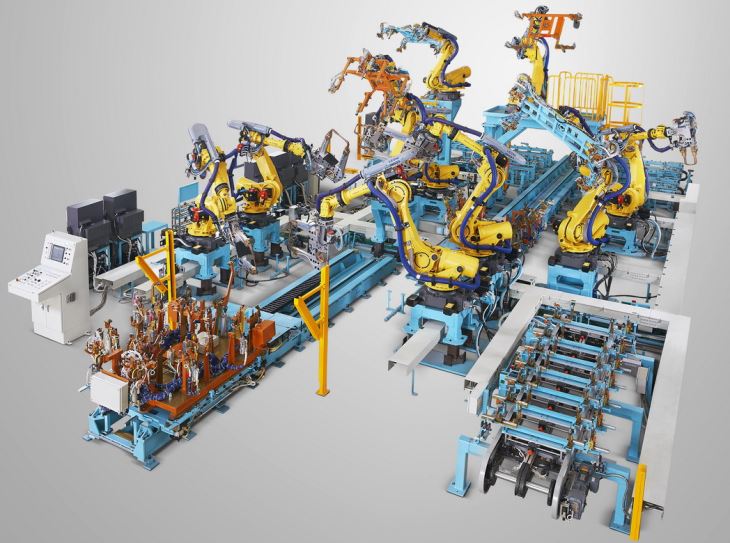
The modular design of our Robotic MIG Weld Fixtures is another ergonomic advantage. Modularity allows for easy customization and reconfiguration of the fixture to meet different welding requirements. Welders can quickly swap out components or add new features as needed, without the need for extensive re - engineering.
This flexibility not only saves time but also reduces the physical effort required to adapt the fixture. For example, in a production line where multiple types of parts are welded, a modular fixture can be easily adjusted to accommodate different part geometries. This is similar to the concept of a Robotic Welding Fixture Line, which can be customized to suit various production needs.
6. Safety Features
Safety is an integral part of ergonomic design. Our Robotic MIG Weld Fixtures are equipped with a range of safety features to protect the welders. These include emergency stop buttons, safety interlocks, and protective barriers.
The emergency stop buttons are strategically placed within easy reach of the operator, allowing them to quickly halt the operation in case of an emergency. Safety interlocks prevent the fixture from operating if the protective barriers are not properly closed, reducing the risk of accidental contact with moving parts or hot surfaces.
Why Ergonomic Design Matters
The benefits of ergonomic design in Robotic MIG Weld Fixtures are far - reaching. Firstly, it improves the health and safety of the welders. By reducing physical stressors such as awkward postures, vibration, and noise, we lower the incidence of work - related injuries and illnesses. This not only benefits the individual workers but also reduces the costs associated with worker compensation and absenteeism.
Secondly, ergonomic design enhances productivity. When welders are comfortable and safe, they can work more efficiently. They can focus on the task at hand without being distracted by physical discomfort or safety concerns. This leads to higher - quality welds and increased production output.
Finally, our ergonomic fixtures contribute to a more sustainable and competitive business. In today's market, companies are increasingly looking for suppliers who prioritize the well - being of their workers. By offering ergonomic Robotic MIG Weld Fixtures, we can attract more customers and build long - term partnerships.
Contact Us for a Consultation
If you're in the market for a Robotic MIG Weld Fixture, we invite you to contact us for a consultation. Our team of experts can help you choose the right fixture for your specific needs and provide you with detailed information about our ergonomic design features. We understand that every welding application is unique, and we're committed to providing customized solutions that meet your requirements. Don't hesitate to reach out and start a conversation about how our fixtures can improve your welding operations.
References
- Grandjean, E. (1988). Fitting the Task to the Man: An Introduction to Ergonomics. Taylor & Francis.
- Konz, S., & Johnson, S. (2012). Work Design: Industrial Ergonomics. Cengage Learning.