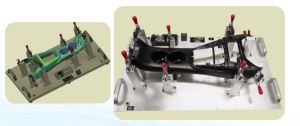
As a supplier of A PILLAR welding fixtures, I've been deeply involved in the automotive manufacturing industry for years. The alignment of A PILLAR welding fixtures is a crucial process that directly impacts the quality and precision of automotive components. In this blog, I'll share some of the alignment methods we commonly use in our work.
1. Manual Alignment Method
Manual alignment is one of the most basic and traditional methods. It relies on the skills and experience of technicians. First, the fixture is roughly positioned on the workbench or welding platform. Then, using simple measuring tools such as rulers, calipers, and angle gauges, technicians adjust the position of the fixture bit by bit.
For example, when aligning the horizontal position of the A PILLAR welding fixture, a ruler can be used to measure the distance between the fixture and a reference edge on the platform. If the measured distance does not meet the design requirements, the fixture is moved slightly until the correct distance is achieved. For the vertical alignment, a caliper can be used to measure the height of different parts of the fixture, and shims can be added or removed under the fixture to adjust its height.
The advantage of manual alignment is its flexibility. It can be carried out in situations where there are no advanced alignment equipment or when dealing with some special - shaped fixtures. However, it also has obvious limitations. The accuracy of manual alignment is highly dependent on the skills of technicians, and it is time - consuming. In addition, the repeatability of manual alignment is relatively poor, which may lead to inconsistent quality of welded products.
2. Optical Alignment Method
The optical alignment method uses optical instruments such as laser trackers and theodolites. Laser trackers are very popular in the alignment of A PILLAR welding fixtures. They work by emitting a laser beam to the target on the fixture. The tracker can measure the position and orientation of the target in three - dimensional space with high precision.
First, a series of targets are installed on the A PILLAR welding fixture. These targets can be reflective spheres or other types of optical targets. Then, the laser tracker is set up at a suitable position around the fixture. The tracker emits laser beams to each target on the fixture and records the position data of the targets. Based on the pre - set design data, the tracker can calculate the deviation between the actual position of the fixture and the ideal position.
Technicians can then use this information to adjust the fixture. For example, if the tracker shows that the fixture is tilted at a certain angle, the fixture can be adjusted by loosening or tightening the bolts that fix the fixture on the platform. The optical alignment method offers high accuracy, usually within a few hundredths of a millimeter. It also has good repeatability, which can ensure consistent quality of welded products. However, the equipment for optical alignment is relatively expensive, and the operation requires professional training.
Theodolites are also used in some cases. They can measure angles in the horizontal and vertical planes. By using a theodolite, technicians can measure the angular deviation of the A PILLAR welding fixture and make corresponding adjustments. Although not as precise as laser trackers in three - dimensional space measurement, theodolites are more cost - effective and can be used in some less - demanding alignment tasks.
3. Fixture - Specific Jig Alignment Method
In some cases, we design and use fixture - specific jigs for alignment. These jigs are custom - made according to the shape and size of the A PILLAR welding fixture. For example, a special jig can be designed with grooves or protrusions that match the features of the fixture.
When aligning the fixture, the jig is first placed on the welding platform. Then, the A PILLAR welding fixture is placed on the jig. The grooves or protrusions on the jig guide the fixture into the correct position. This method is very effective in ensuring the accurate alignment of the fixture, especially for mass - produced fixtures with the same design.
The advantage of the fixture - specific jig alignment method is its simplicity and high efficiency. Once the jig is made, the alignment process can be completed quickly. It also reduces the dependence on the skills of technicians. However, the design and manufacturing of these jigs require additional time and cost. And if the design of the A PILLAR welding fixture changes, the jigs may need to be redesigned and remanufactured.
4. Machine - Based Alignment Method
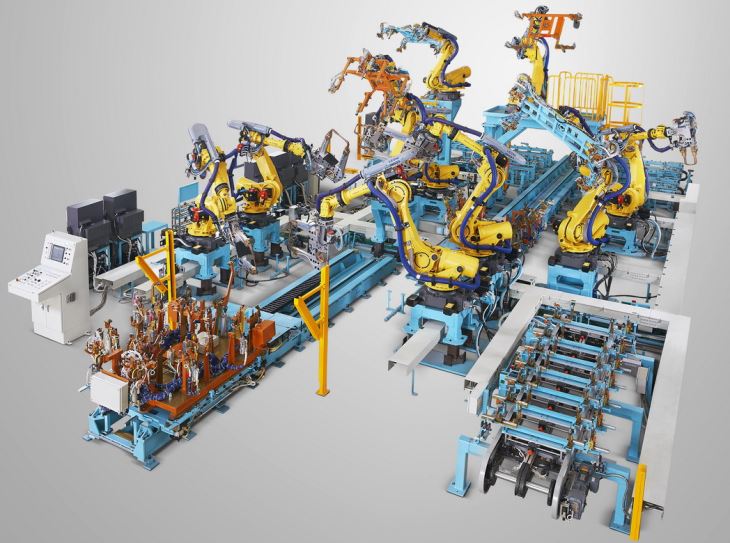
Some modern manufacturing facilities use automated machine - based alignment systems. These systems are usually integrated into the welding production line. For example, in a Robotic Welding Fixture Line, the alignment of the A PILLAR welding fixture can be achieved through the cooperation of robots and sensors.
The robots are programmed to pick up the fixture and place it on the welding platform. Sensors installed on the platform or on the robots can detect the position and orientation of the fixture. Based on the feedback from the sensors, the robots can make fine - tuning adjustments to the fixture.
This method has many advantages. It can achieve high - speed and high - precision alignment. The automated process reduces human error and increases production efficiency. In addition, it can be easily integrated into the overall production management system, which is beneficial for the intelligent production of automotive components. However, the initial investment in machine - based alignment systems is very large, and the maintenance and programming of these systems require professional technical support.
5. Reference - Feature Alignment Method
The reference - feature alignment method uses the existing features on the A PILLAR or the welding platform as references. For example, the holes on the A PILLAR or the positioning pins on the platform can be used as reference features.
First, the positions of these reference features are accurately measured and recorded. Then, when aligning the A PILLAR welding fixture, the fixture is adjusted so that its corresponding features match the reference features. For example, if there are holes on the fixture that need to align with the holes on the A PILLAR, the fixture can be adjusted until the holes are in perfect alignment. This can be done by using alignment pins or other mechanical means.
This method is relatively simple and cost - effective. It can make full use of the existing features of the components and the platform, reducing the need for additional alignment equipment. However, the accuracy of this method depends on the accuracy of the reference features themselves. If the reference features are inaccurate, it will directly affect the alignment accuracy of the fixture.
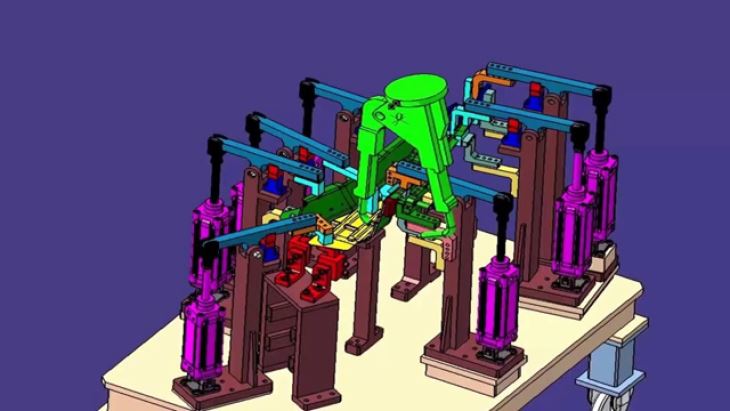
6. Software - Assisted Alignment Method
With the development of computer technology, software - assisted alignment methods have emerged. Specialized alignment software can be used in combination with the above - mentioned alignment methods. For example, when using an optical alignment system, the software can receive the measurement data from the laser tracker or theodolite.
The software can then analyze the data, compare it with the design data, and provide detailed adjustment instructions to technicians. It can also generate reports on the alignment results, which is convenient for quality control and traceability. In addition, some software can simulate the alignment process in advance, allowing technicians to predict possible problems and plan the alignment steps more effectively.
Software - assisted alignment methods can improve the efficiency and accuracy of the alignment process. They can also integrate with other manufacturing management software, realizing more intelligent and automated production. However, the use of software requires technicians to have certain computer skills, and the software may need to be updated regularly to adapt to new requirements.
In conclusion, each alignment method for A PILLAR welding fixtures has its own advantages and disadvantages. In actual production, we usually choose the most suitable method according to the specific requirements of the project, such as the accuracy requirements, production volume, and cost - effectiveness. As a professional supplier of Auto Pillar Parts Welding Fixture, we are committed to providing high - quality alignment solutions for our customers.
If you are in the automotive manufacturing industry and are looking for high - quality A PILLAR welding fixtures or need professional alignment services, please feel free to contact us for procurement and negotiation. We have a professional team and advanced technology to ensure that we can meet your needs and provide you with the best solutions.
References
- Automotive Manufacturing Technology Handbook.
- Precision Measurement and Alignment in the Automotive Industry, Journal of Automotive Engineering.
- Welding Fixture Design and Manufacturing Guidelines, Industry Standards Document.