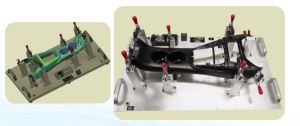
In the manufacturing industry, the precision of a Cupholder CMM (Coordinate Measuring Machine) holding jig is of utmost importance. As a supplier of Cupholder CMM holding jigs, I understand the challenges and requirements that come with ensuring high precision in these essential tools. In this blog post, I will share some effective strategies on how to increase the precision of a Cupholder CMM holding jig.

Understanding the Importance of Precision in Cupholder CMM Holding Jigs
Before delving into the methods of improving precision, it is crucial to understand why precision is so vital in Cupholder CMM holding jigs. These jigs are used to hold cupholders in place during the measurement process on a CMM. Accurate measurements are essential for quality control, ensuring that the cupholders meet the required specifications. A high - precision holding jig minimizes errors in measurement, which in turn leads to better - quality products and reduced production costs.
Material Selection
The choice of material for the Cupholder CMM holding jig has a significant impact on its precision. High - quality materials with low thermal expansion coefficients are preferred. For example, materials like aluminum alloys and stainless steel are commonly used. Aluminum alloys are lightweight, have good machinability, and relatively low thermal expansion. Stainless steel, on the other hand, offers high strength and corrosion resistance.
When selecting the material, it is also important to consider its stability over time. Some materials may deform or change shape due to environmental factors such as temperature and humidity. By choosing a stable material, the holding jig can maintain its shape and dimensions, thereby ensuring consistent precision in measurements. You can find more information about high - quality holding fixtures, including Auto Metal Parts CMM Holding Fixture on our website.
Machining Processes
The machining processes used to manufacture the Cupholder CMM holding jig play a crucial role in determining its precision. Precision machining techniques such as CNC (Computer Numerical Control) machining are highly recommended. CNC machining allows for accurate control of the cutting tools, resulting in high - precision parts.
During the machining process, it is important to control the cutting parameters, such as cutting speed, feed rate, and depth of cut. These parameters can affect the surface finish and dimensional accuracy of the holding jig. For example, a high cutting speed may lead to a better surface finish but can also cause tool wear, which may affect the precision of the final product. Therefore, it is necessary to optimize these parameters based on the material and the design requirements of the holding jig.
Design Optimization
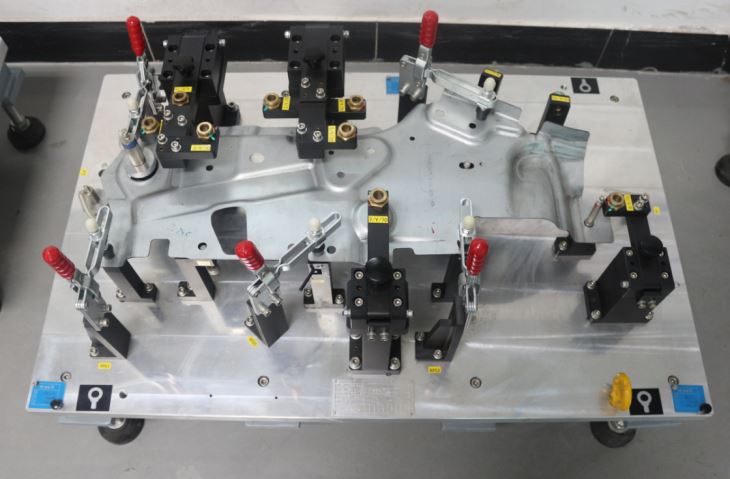
The design of the Cupholder CMM holding jig is another key factor in achieving high precision. A well - designed holding jig should provide stable support for the cupholder during the measurement process. It should have proper clamping mechanisms to ensure that the cupholder is held firmly in place without causing any deformation.
One effective design strategy is to use modular designs. Modular designs allow for easy customization and replacement of parts. This means that if a particular part of the holding jig is damaged or worn out, it can be easily replaced without having to replace the entire jig. Additionally, modular designs can also improve the overall precision of the holding jig by allowing for more accurate alignment of the components.
Another important aspect of design is the consideration of the measurement points. The holding jig should be designed in such a way that it does not interfere with the measurement points on the cupholder. This ensures that the CMM can accurately measure the dimensions of the cupholder without any obstructions. You can explore our Cupholder CMM Holding Fixture designs to see how we optimize for precision.
Calibration and Inspection
Regular calibration and inspection are essential for maintaining the precision of the Cupholder CMM holding jig. Calibration involves comparing the dimensions of the holding jig with a known standard to ensure its accuracy. This should be done at regular intervals, especially after any significant changes to the jig, such as repairs or modifications.
Inspection should be carried out using high - precision measuring instruments, such as CMMs themselves. These instruments can detect even the slightest deviations in the dimensions of the holding jig. Any deviations should be corrected immediately to ensure that the holding jig continues to provide accurate measurements.
Environmental Control
The environment in which the Cupholder CMM holding jig is used can also affect its precision. Temperature and humidity are two of the most significant environmental factors. Changes in temperature can cause the holding jig to expand or contract, leading to dimensional changes. Similarly, high humidity can cause corrosion and rust, which can also affect the precision of the holding jig.
To minimize the impact of environmental factors, it is important to control the temperature and humidity in the measurement area. This can be achieved through the use of air - conditioning and dehumidifiers. Additionally, the holding jig should be stored in a clean and dry environment when not in use.
Operator Training
The skills and knowledge of the operators using the Cupholder CMM holding jig also play a role in ensuring its precision. Operators should be properly trained on how to use the holding jig correctly, including how to install and remove the cupholder, how to operate the CMM, and how to perform basic maintenance tasks.
Training should also include an understanding of the importance of precision and how to identify and address any potential issues that may affect the precision of the holding jig. By having well - trained operators, the risk of human - error in the measurement process can be minimized, leading to more accurate measurements.
Supplier Support
As a Cupholder CMM holding jig supplier, we are committed to providing comprehensive support to our customers. We offer technical advice on material selection, design optimization, and machining processes. Our team of experts can also assist with calibration and inspection services to ensure that the holding jigs maintain their precision over time.
If you are looking to improve the precision of your Cupholder CMM holding jigs or are interested in purchasing high - quality holding jigs, we invite you to contact us for a detailed discussion. Our goal is to help you achieve the highest level of precision in your manufacturing processes, which will ultimately lead to better - quality products and increased customer satisfaction.
Conclusion
Increasing the precision of a Cupholder CMM holding jig requires a comprehensive approach that includes material selection, machining processes, design optimization, calibration and inspection, environmental control, and operator training. By implementing these strategies, manufacturers can ensure that their holding jigs provide accurate and consistent measurements, leading to improved product quality and reduced production costs.
If you have any questions or would like to discuss your specific requirements, please do not hesitate to reach out. We look forward to the opportunity to work with you and help you achieve the best results in your manufacturing operations.
References
- Smith, J. (2020). Precision Machining for Manufacturing. Industrial Press.
- Brown, A. (2019). Design Principles for CMM Holding Fixtures. Journal of Manufacturing Technology.
- Johnson, R. (2021). Environmental Effects on Precision Measuring Tools. Measurement Science Review.