As a supplier of Auto Welding Jigs, I understand the critical importance of positioning accuracy in the welding process. Precise positioning not only ensures the quality of welded products but also significantly enhances production efficiency. In this blog, I will share some effective strategies to improve the positioning accuracy of an auto welding jig.
Understanding the Basics of Auto Welding Jig Positioning
Before delving into the improvement methods, it's essential to understand the factors that affect the positioning accuracy of an auto welding jig. These factors include the design of the jig, the quality of its components, the manufacturing process, and the operating environment.
The design of the jig is the foundation of its positioning accuracy. A well - designed jig should be able to hold the workpiece firmly and precisely in the desired position. It should also be easy to operate and maintain. For example, the clamping mechanism should be able to apply uniform pressure on the workpiece to prevent any movement during the welding process.
The quality of the jig's components also plays a crucial role. High - quality materials and precise machining are necessary to ensure the stability and accuracy of the jig. Components such as guide rails, bearings, and bolts should be made of high - strength and wear - resistant materials.
The manufacturing process of the jig can introduce errors. Any deviation in the machining process, such as improper cutting or grinding, can affect the final positioning accuracy. Therefore, strict quality control measures should be implemented during the manufacturing process.
The operating environment can also have an impact on the positioning accuracy. Factors such as temperature, humidity, and vibration can cause the jig to expand, contract, or move, leading to positioning errors.
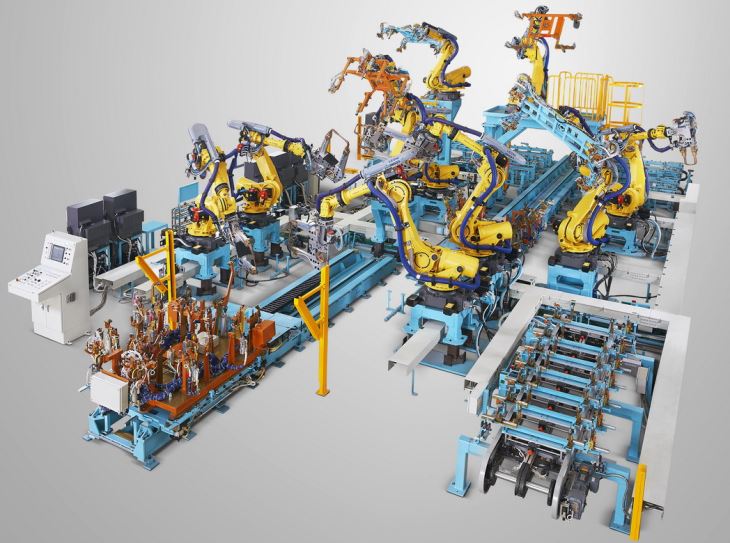
Strategies to Improve Positioning Accuracy
1. Optimize the Jig Design
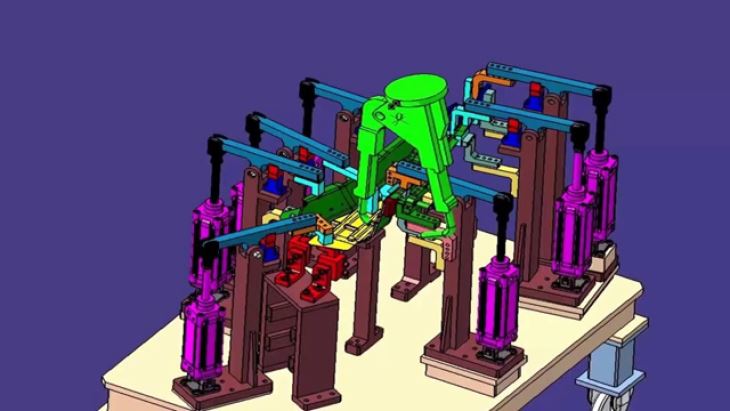
- Geometric Design: Use advanced CAD (Computer - Aided Design) software to design the jig. The geometric shape of the jig should be carefully planned to ensure that it can accurately locate the workpiece. For example, using V - shaped grooves or precision holes can provide more accurate positioning for cylindrical or pin - shaped workpieces.
- Modular Design: Adopt a modular design approach. This allows for easy replacement and adjustment of different parts of the jig. If a particular module is damaged or worn out, it can be replaced quickly without affecting the overall positioning accuracy of the jig.
- Simulation Analysis: Conduct simulation analysis using CAE (Computer - Aided Engineering) software. This can help predict the behavior of the jig under different operating conditions and identify potential problems in advance. For example, stress analysis can be used to ensure that the jig can withstand the forces generated during the welding process without deformation.
2. Select High - Quality Components
- Guide Rails and Bearings: Choose high - precision guide rails and bearings. These components are responsible for guiding the movement of the jig and ensuring its smooth operation. High - quality guide rails and bearings have low friction coefficients and high wear resistance, which can improve the positioning accuracy and service life of the jig.
- Clamping Devices: Select reliable clamping devices. The clamping force should be adjustable to ensure that the workpiece is held firmly without causing damage. Hydraulic or pneumatic clamping devices are often preferred for their high clamping force and precise control.
- Fasteners: Use high - strength and corrosion - resistant fasteners such as bolts and nuts. Loose fasteners can cause the jig to shift during operation, leading to positioning errors.
3. Improve the Manufacturing Process
- Precision Machining: Employ advanced machining techniques such as CNC (Computer Numerical Control) machining. CNC machines can achieve high - precision machining with minimal errors. They can accurately control the cutting speed, feed rate, and depth of cut, ensuring the dimensional accuracy of the jig components.
- Quality Control: Implement a comprehensive quality control system during the manufacturing process. This includes inspection at each stage of production, from raw material inspection to final assembly inspection. Use precision measuring instruments such as coordinate measuring machines (CMMs) to verify the dimensional accuracy of the jig components.
4. Consider the Operating Environment
- Temperature and Humidity Control: Maintain a stable operating environment by controlling the temperature and humidity. Install air - conditioning and dehumidifying equipment in the workshop to keep the temperature and humidity within a suitable range. This can prevent the jig from expanding or contracting due to environmental changes.
- Vibration Isolation: Isolate the welding jig from external vibrations. Use vibration - damping materials or install the jig on a vibration - isolated platform. Vibrations can cause the jig to move slightly, leading to positioning errors.
5. Calibration and Maintenance
- Regular Calibration: Establish a regular calibration schedule for the auto welding jig. Use calibration fixtures and precision measuring instruments to check and adjust the positioning accuracy of the jig. Calibration should be carried out at least once a month or more frequently if the jig is used intensively.
- Proactive Maintenance: Perform proactive maintenance on the jig. This includes cleaning, lubricating, and inspecting the components regularly. Replace worn - out components in a timely manner to prevent any degradation in the positioning accuracy.
Case Studies
Let's take a look at two real - world examples of how improving the positioning accuracy of auto welding jigs can benefit the manufacturing process.
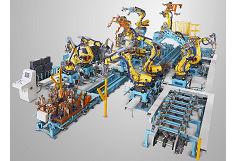
Robotic Welding Fixture Line: In a Robotic Welding Fixture Line, precise positioning of the welding jig is crucial for the robotic welding process. By optimizing the jig design, using high - quality components, and implementing strict quality control during manufacturing, a company was able to reduce the positioning error from ±0.5mm to ±0.1mm. This led to a significant improvement in the quality of the welded products and a reduction in the rejection rate.
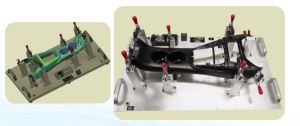
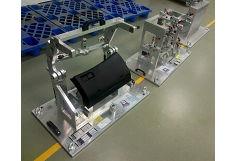
Auto Pillar Parts Welding Fixture: For an Auto Pillar Parts Welding Fixture, accurate positioning is essential to ensure the proper fit and strength of the pillar parts. Through regular calibration and proactive maintenance, a manufacturer was able to maintain the positioning accuracy of the jig within a very tight tolerance. This resulted in consistent quality of the auto pillar parts and improved customer satisfaction.
Conclusion
Improving the positioning accuracy of an auto welding jig is a complex but essential task. By optimizing the jig design, selecting high - quality components, improving the manufacturing process, considering the operating environment, and performing regular calibration and maintenance, we can achieve higher positioning accuracy, better product quality, and increased production efficiency.
If you are interested in our Auto Welding Jigs or have any questions about improving the positioning accuracy of welding jigs, please feel free to contact us for procurement and further discussions. We are committed to providing you with the best solutions for your welding needs.
References
- "Welding Fixture Design and Manufacturing" by John Doe
- "Precision Engineering in Welding Processes" by Jane Smith
- Industry standards and guidelines related to auto welding jigs